
VIEWPOINTS – Dance roundup: HUGO MARCHAND shimmers as an Artist at the Center, MARK MORRIS DANCE GROUP celebrates its 45th at The Joyce
- By drediman
- July 27, 2026
- No Comments
Over the past few weeks, New York dance fans have had plenty to get excited about, namely getting a chance to see Paris Opera Ballet étoile Hugo Marchand take his turn as one of New York City Center’s Artists at the Center, as well as Mark Morris Dance Group take up residency at The Joyce Theater for their 45th anniversary with a trio of programs. And the notable summer dance programming doesn’t stop there — the next few weeks see the arrival of the annual BAAND Together Dance Festival as part of Lincoln Center’s Summer for the City and the return of The Joyce’s Ballet Festival, this time around curated by ballet superstar Misty Copeland. As per usual, read on for my thoughts.
HUGO MARCHAND: ARTISTS AT THE CENTER
New York City Center
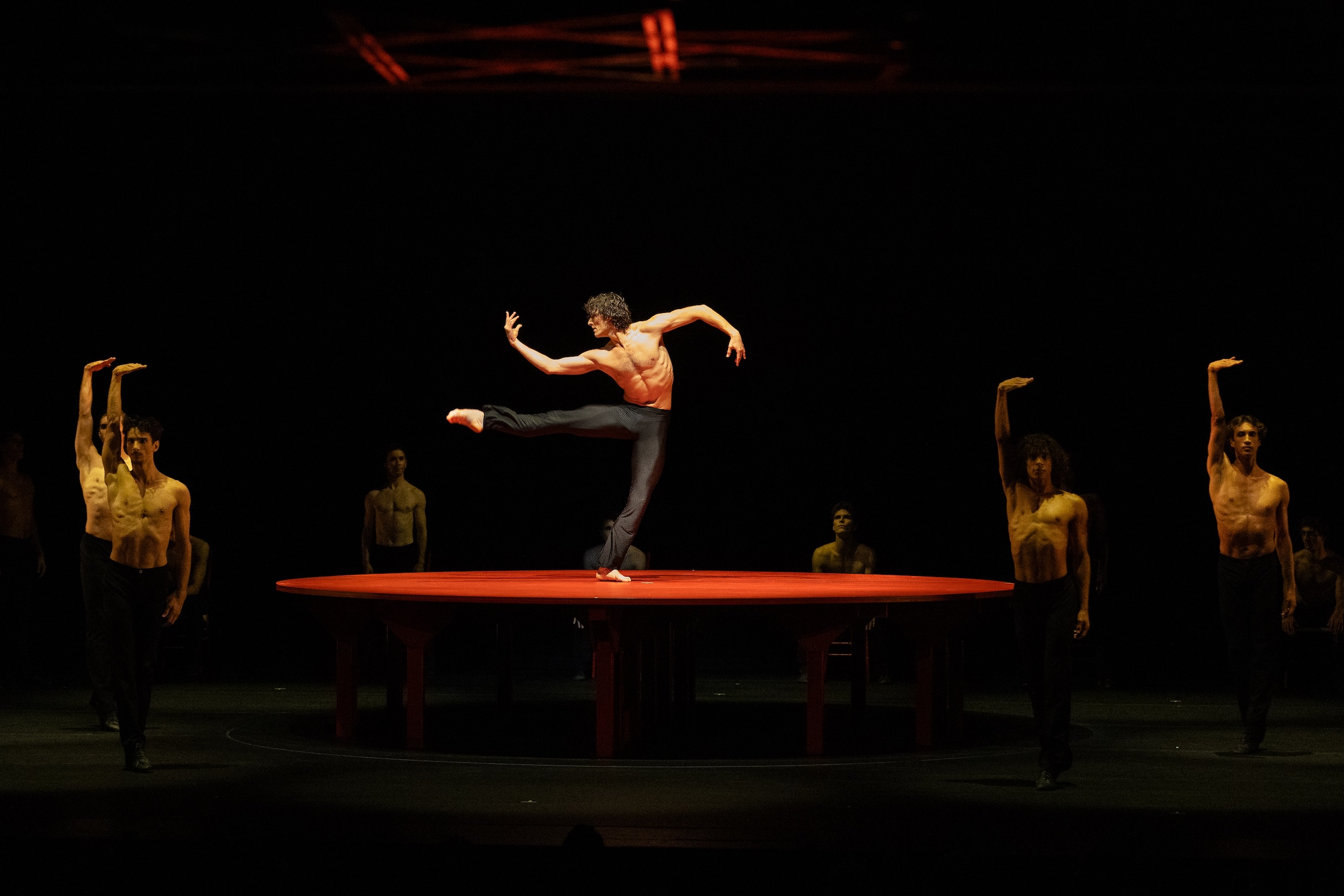
One of the most anticipated dance events of the summer was the Hugo Marchand edition of New York City Center’s annual Artists at the Center series (RECOMMENDED). For his turn at the table (past honorees/curators have included Tiler Peck, Sara Mearns, and Ayodele Casel), the beloved Paris Opera Ballet étoile has surrounded himself with sublime dancers, using the opportunity to celebrate of the male body and its unique capacity for expressive movement — whether overtly or in pas de deux choices that highlighted an equal partnership between the sexes. As a sort of homage to New York’s dance history and tradition, the eclectic program commenced with George Balanchine’s rarely performed pas de deux Sonatine set to a delightful Maurice Ravel piano score. Although the piece was danced with lovely personalty and attention to detail by Léonore Baulac and Germain Louvet, the performance lacked the pop and verve typically associated with Balanchine (or at least the New York City Ballet aesthetic). Then came the evening’s first of two Maurice Béjart works, the French choreographer’s version of The Firebird from 1970. Set to Igor Stravinsky’s popular composition — these performances marked the fourth major choreographic interpretation of the score to play New York this year alone (following City Ballet, American Dance Theatre, and Dance Theatre of Harlem’s) — Béjart’s take captures the excitement of pure dance, taking a more abstract approach to the typically more narrative-driven one act story ballet. At the performance I attended, the Firebird was danced by Hideo Kishimoto with dazzling explosiveness and crisp technique; he and the overall performance brought the house down. After teasing the audience with his absence, Marchand finally made his first appearance in Angelin Preljocaj’s “L’Abandon” from Le Parc to close out the first half of the bill, dancing with the striking Dorothée Gilbert. Suffice to say, they performed Preljocaj’s uninhibited, raw romantic encounter with understated lyricism and naked intimacy. The second half began with more pas de deux performances that mixed and matched the pairings — Hans van Manen’s Trois gnossiennes (Marchand, Baulac) and Carolyn Carlson’s “L’esprit du Bleu” from Signes (Louvet, Gilbert) — highlighting these gorgeous dancers’ versatility despite the these works’ arguable blandness. Ravel’s Boléro is nothing if not sensual and rhythmic. Thankfully, in the 1961 choreographic take on the iconic score, Béjart took those qualities to heart in a vision that built with magnificent tension, altogether making for a show-stopping finale. The piece was an unabashed showcase for Marchand, who was the shimmering and magnetic presence at the center of it all — a ringmaster whose intensity emanated to the rest of the large all-male cast like a lighting bolt.
MARK MORRIS DANCE GROUP
The Joyce Theater
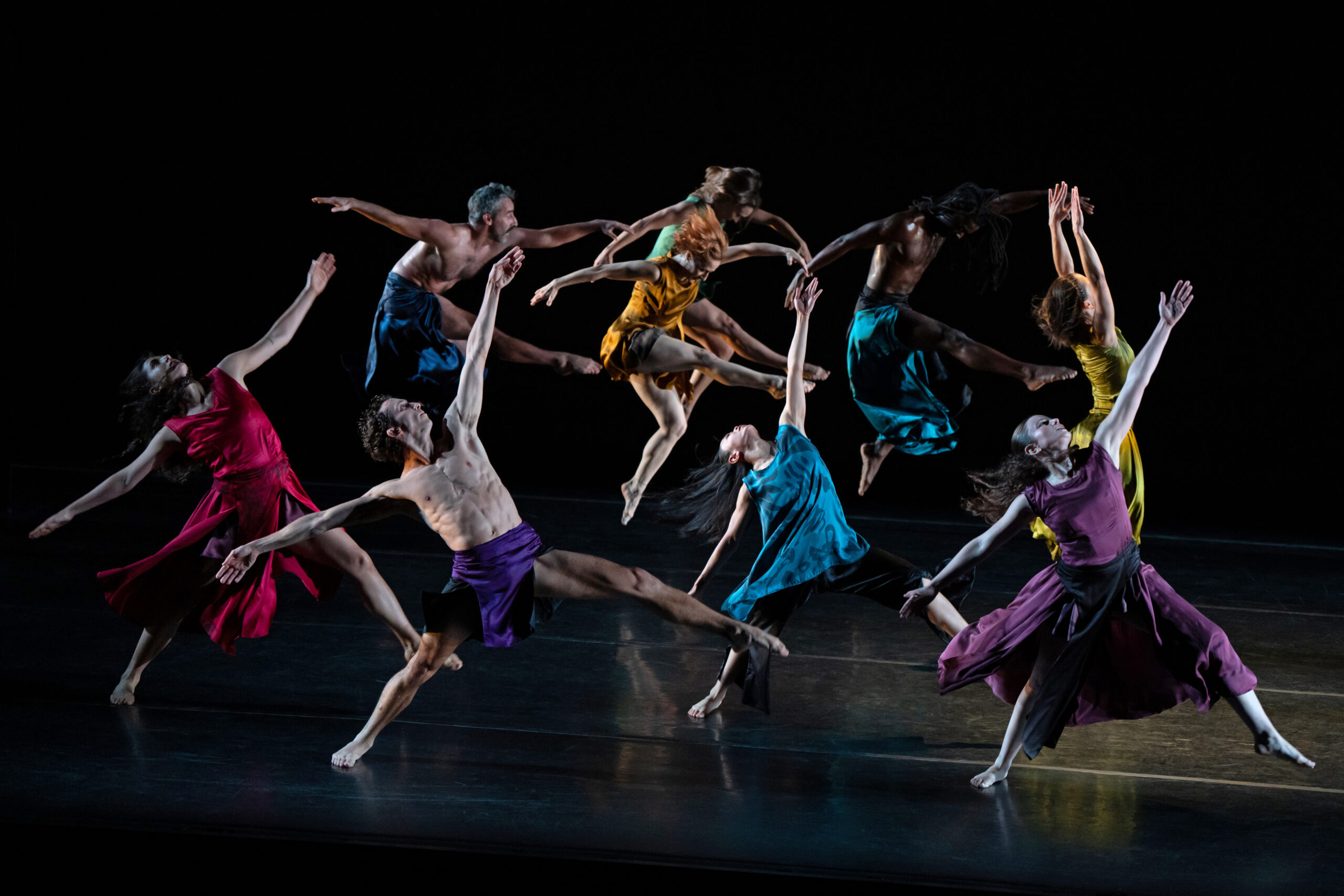
Then over at The Joyce Theater in Chelsea, there was Mark Morris Dance Group’s two-week summer stint — which just concluded this past Sunday — commemorating the 45th anniversary of the company (HIGHLY RECOMMENDED). For the occasion, Morris and his close-knit ensemble of dancer and musicians assembled an ambitious trio of discrete programs, collectively under the broad yet appropriate umbrella theme of “Dances to American Music”. Each program had its own mode of presenting the dances, which made watching each installment a bespoke adventure. Given that the works chosen for these carefully curated programs drew from various eras of Morris’s expansive output, it was fascinating to examine the choreographer’s evolving relationship to music and the notion of Americana across the three bills. Entitled “Soul of America”, Program A featured dances set to live music by jazz innovators such as James P. Johnson and George Gershwin. The evening began with two appetizers on the slighter side — the New York premiere of Pizzica (2025), an entertaining homage to Italian immigrants and their robust, often brash personalities; and Three Preludes (1992), a solo set to a Gershwin piano score that was danced with appealingly understated panache by veteran company member Dallas McMurray. More substantial were the larger-scale, jazz-focused Dancing Honeymoon (1998) and the closer You’ve Got to Be Modernistic (2025), both of which showed off the playful character-building, unforced camaraderie, and instinctually rhythmic musicality of the MMDG dancers. Program B was “American Heartbeat”, and it put forth dances set to early recorded music by American country legends (it was the only program not to feature live music, but that’s by design). Dispersed between the bifurcated Home (1993) in the evening’s first half were Deck of Cards (1983) and Songs that Tell a Story (1982). Creating dialogue with each other, these dance episodes formed an encompassing tapestry that was greater than the sum of its parts. The program’s joyous sendoff was Going Away Party (1990). Set to a collage of songs by Bob Wills and His Texas Playboys, the piece was a crowd-pleasing celebration that was also streaked with humanity. Saving the best for last was the eclectic Program C, which was given the title “American Mavericks: West Coast Composers”. Things got under way with the stylish and succinct Prelude and Prelude (1984) and Jenn and Spencer (2013), an emotionally knotted duet depicting a turbulent relationship (it was danced with heart-stopping intensity by Karlie Budge and Brandon Randolph). Then came the refreshing openness of Pacific (1995), which evoked the specific grandeur of Northern California. Closing things off was the masterful Grand Duo (1993). Pungently performed by the entire company, it left a disquieting mood in the air, likely intentionally. Throughout, I adored Morris’s commitment to live music; particularly wonderful was the playing of pianist Colin Fowler, with whom the dancers have formed a compelling symbiotic relationship.
 Copyright © 2026
Leave a Reply