
VIEWPOINTS – ABT wraps up its story ballet-packed summer season with a new staging of DON QUIXOTE, the underrated SYLVIA, and the return of SWAN LAKE
- By drediman
- July 16, 2026
- No Comments
The latter half of American Ballet Theatre’s story ballet-packed summer season at the Metropolitan Opera House included a new staging of Don Quixote, a mounting of Frederick Aston’s underrated Sylvia, and the bookending return of Swan Lake. During this time, the company also announced news of two well-deserved soloist-to-principal promotions. As always, read on for my thoughts.
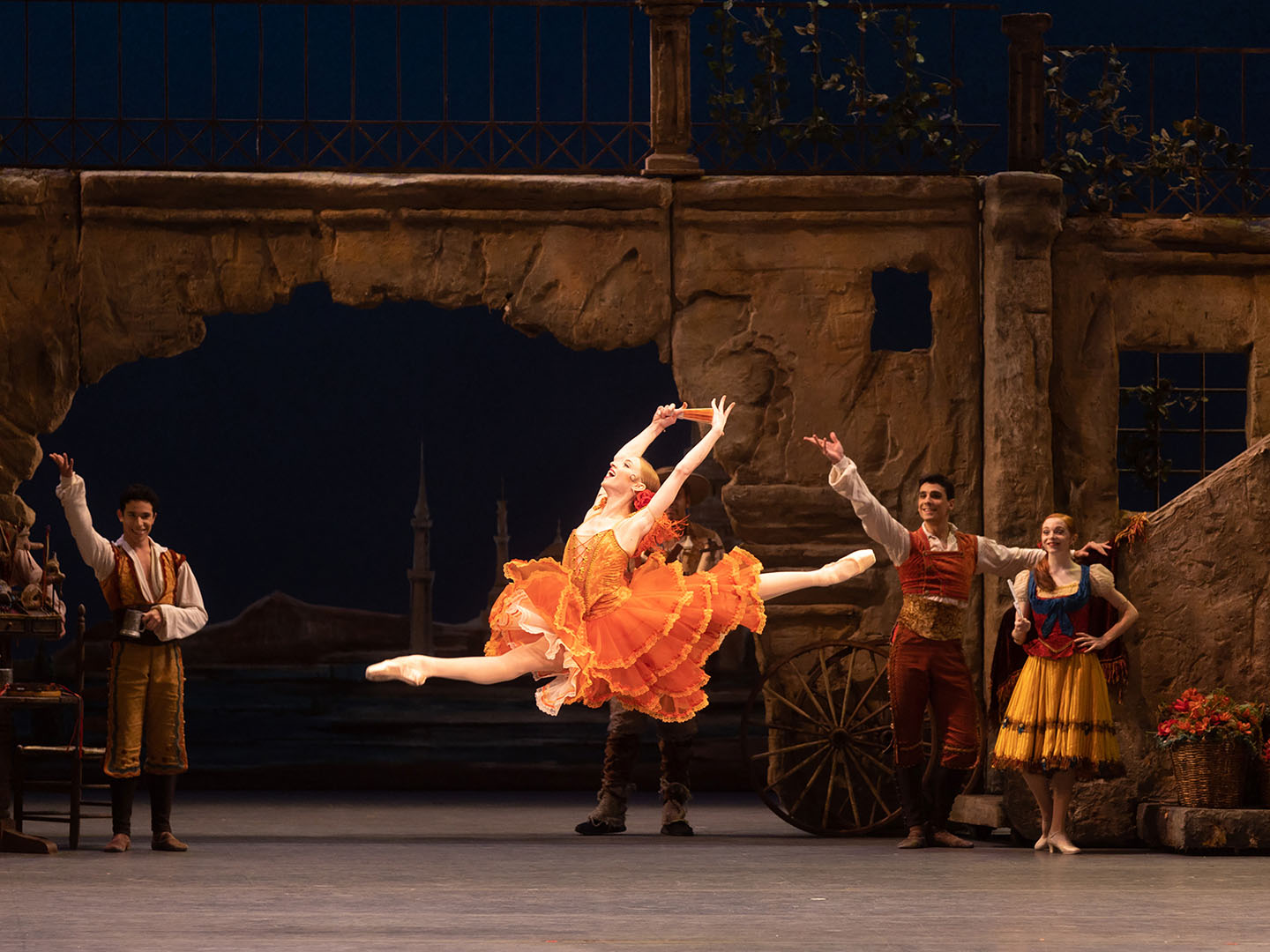
One of the highlights of Ballet Theatre’s summer season was supposed to have been Natalia Osipova’s appearance as Kitri in Susan Jaffe and Susan Jones’s new staging of Don Quixote. Unfortunately, Osipova succumbed to injury and was replaced by Catherine Hurlin, the dependable and technically brilliant principal who actually starred in the opening cast of the new staging of the classic story ballet just a week prior. The more-than-game Hurlin was up to the challenge, delivering an inspired performance that riled up the audience’s frenzy. Her dancing was explosive yet light, and her Kitri was a fully-formed, finely-etched character without any of the histrionics that you sometimes get with the portrayal of the role. As Basilio, Hurlin was paired with Daniel Camargo, a robust stage presence and partner who held his own opposite Hurlin’s dynamism. The rest cast was exemplary, featuring high octane performances all around. If not quite the dancer he once was, James Whiteside exuded an exciting fiery flourishes and look-at-me bravado as the matador Esparza, qualities which permeated Olivia Tweedy’s performance as the matador’s tempestuous love interest Mercedes. As the Flower Girls, the deluxe casting of the duo of Fangqi Li and Sunmi Park were breathtaking in their precision and style; they were simply a delight to behold (it was later announced that Park was promoted to principal following her turn in Swan Lake). And in the roles of the Romani couple, the other newly promoted principal Jake Roxander and Zimmi Coker were predictably dynamite. Although still utilizing Santo Loquasto’s somewhat tired designs, Jaffe and Jones’s new staging is streamlined and focused, a much more human story than the comic, campy spectacle that it replaced, particularly as it relates to the character arc of the titular Don Quixote. Other smart changes include the expanded role of Amour, danced with sprightly exuberance by soloist Léa Fleytoux, and splendid new choreography for the Romanis.
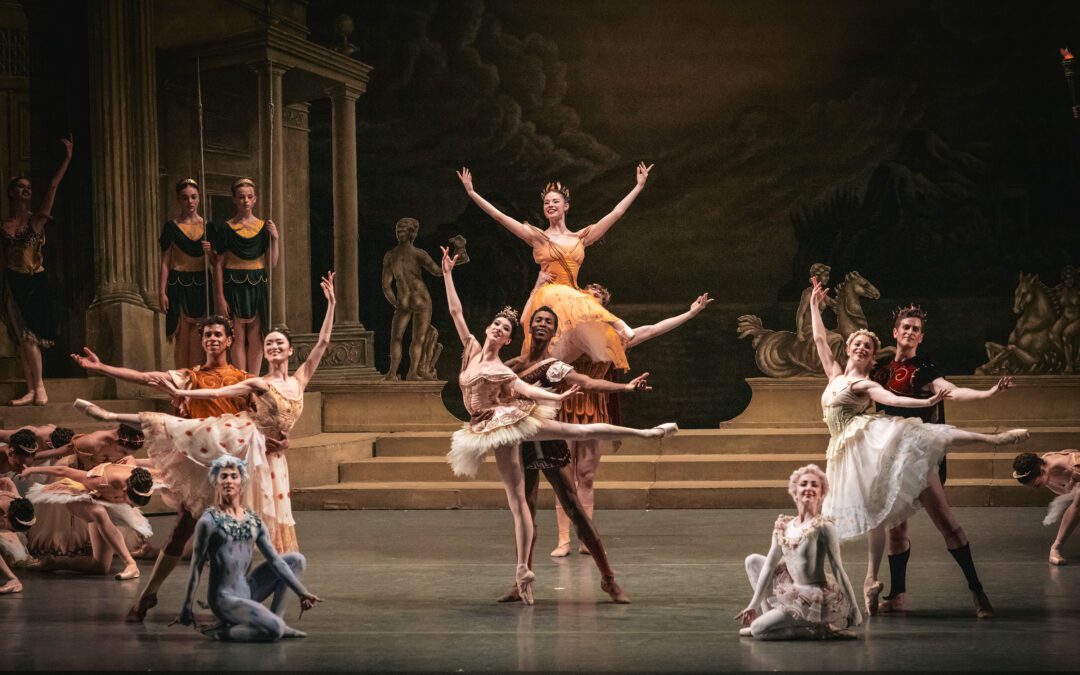
I pounce on every opportunity to see Frederick Ashton’s Sylvia. Indeed, the choreography — set to Léo Delibes’s wondrous score — is simply glorious, a decadent explosion of visually dazzling shapes and patterns. Despite the complexity of the steps and the muddled Ancient Greece-set storyline, Ashton’s obsessive attention to pronounced lines and sublime stage tableaus is paramount. Once again, at the Friday matinee I attended, the wonderful Catherine Hurlin headlined the fast-moving ballet in the technically challenging title role of a nymph whose headstrong nature is the catalyst for the eventful plot (Ashton originally designed the role in 1952 for legendary Royal Ballet prima ballerina Margot Fonteyn). The busy principal met these choreographic demands head on with impressive attack and rigor. Additionally, she registered her acting at just the right level of dramatic heat to bring some semblance of serious gravitas to the otherwise ridiculous plot. As Orion, soloist Jose Sebastian was also excellent, his dark features and stylish physicality lending itself beautifully to the role of the evil hunter who falls in love with Sylvia and abducts her to his Persian-themed “man cave” (one of the more ludicrous scenes in the ballet). Principal Joo Won Ahn danced with an airy elegance that seemed almost dreamlike in the role of Aminta, the shepherd who ultimately wins Sylvia’s love. As Eros — the god of love who ushers the story along — rising star Takumi Miyake was breathtaking throughout, dancing with a virtuosic flair that really stood out (see my rave about him in my impressions of Swan Lake below). Indeed, with the exception of Jake Roxander, no one in the company currently dances with as much natural athletic ability and concerted focus on style as Miyake does. And finally as the goddess Diana, soloist Sierra Armstrong was an appropriately regal and commanding stage presence in her late-in-the-ballet appearance.
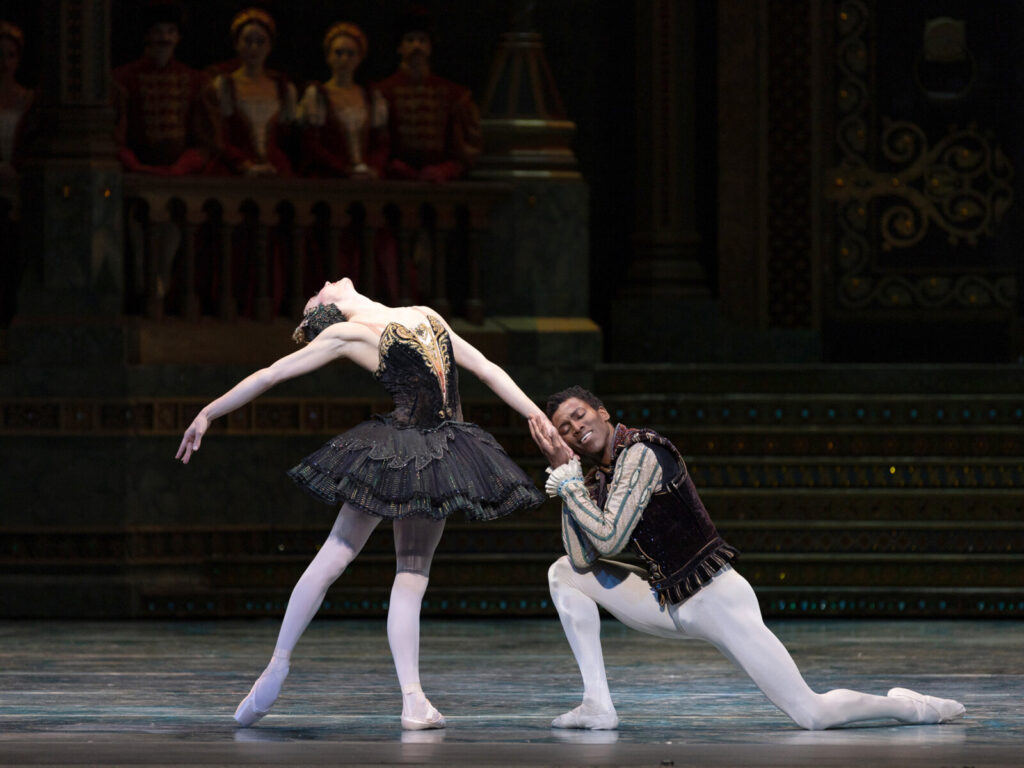
Returning to close out Ballet Theatre’s 2026 summer season at the Metropolitan Opera House is Kevin McKenzie’s traditional, if somewhat bland production of Swan Lake. At the performance I attended, the beloved story ballet was led by a pair of veteran company principals, Christine Shevchenko in the coveted dual Odette/Odile role(s) and Calvin Royal III as her Prince Siegfried. Overall, the performance was very well-balanced across the board. Always a reliable technician, Shevhenko as of late has developed a keen sense of dramatic intent (you must see her in Onegin). She’s also more willing to let herself be carried away by the music and the heat of the moment, which was evident in both her iconic set pieces, resulting in far more organic character-building than I’ve seen from her in the past. In Act II, her Odette was a delight — her balances and flexibility had an achingly lilting quality, and her overall choreographic phrasing and musicality were instinctually in tune with Tchaikovsky’s famous ballet score. In Act III, she used her gorgeously proportioned body and innately striking presence to take seductive command of the stage with a cool elegance that sent both chill and excitement into the air. As her other half, Royal was more than serviceable. With his long lean lines and naturally princely demeanor, he was an ideal physical match for Shevchenko. But perhaps more importantly, their chemistry — their close friendship as dancers, really — was palpable. The peasant pas de trois was danced by Takumi Miyake, Léa Fleytoux, and Yoon Jung Seo. Miyake and Fleytoux were technically superior, although Seo landed a tad on the tentative side. As mentioned, Miyake was simply remarkable, showing off his impossibly high and hanging leaps, clearly placed lines, and refined presentation. He was the true star of Act I. As Rothbart in Act III, soloist Jose Sebastian brought uncommon flair and drama to a solo that once stopped the show; I’m hopeful that Sebastian is inspiring a return to that trend.
HIGHLY RECOMMENDED
AMERICAN BALLET THEATRE
Dance
Metropolitan Opera House
Running time varies by production
ABT’s 2026 Summer Season concludes on July 18
 Copyright © 2026
Leave a Reply