
VIEWPOINTS – Tapping into the universality of domestic discord: Jeena Yi’s JESA and James Caverly & Andrew Morrill’s TRASH
- By drediman
- March 27, 2026
- No Comments
American drama isn’t a stranger to depicting domestic discord, which can be found in many of the works of such playwrights as Eugene O’Neill, Arthur Miller, and Edward Albee. Currently Off-Broadway, a new crop of theater-makers are putting their own spin on the domestic drama, filtering them through fascinating new lenses and, in the process, tapping into the universality of domestic strife.
JESA
Ma-Yi Theater Company at The Public Theater
Through April 12
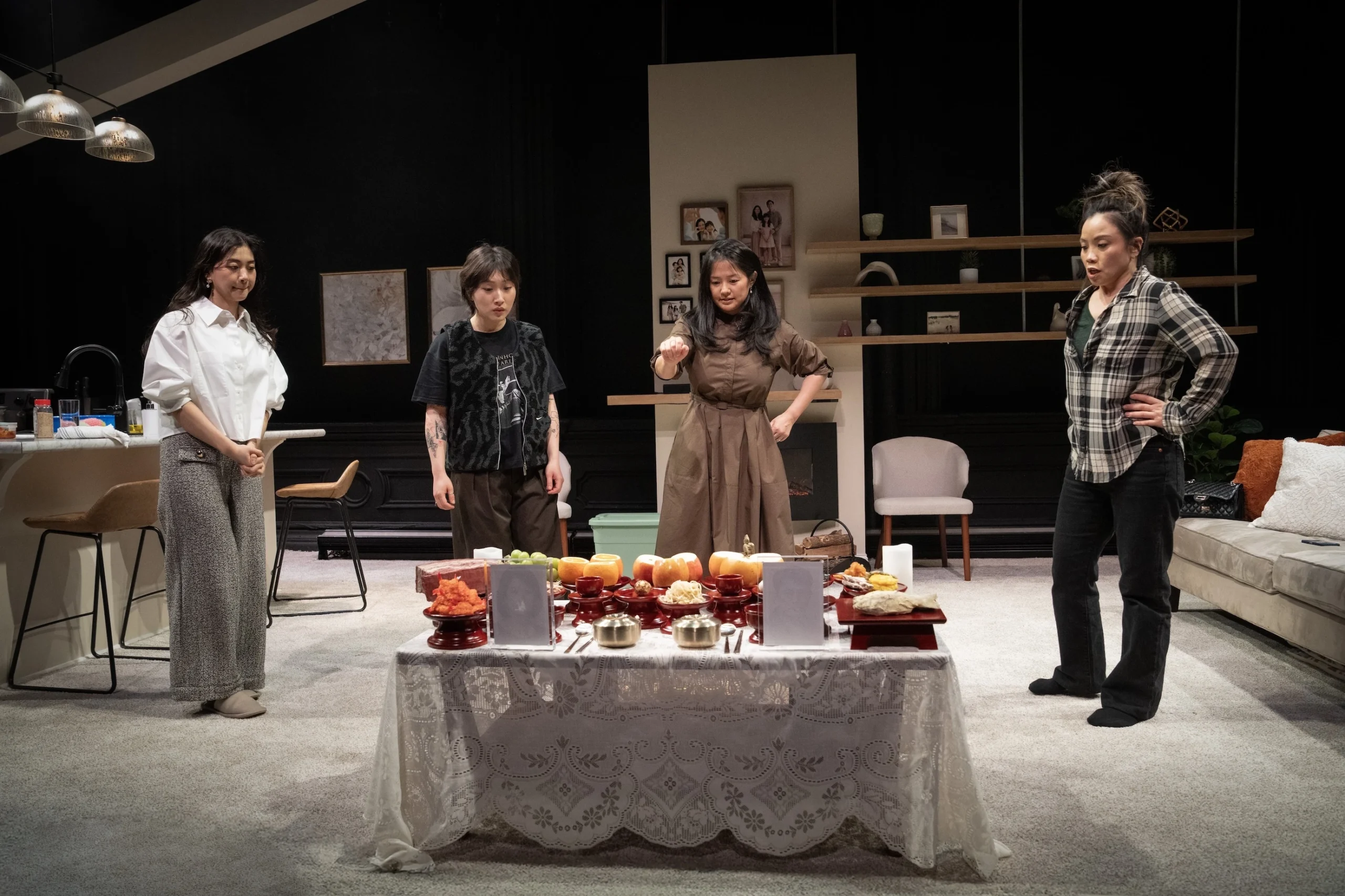
Now on the boards, you’ll find Ma-Yi Theater Company’s production of Jesa (RECOMMENDED) by Jeena Yi at the Public Theater (where Ma-Yi is currently the company in residence). In short, the new play tells the story of four adult Korean-American sisters — increasingly estranged — who come together in one of the sibling’s generic Orange County home to perform their divisive father’s Jesa, a traditional Korean ritual that honors deceased forebears. What’s clear from the very beginning is how different each sister is from one another in terms of life philosophies. What they have in common (with the exception of perhaps one of them) is some serious anger management issues. Indeed, the things that transpire between them over the course of the evening is not for the faint of heart — what starts off as a touch of bickering here and there gradually and eventually escalates into all-out shouting matches and even hand-to-hand combat. At a certain point, the elevated tensions of the sibling rivalries plateau, resulting somewhat in a lull in the play despite Yi’s caustic, high octane kitchen sink dialogue, which calls to mind a sort of Korean-American version of Tracy Letts’ August: Osage County and Branden Jacobs-Jenkins’ Appropriate. Thankfully, Jesa caps off in gripping manner, leaning in on the ghost story aspects of the play. Yi effectively explores themes of inherited and inter-generational trauma and the instinctual coping mechanisms we use to keep ourselves from psychological and emotional harm. Director Mei Ann Teo’s production does well to combine naturalistic staging with touches of the supernatural, and she elicits some excellent performances from her cast. Indeed, her quartet of fine actresses — Laura Sohn, Christine Heesun Hwang, Shannon Tyo, and Tina Chilip — carve out defined, strongly-etched portrayals of strong yet damaged women that pop off the stage. Tyo in particular gives a chilling portrayal of a delusional woman in deep denial about the realities of her life.
TRASH
Out of the Box Theatrics at PAC NYC
Through March 28
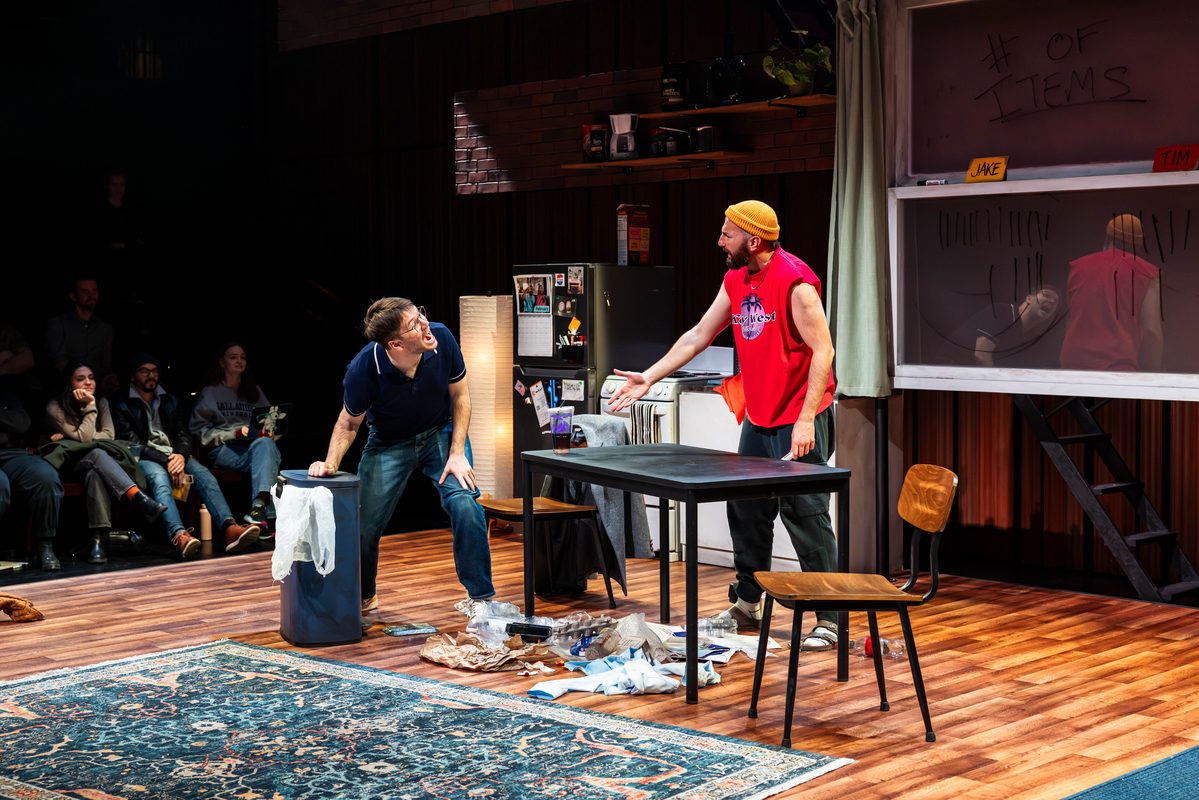
Closing this coming weekend is Out of the Box Theatrics’ production of Trash (RECOMMENDED), which can currently be seen at the Perelman Performing Arts Center (otherwise referred to simply as PAC NYC). In essence, James Caverly and Andrew Morrill’s new play chronicles the relationship between two deaf roommates — whom Caverly and Morrill portray — particularly their struggles navigating their seemingly irreconcilable differences in a world that revolves around the hearing. Despite being performed almost completely in ASL (American Sign Language), the play is ingeniously and tantalizingly accessible to all audiences (no spoilers as to how this is accomplished, except that it involves a jukebox as a character) yet uncompromising in its messaging. Indeed, as a theatrical act of empathy that defiantly reaches across barriers, the play is a significant as an illuminating, honest depiction of the deaf community and the realities it faces for those who are not regularly asked to step into the shoes of those for whom society has not been designed. It’s also wonderfully entertaining and structurally ambitious, jumping back and forth between time and communication methods, all the while putting a very human face on the lives of the deaf. That it all hangs together as well as it does is a testament to the careful attention that director Nathaniel P. Claridad has lavished on his multimedia production, potently realizing Caverly and Morrill’s nuanced vision and intentions. Despite some tonal issues here and there — the portrayal of one of the roommate’s love interests comes across as excessively boisterous — Trash is never less than smart, very funny, and ultimately profound. There are some elements of audience interaction that introduce an element of variety to the theatrical experience, even affecting how the narrative unfolds at one key moment. At the center of it all are Caverly and Morrill’s lived-in performances that speak volumes.
 Copyright © 2026
Leave a Reply