
VIEWPOINTS – In the 2026 edition of The Joyce’s BALLET FESTIVAL, Misty Copeland curates bills that transcend racial and stylistic barriers
- By drediman
- August 13, 2026
- No Comments
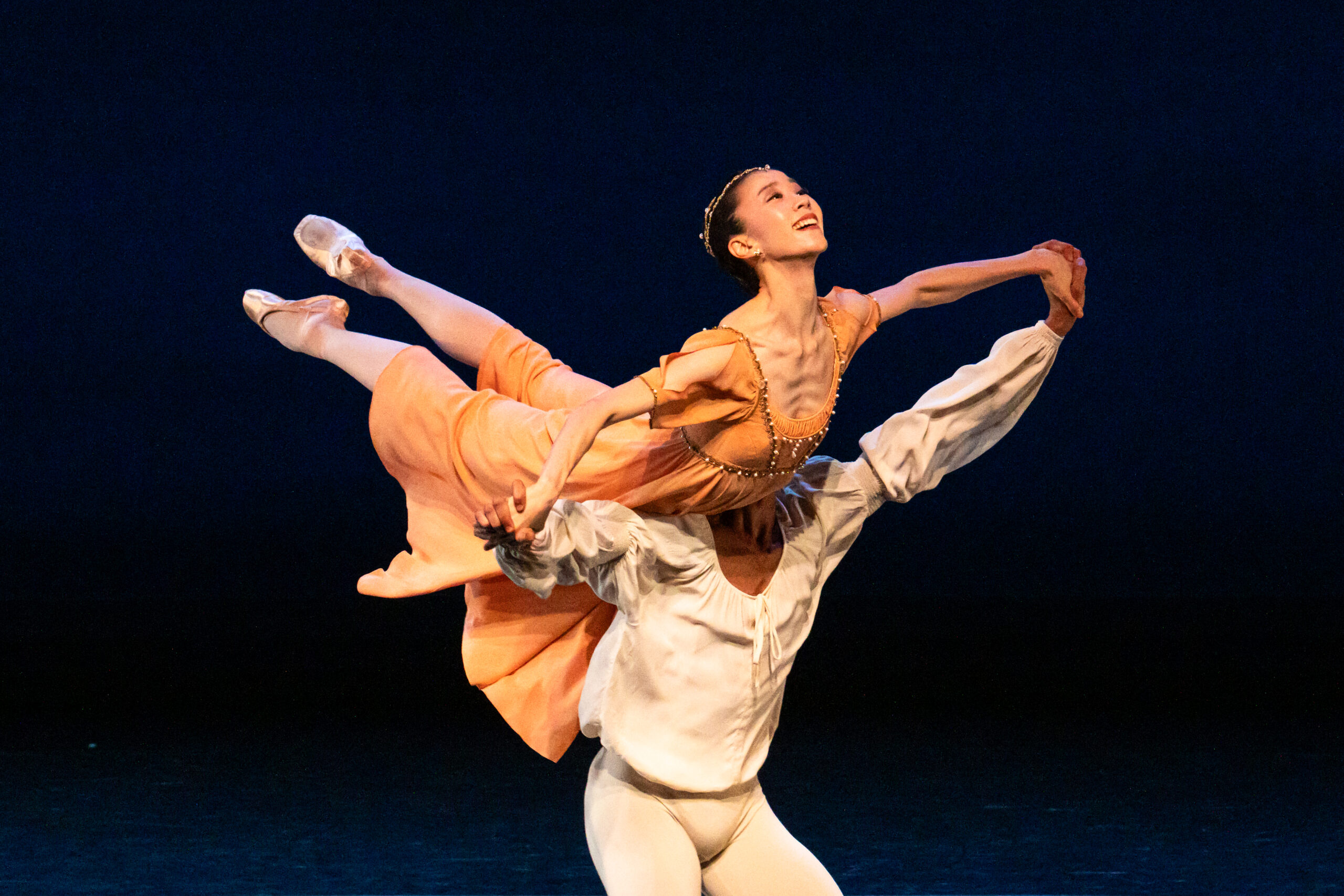
Currently down in Chelsea, you’ll find the 2026 edition The Joyce Theater’s annual Ballet Festival. This summer’s two week iteration has been curated by former American Ballet Theatre principal and cultural icon Misty Copeland with an emphasis on transcending racial and stylistic barriers. Prominently featuring dancers of color from New York City Ballet, American Ballet Theatre, Houston Ballet, Alonzo King LINES Ballet, Dance Theatre of Harlem, Complexions, and Paris Opera Ballet, the festival’s two programs have been largely comprised of short works that collectively amount to an eclectic sampler, in essence a comprehensive overview of choreographic voices across classical ballet and contemporary dance.
Taylor Stanley appeared in solos in both programs, making a strong impression in each. In Week One, he was sleek and stylish in Kyle Abraham’s exciting 2018 Show Pony. He took on an entirely different aesthetic in Week Two, appearing in Andrea Miller’s Middle Length Poem. Created in 2017, the sculptural and atmospherically lit work takes inspiration from the butoh tradition in its depiction of a man in existential crisis. Only an artist as attuned to the human condition as Stanley could have given such an emotionally transparent, soul-baring performance. Altogether, a future segue to contemporary dance seems more than a promising next step for the beloved beloved City Ballet principal.
Flashier and more commercial solos were danced by Hubbard Street Dance’s Shota Miyoshi and Alonzo King LINES Ballet’s Babatunji, who appeared in Bob Fosse’s show-stopping Percussion IV and a soulful “Lift Every Voice and Sing” excerpt from Deep River, respectively. Although the pieces were brief, both Miyoshi and Babatunji are dynamic and expressive dancers who made indelible impressions with their showmanship and commitment to the material.
Both programs included Dwight Rhoden’s rousing 1995 pas de deux Ave Maria. Strikingly contrasting Giulia Caccini’s prayerful score, Rhoden’s choreography is marked with defiant tension — even aggression — as if signifying the human anguish underlying hope. Week Two’s rendition was especially potent in the hands of a stunning ABT corps member, the strong and stylish Madison Brown. She’s certainly one to keep an eye on.
Paris Opera Ballet étoiles Guillaume Diop and Sae Eun Park — each the epitome of refinement, like the company they belong to — danced in an excerpt from Nureyev’s 1977 Romeo & Juliet and Thaïs from 1986, performing both pas deux with quiet passion and superb technique. Together, they created stunning tableaus, thanks largely to Diop’s impressive partnering abilities and Park’s unforced lyricism. The festival’s other pas de deux — Ingrid Silva’s Interactions and an excerpt from Houston Thomas’s Young Lovers, both created in 2025 — were attractive but ultimately forgettable.
Each program included notable revivals — José Limón’s Sonata for Two Cellos from 1961 and an excerpt from John Taras’s 1982 Firebird. The former featured a terrifically present and assertive performance, to live music, by City Ballet soloist Victor Abreu. The latter — culled from a welcome Carribean-inspired take on the classic one act ballet (which was danced in its entirety earlier this year at New York City Center) — was danced with crisp musicality and otherworldly demeanor by two exotically-costumed members Dance Theatre of Harlem, Derek Brockington and the great Alexandra Hutchinson in the title role.
Also worth mentioning is Stanton Welch AM’s brief but elegant Clear from 2001. As danced with strength and patience, as well as flashes of flourish, by a trio of dancers from Houston Ballet — Kellen Hornbuckle, Nasir Muhammad, and Harper Watters — the choreographer’s focus on simplicity shined through, infusing work’s Baroque sensibility with a straightforward modernity that felt both timeless and authentic.
Lastly, we have a trio of new works that range from evocative to flimsy. The most memorable of the bunch was James Whiteside’s Mantle. Soaked in romancticism, the dreamlike work calls to mind a grimly pungent version of Balanchine’s Apollo, wherein three muse-types activate a scenario of rapturous awakening with a male dancer. It’s one of the few pieces in the festival that had a strong semblance of a dramatic arc. Throughout, the dancing was lyrical yet pointed, complete with defined shapes that captured the imagination. Particularly affecting were the newly promoted principals SunMi Park and Jarod Curley.
The other two new works — both firmly contemporary, bordering on commercial dance even — were not as substantial. Alisha Walker’s Rising was a crowd-pleasing vehicle for five strong female dancers if little else, while Ilo’s darkly glittering afrofuturistic Melt — featuring loosely synchronized steps set to sensuous beats, with slight modulations that drive architecture of dance — eventually succumbed to pointless repetition.
RECOMMENDED
BALLET FESTIVAL (CURATED BY MISTY COPELAND)
Dance
The Joyce Theater
Approximately 100 minutes per program (including intermission)
Through August 16
 Copyright © 2026
Leave a Reply