
VIEWPOINTS – AMERICAN BALLET THEATRE concludes a somewhat truncated spring season anchored by a pair of story ballets
- By drediman
- March 24, 2026
- No Comments
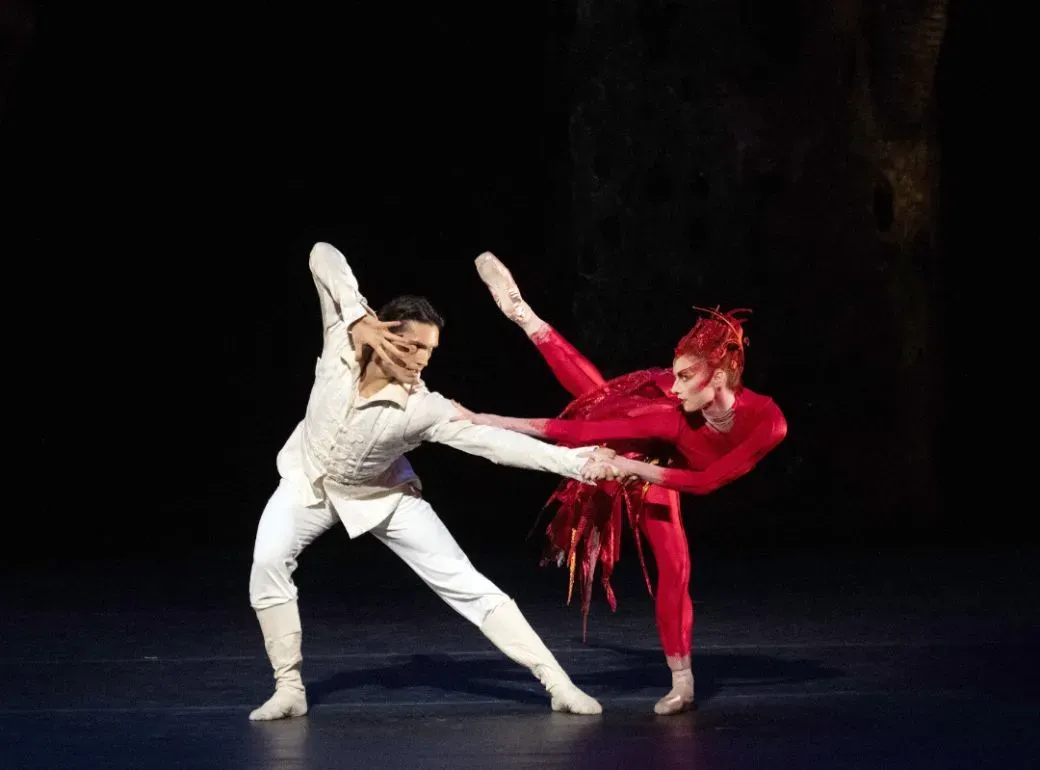
Anchored by a pair of story ballets, American Ballet concluded its somewhat truncated spring season this past weekend at the David H. Koch Theater. I was able to attend two programs, the first of which was a mixed bill that included works by George Balanchine and Alexei Ratmasnky. The evening commenced with Balanchine’s Mozartiana, headlined by the ethereal Chloe Misseldine in her premiere appearance in the work. It’s interesting to compare Ballet Theatre’s version to the one danced by New York City Ballet on the very same stage. As performed by Misseldine and her fellow dancers, the ballet seemed to take its time, their dancing floating across the stage with lackadaisical, pastoral charm — which some may misconstrue as a lack of intent, especially when compared to City Ballet. Indeed, there’s something enchanting about the approach Misseldine takes, as if she’s inspired only in the moment when choosing how to respond to the music, yet invariably hitting gorgeous extended positions and executing delicate turns. The male lead was danced by lively corps member Michael de la Nuez, who also made his debut in the ballet, admirably. Then came a Neo, a pas de deux choreographed by Ratmansky in 2021 during the global pandemic, namely for company veterans James Whiteside and Isabella Boylston. Set to a pungent composition played on a traditional Japanese string instrument (performed live by Sumie Kaneko), the piece is short and difficult — breathlessly athletic and rhythmically intense. Whiteside returned to the piece and was joined by Christine Shevchenko — her dancing throwing off shades of (the expecting) Boylston in terms of attitude and musicality — both of whom are dancing with more authority than ever. The program concluded with Ratmansky’s 2012 Firebird, which fit in snugly on the Koch’s stage (the piece was originally performed at the much larger Metropolitan Opera House). Thankfully, this is a dance-heavy version of the ballet that takes liberties with the creaky narrative, eschewing much of the posing and miming of other versions of the ballet I’ve seen. The title role was played with precision and abandon by the terrific Catherine Hurlin, who was nicely partnered by the robust Daniel Carmago. Also performing were Cory Stearns as the villainous Kaschei and SunMi Park as the Maiden — both danced wonderfully without resorting to histrionics.
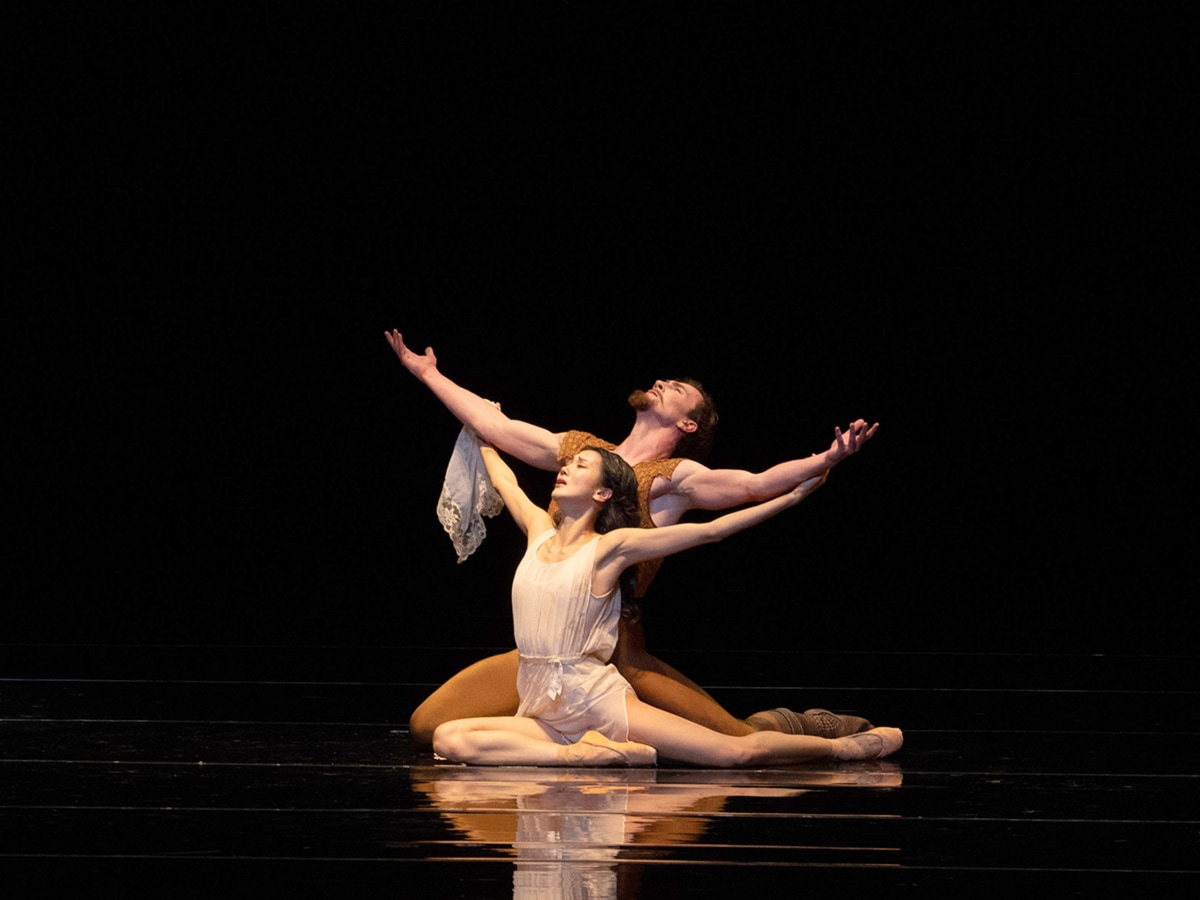
The other Ballet Theatre program I attended this spring season at the Koch Theater was the return of Law Lubavitch’s Othello: A Dance in Three Acts. First performed nearly thirty years ago in 1997 at the Metropolitan Opera House as a showcase for Ballet Theater’s historically outstanding male dancers, the piece has returned in a sleeker version, which now features the heavy incorporation of video projections into the scenic design by George Tsypin (the stylishly suggestive period costumes are by Ann Hould-Ward). Set to a turbulent score by Elliot Goldenthal, the full length ballet is, intelligently, more a psychological distillation of Othello than a blow-by-blow ballet retelling of Shakespeare’s famous tragedy. Indeed, Lubavitch’s movements for the work primarily reflect the characters’ emotional and mental states rather than merely being a conduit for beauty, line, and choreographic composition (although there is some of that too), thereby doing away with variation sequences and other classical ballet tropes that often times stop the dramatic flow of story ballets dead in their tracks. Unfortunately, however, a certain choreographic sameness eventually creeps in, particularly in the third act (at nearly two and a half hours, this Othello is not a short evening at the ballet). Interestingly, the choreographer’s focus on Othello’s jealousy rather than the racism he faces also means that male dancers other than Black ones are able to take on the title role, which was the case at the performance I attended. Joseph Markey was a solid as Othello, carefully crafting a portrayal that convincingly tracked the character’s deteriorating psychological state as he succumbs increasingly to torturous thoughts of the infidelity of his wife Desdemona. His dancing was powerful and full of detail throughout, as was Cory Stearns’ as the antagonist Iago. As always the reliably princely dancer, Stearns here gave one of his most dramatically potent performances, fully embracing the knotted evil and darkness within the notorious villain (sadly, he is slated to retire from the company in June). He was paired with the Emilia of Christine Shevchenko, who as I’ve mentioned, is dancing with the command and maturity of a true principal dancer. As Desdemona, SunMi Park was lovely, as usual, giving the tragic heroine a heartbreaking yet unfussy end. Perhaps dancing with the most force and style of all were Andrew Robare and Léa Fleytoux in the lively supporting roles of Cassio and Bianca, respectively.
RECOMMENDED
AMERICAN BALLET THEATRE
Dance
David H. Koch Theater
Approximately 2 hours
Closed
 Copyright © 2026
Leave a Reply