
VIEWPOINTS – Eclectic symphonic forms: The blockbuster return of Glenn Branca’s HALLUCINATION CITY, Nézet-Séguin’s completist quest continues with MAHLER 4
- By drediman
- July 13, 2026
- No Comments
Even in the midst of summer, New York music lovers have been able to take in a slew of memorable and eclectic performances in the city’s major concert halls. Read on below for two such symphonic experiences.
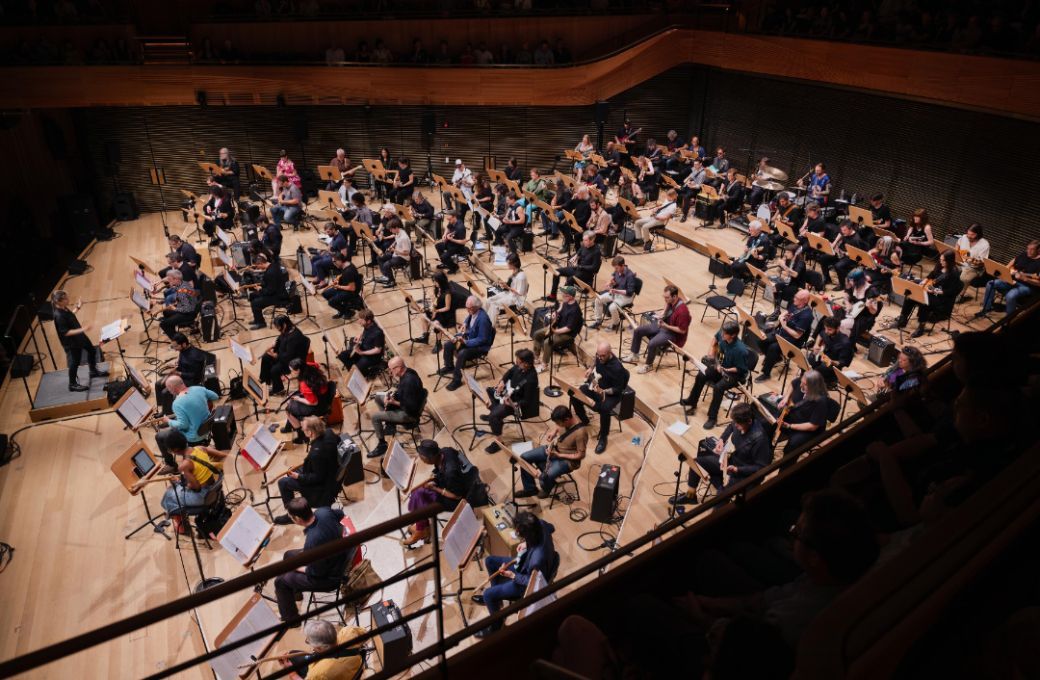
GLENN BRANCA’S SYMPHONY NO. 13 (“HALLUCINATION CITY”)
David Geffen Hall
One-night-only
Despite the ongoing series of concerts being presented by the Festival Orchestra of Lincoln Center, perhaps the blockbuster symphonic offering of Lincoln Center’s expansive 2026 Summer for the City slate was the one-night-only performance of Glenn Branca’s monumental, earthshaking Symphony No. 13 (Hallucination City) at David Geffen Hall (HIGHLY RECOMMENDED) (as a prelude to the evening, the program began with a rare performance of Yoko Ono’s shamelessly sensual Pelvic Noise, which was reconstructed based on notes left behind by Ono)). Conducted by the late Branca’s wife and frequent collaborator Reg Bloor, the event was a sonic experience unlike any other I had experienced in terms of its maximalism, both in scale and volume. Experimental and formally audacious, the endeavor requires a whopping 101 musicians — 80 electric guitars, 20 electric basses, and one drummer. Given the massive and nearly prohibitive resources needed to pull off the singular symphony, the occasion to witness the 70-minute piece performed live doesn’t come around very often (it was first performed in June 2001 at the base of former site of the World Trade Center in Lower Manhattan). Spread across four distinct movements (entitled March, Chant, Drive, and Vengeance), the overarching vibe was one of relentless and assaultive aggression, which unsurprisingly resulted in a number of walkouts throughout the performance. But those who stuck it out — with the helpful aid of ear plugs — and surrendered themselves to the enveloping sonic tidal wave were privy to a transcendent aural (and physical) experience. In person, the vibrations of Branca’s score sent visceral shocks through the bodies of listeners as it moved beyond rock and roll vernacular to a realm of spiritual grandeur, encouraging those in the room to process time and sound in new ways. Bloor led the piece undaunted, balancing the work’s intrinsic rage and pandemonium with driving and ultimately hypnotic rhythmic flow. She literally collapsed at the conclusion of the ferocious final Vengeance movement and arose to thunderous ovations.
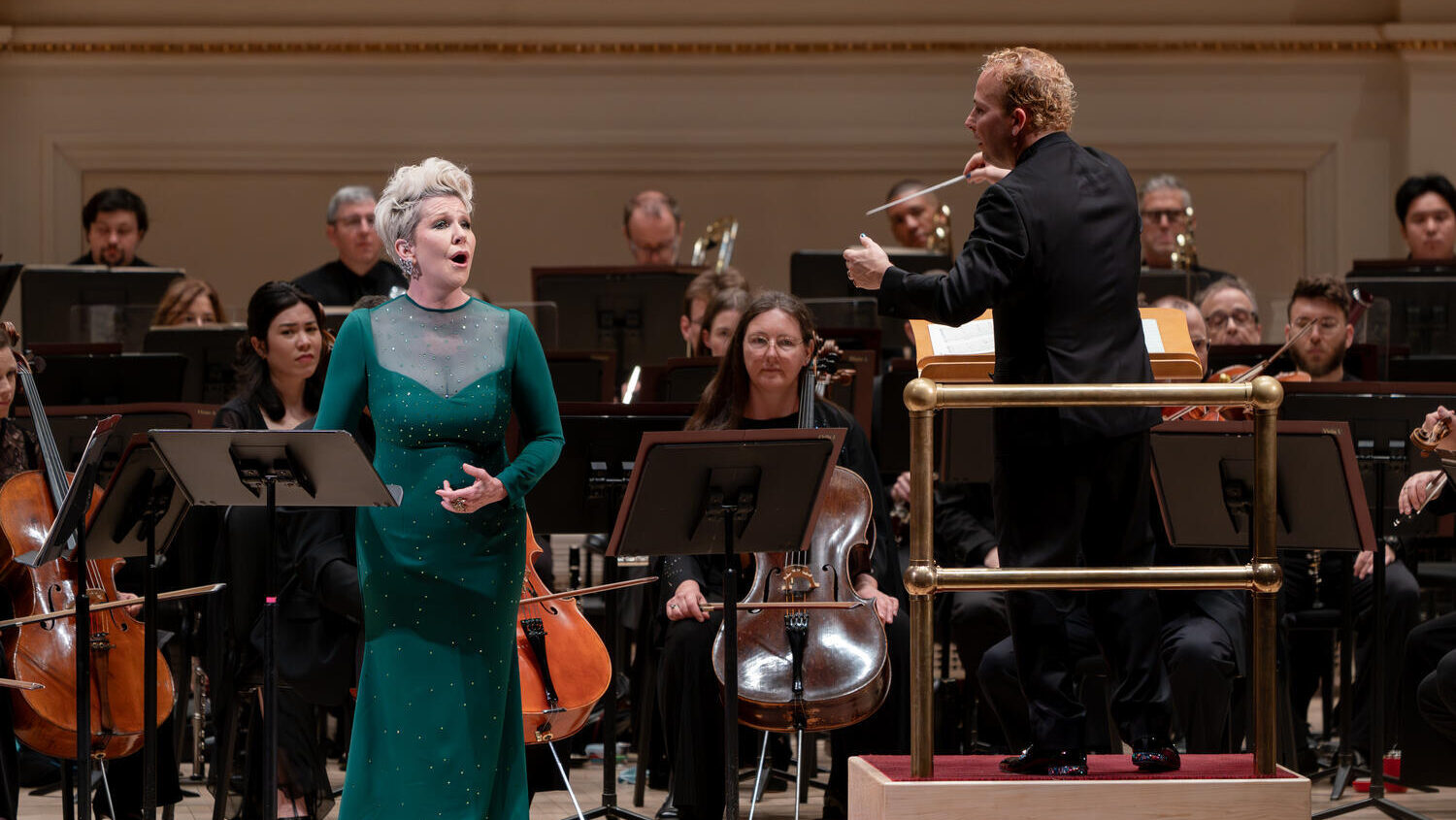
THE MET ORCHESTRA
Carnegie Hall
One-night-only
Another memorable one-night-only concert this summer came courtesy of maestro Yannick Nézet-Séguin and his Met Orchestra at Carnegie Hall (RECOMMENDED). Coming off of its lengthy 2025/2026 opera season, the mighty ensemble performed a pair of bespoke concerts at the famed midtown concert hall, one themed to Anton Bruckner (namely the composer’s Eighth Symphony) and the other to Gustav Mahler (headlined by the Fourth Symphony). To set the mood in the latter — I unfortunately missed the Bruckner concert — the program commenced with a performance of the great Kaija Saariaho’s Lumière et pesanteur. A glimmering if slight composition, the short, delicate piece was nonetheless a potent reminder of the late composer’s uncanny ability to evoke the natural world. Then came two Mahler works, beginning with Rückert-Lieder, which the composer set to a quintet poems by Friedrich Rückert. The piece was sung by the beloved American mezzo-soprano Joyce DiDonato, who interpreted the songs with sensitivity and introspective womanly intensity. Indeed, DiDonato — whose lustrous voice is currently in terrific shape — understands the theatrical potency of vocal music, which was evident in the confessional drama at play in her performance, during which her meticulous phrasing and instinctual ability to compellingly convey inner life were on full display. After the intermission came Mahler’s gentle and serene Symphony No. 4, which the composer created as a musical depiction of a child’s vision of what heaven. The performance brought back DiDonato, whose performance boldly contrasted her turn in Rückert-Lieder. For the Fourth, the opera star adopted a disarming childlike purity to her singing, thankfully without sacrificing her innate gravitas. Suffice to say, her vocal contribution brought the symphony to an elegant close, even if at times the orchestral playing by the Met forces seemed a tad on the lax side, despite the appealing transparency of the conducting by Nézet-Séguin (who is currently on an ambitious quest to conduct the complete cycle of Mahler symphonies).
 Copyright © 2026
Leave a Reply