
VIEWPOINTS – American Ballet Theatre commences its 2026 Summer Season at The Metropolitan Opera with revivals of SWAN LAKE and ONEGIN
- By drediman
- June 25, 2026
- No Comments
You know that summer is upon us when American Ballet Theatre is in performances at The Metropolitan Opera House. For its five-week 2026 Summer Season, the revered classical ballet company has assembled an appealing collection of four sturdy full length story ballets that can be counted upon to deliver. Here are my thoughts on the season opener Swan Lake and the subsequent mounting of Onegin this week (the season continues with Susan Jaffe and Susan Jones’s new staging of Don Quixote next week, then its Sir Frederick Ashton’s far underrated Sylvia, followed by the return of Kevin McKenzie’s Swan Lake to close things out).
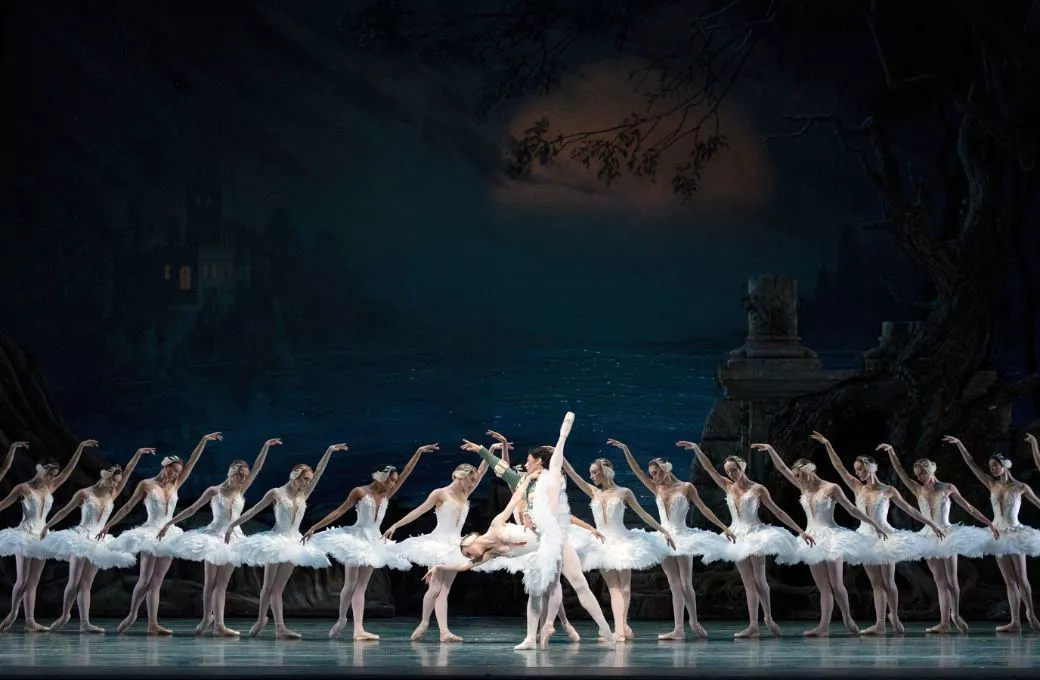
This summer, American Ballet Theatre has chosen to launch into its season at The Metropolitan Opera House with its well-worn production of Swan Lake (HIGHLY RECOMMENDED). Since premiering in 1988, Kevin McKenzie’s staging has been steadily performed and has since become one of the company’s biggest ticket sellers. Although the production could use a touch-up, it continues to be a compellingly traditional vision of the beloved classic ballet, providing a nice contrast to Peter Martins’ more modernist, dance-driven version for New York City Ballet just a few steps away. Last Wednesday matinee, the performance was led by principal Skylar Brandt, a compact but dynamic dancer who excelled technically and dramatically in the central dual roles of Odette/Odile. Physically, Brandt is not an obvious choice for the coveted role, but she came to it with attack and intent, rising to the occasion with a performance that rippled with confidence, incisive musicality, and exquisitely self-aware extensions and positioning. She’s also an intelligent actress; her large, expressive eyes alone conveyed a passionate inner life. As Prince Siegfried, longtime principal Herman Cornejo proved an utterly ideal match, both in stature and style. In recent years, he’s traded in his trademark explosiveness for a thoughtfulness that translates well to the introspective role. More importantly, he’s a magnificent partner, and his moments with Brandt, particularly the lifts and turns, were simply thrilling to behold. Merely serviceable was Andrii Ishchuk as as the human incarnation of the evil sorcerer von Rothbart in the second act ballroom scene (I do miss the days when the likes of Marcelo Gomes and David Hallberg all but chewed the scenery with their bravado and brash attitude). The first act saw a really wonderful peasant pas de trois, featuring soloist Jake Roxander, who nearly stole the show with his astonishing control and explosiveness, as well as his expansive musicality. He was joined, nearly just as wonderfully by Léa Fleytoux and Yoon Jung Seo, two dancers of personality and distinction. Throughout, the corps looked well-trained and ready to take on the Met season ahead of them. Overall, the performance was a beautifully balanced performance of Swan Lake.
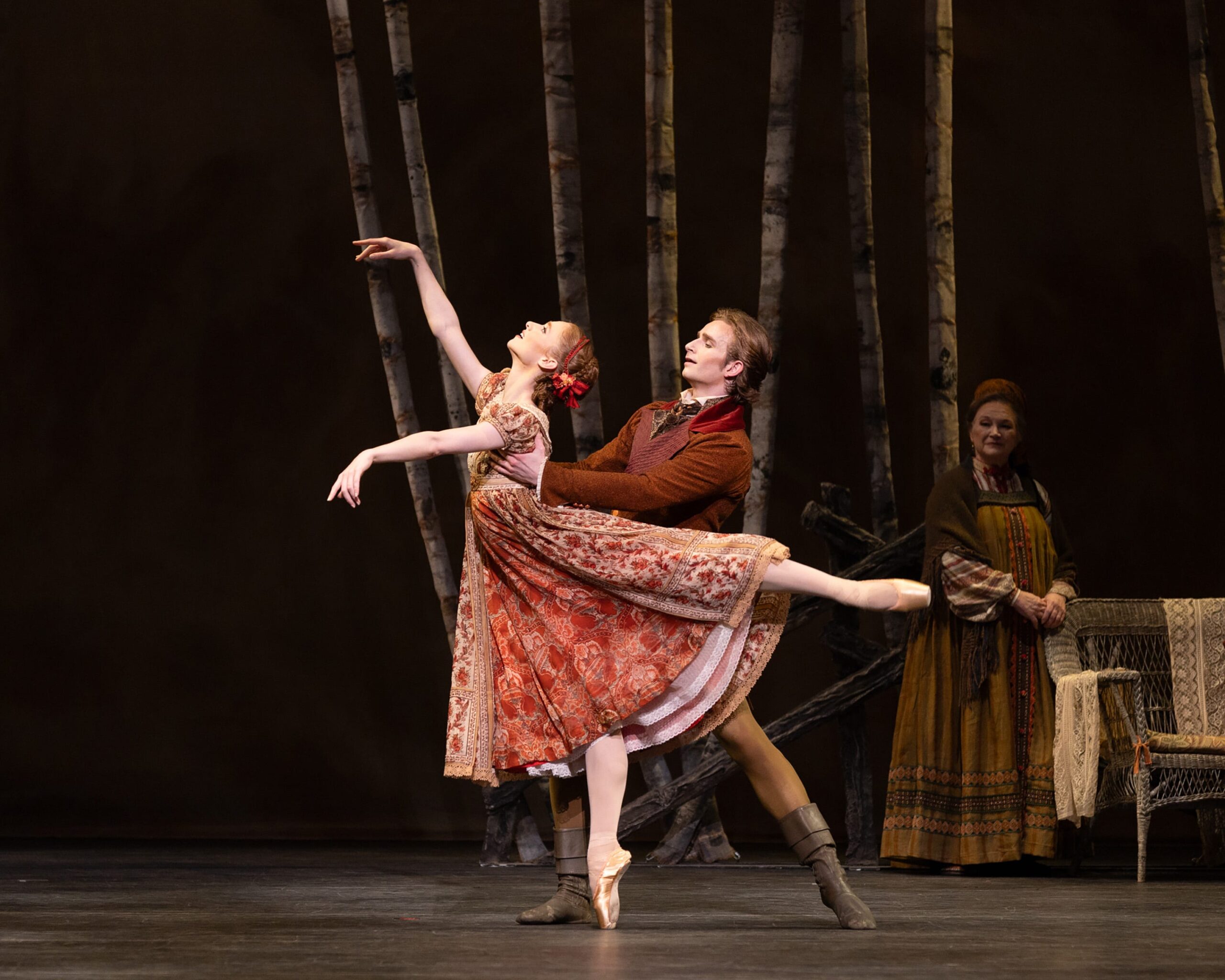
Continuing the summer season this week was the welcome return of John Cranko’s Onegin (RECOMMENDED). First staged in 1965 for the Stuttgart Ballet, the production is a reliably dramatic and efficiently plotted three-act story ballet based on Pushkin’s literary classic Eugene Onegin. Although the score is essentially an amalgamation of a number of musical compositions by Tchaikovsky — expertly arranged for the ballet by Kurt-Heinz Stolze — it includes none of the memorable music written by the composer for his operatic adaptation of the seminal Russian novel, despite closely tracking its plot points scene-by-scene (perhaps to ensure that the ballet retains an identity all its own without sacrificing any of its “Russian-ness”?). As with last week’s Swan Lake performance, this Wednesday matinee performance was also wonderfully balanced, fleshing out the high drama of Cranko’s ballet with affecting sensitivity. Principals Aran Bell and Devon Teuscher were up to the task in the central roles of Onegin and Tatiana, respectively. In the title role, Bell exuded a budding maturity that synched naturally with the brooding title character, whose stoicism and egotism drives the story as much as Tatiana’s burning passion. Teuscher’s pensive, introverted Tatiana knows who she is from the beginning, which makes Onegin’s repeated rebuttal of her love that much more heartbreaking. Both possess fantastic technique and deployed purposeful dramatic phrasing in their dancing, ably unlocking the drama in Cranko’s underlined choreography, as mentioned. As Onegin’s friend Lensky, veteran principal Calvin Royal III was immensely likable. And as with Bell and Teuscher, he let his characterization of Lensky lead and inform his dancing. As his love interest Olga — Tatiana’s younger sister — fellow principal Catherine was perhaps the performance’s secret weapon. As always, Hurlin was a bright stage presence, and her fresh, sprightly dancing (that gorgeous technique and attack!) and spot-on acting was just the right contrast to the psychological moodiness and pungent regretfulness of unrequited love that courses through the ballet. Indeed, this rendition of Onegin was truly dance theater.
 Copyright © 2026
Leave a Reply