
VIEWPOINTS – Fiercely feminist plays that still resonate more than 100 years onwards: Rediscovering Susan Glaspell’s THE VERGE and Cicely Hamilton’s PHYL
- By drediman
- November 10, 2026
- No Comments
This fall, I discovered a pair of all-but-lost plays that fiercely champion feminism through their tenacious central characters, two women who have vowed to live their lives uncompromisingly during a time in which doing so precariously risked their alienation from and the indignation of society. That these works continue to resonate more than 100 years onwards from their respective premieres is a testament to the staunch vision and enduring relevance of the women playwrights who penned them.
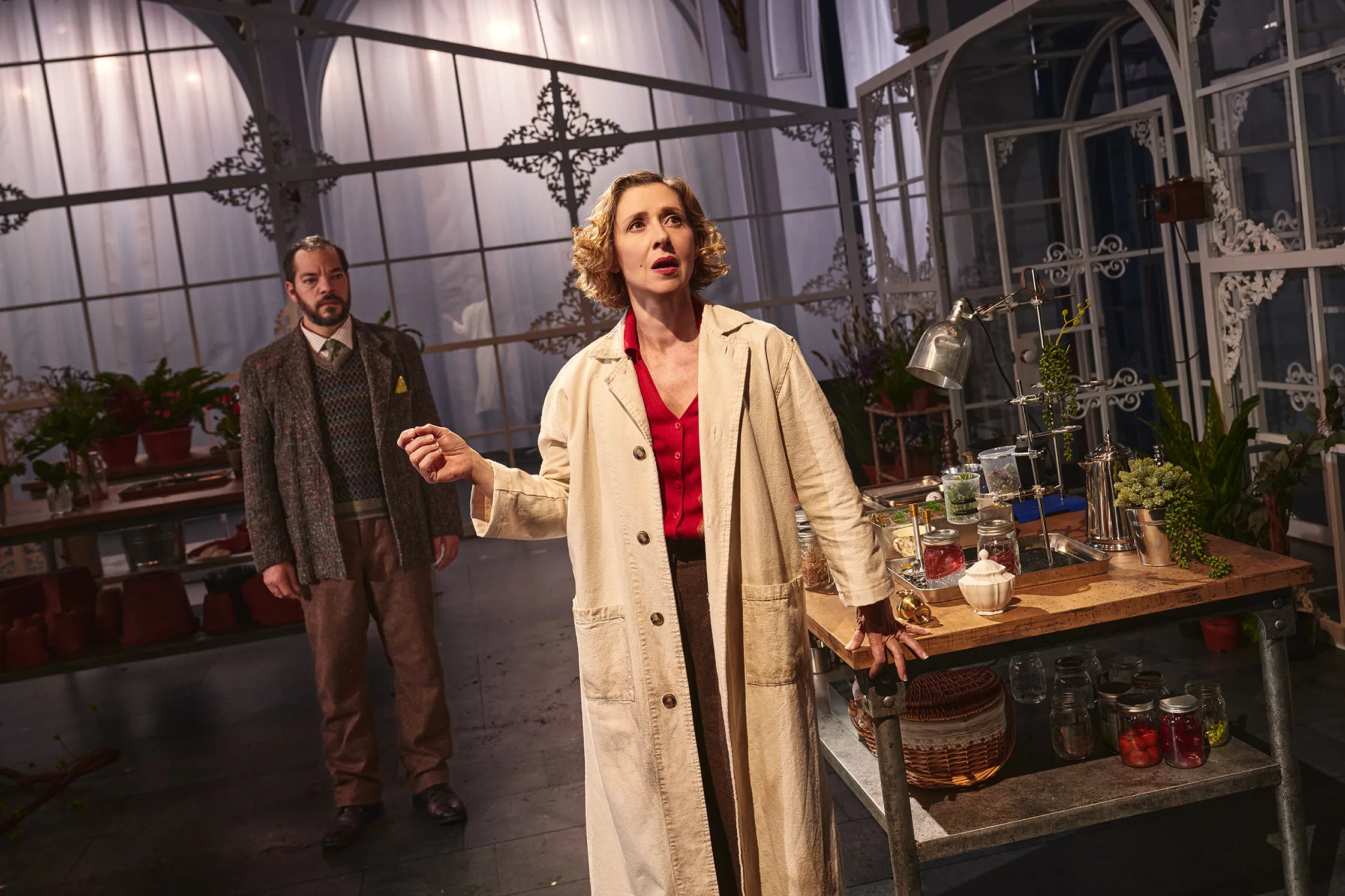
THE VERGE
Fiasco Theater at The Public Theater
Through November 29
Currently running Off-Broadway at The Public Theater, you’ll find Fiasco Theater’s production of The Verge (RECOMMENDED). Written by Pulitzer Prize-winner Susan Glaspell in 1921, the play remains a curiosity and a tough nut to crack due to its frustrated/frustrating heroine, weighty philosophical discourse, symbolism-heavy expressionism, and increasingly fractured dialogue. As the play opens, we meet Claire Archer, an upper middle class woman who has turned to botany to test her theories on the evolution of life and how it can break free into new forms. It soon becomes clear that she’s being pushed to the edge of her sanity, not only by neediness of the men in her life — literally named Tom, Dick, and Harry — but also the societal expectations of her as a woman and mother. In terms of her lovers, she has the most in common with Tom, an explorer who understands Claire’s motivations but is frightened of her voracious appetite for both life and destruction. As she retaliates against these external pressures through violence and isolation, it’s unclear whether she devolves into madness or transcends her human existence into something unexpected and unforeseen (the conclusion of the play is ambiguous as to what actually transpires). Suffice to say, The Verge is an utterly fascinating, intermittently vexing play that’s most notable for the portrait of the woman at its center. Thankfully, Claire is played with unrelenting commitment by Tony-winner Miriam Silverman, who fully embraces the character’s extremities and volatile vacillations between captivating and repulsiveness, even when language starts to fail/limit her. Alongside Rachel Crowl’s solo turn in Josep Maria Miró‘s The Nicest Body Ever Seen Around These Parts, Silverman’s performance is one of the bravest I’ve seen this fall. As directed by Jessie Austrian, the pacing is taken at a nice clip (after all, Fiasco has built a reputation for ensemble productions that thrive on madcap energy), which camouflages some of the play’s strange idiosyncrasies and drastic tonal shifts.
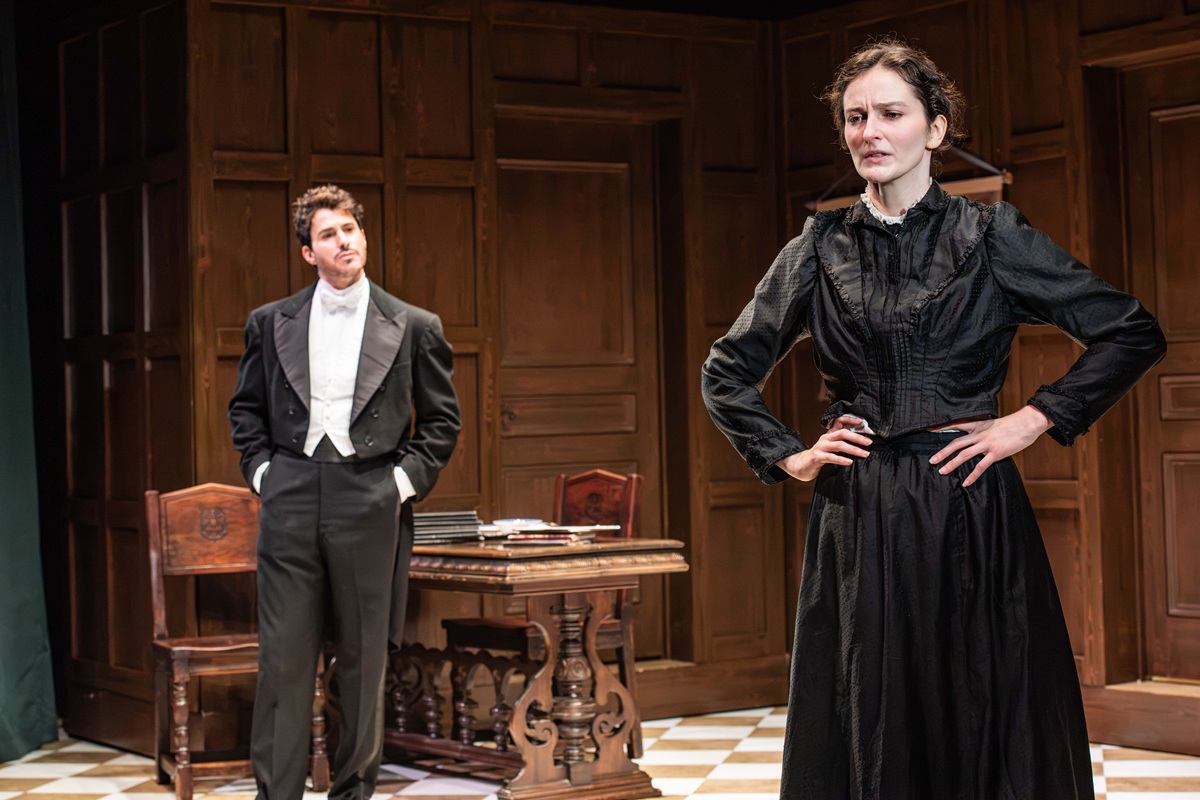
PHYL
Mint Theater Company at Theatre Row
Closed
In the past few weeks, I also had the chance to catch a rare revival Phyl by Cicely Hamilton at Theatre Row (RECOMMENDED) (note that the production’s limited run just recently concluded). Presented by Off-Broadway’s Mint Theater Company — a troupe that specializes in resuscitating lost plays of the past and thoughtfully “minting” them for contemporary audiences — this latest entry, written way back in 1913, was one of the company’s finest efforts to date. Indeed, the play itself was a marvelous curatorial choice for revival (with its continued relevance and tightly structured plotting), while the production boasted some splendid acting. In short, the piece tells the story of the titular Phyl, a young, unsatisfied governess who resolves to live for happiness — primarily via worldly pleasures — even if it means sacrificing her dignity and place of respect in society. As such, she chooses to run off, unmarried, to live decadently and freely with a rich bachelor, who ultimately falls in love with her. Although on paper simply another “Cinderella” story, the key difference here is the stubborn agency that Phyl insists on having every step of the way. Like Silverman, the central character of Phyl — another example of a woman who never opts for the easy way forward, albeit her stance is more sensibly argued than Claire in The Verge — was played with layered complexity by newcomer Lily Ganser. She’s a talent to certainly look out for in the future. The excellent performances didn’t end there. Jennifer Blood gave a deeply felt performance as Phyl’s hopelessly respectable older sister, who has been run ragged by the daily toils of an unforgiving office job (in particular, her philosophical face-off with Phyl in the second act was handled with the moving articulation). As the rich man who sweeps Phyl off her feet, Anthony Michael Martinez was amiable and perfectly charming. There were also two uncommonly fine child actresses — Charlotte Van Ledtje and Tessa Bilmes — who deliciously portrayed, with gleeful manipulation, bratty children opposite Ganser’s exasperated governess. As directed by Britt Berke, the production was nothing less than elegantly resourceful and well-paced, in line with most of Mint’s long catalog of past revivals.
 Copyright © 2026
Leave a Reply