
VIEWPOINTS – The battle of the Firebirds: DANCE THEATRE OF HARLEM packs them in, NEW YORK CITY BALLET’s spring season commences
- By drediman
- April 23, 2026
- No Comments
Over the course of a single week, I was able to take in two important versions of Firebird, courtesy of Dance Theatre of Harlem and New York City Ballet. Set to a score by Igor Stravinsky — the composer’s first for ballet, commissioned in 1910 by Serge Diaghilev for his Ballet Russes (original choreography by Michel Fokine) — it seems as if the storied ballet has caught the public’s imagination as of late. In addition to the aforementioned presentations, American Ballet Theatre also mounted its own version (by Alexei Ratmansky) during its spring season last month, and next week, popular maestro Gustavo Dudamel will be conducting the iconic, ubiquitous score with the New York Philharmonic. As per usual, read on for my thoughts.
NEW YORK CITY BALLET
David H. Koch Theater
The company’s spring repertory season continues through May 24
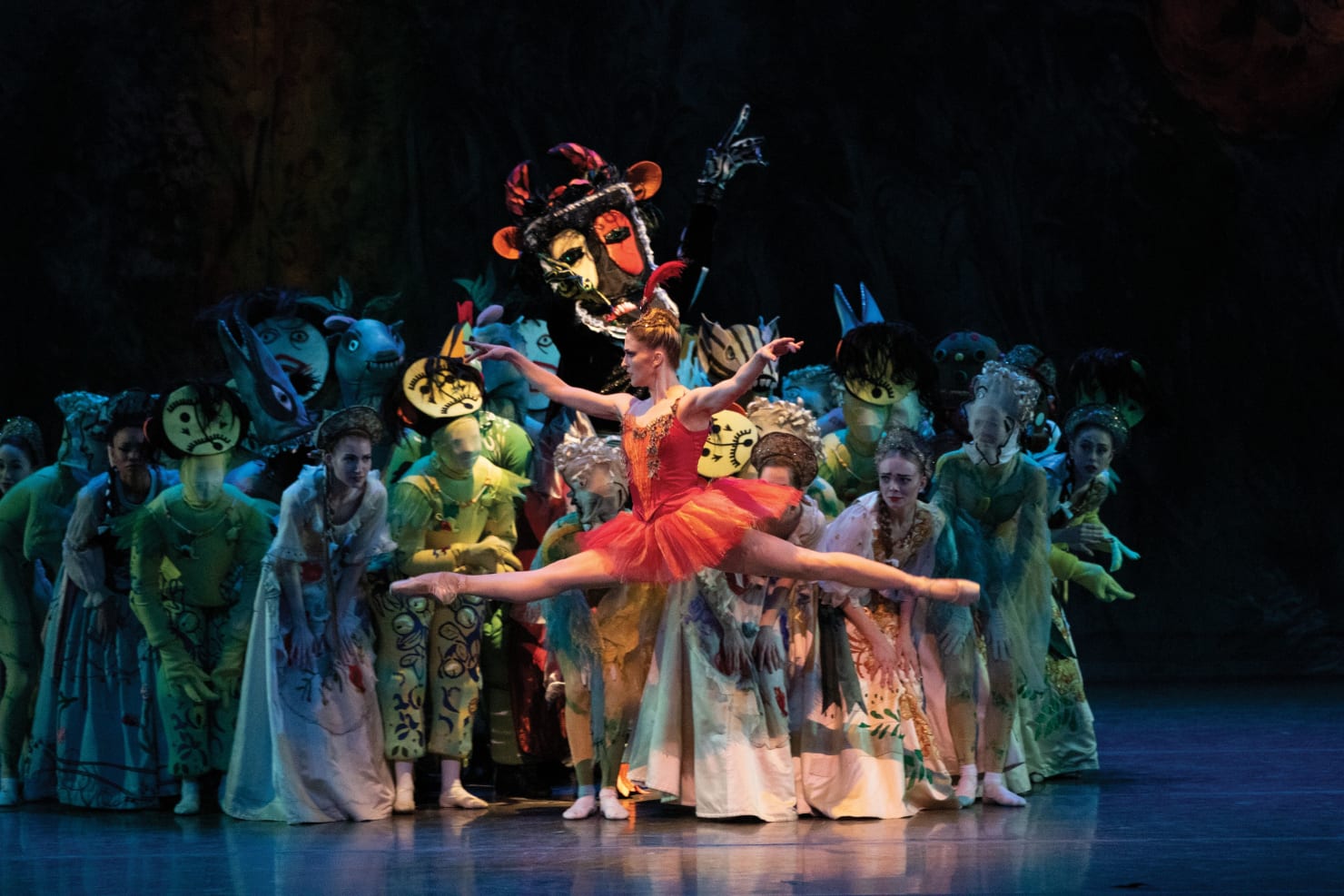
New York City Ballet opened its spring season this week with an all-Balanchine program that was anchored by Firebird (RECOMMENDED). First seen at New York City Center, Balanchine’s staging utilizes the orchestral suite version of Stravinsky’s three-act score, in the process streamlining the story to a single act (he would later take the same approach for his take on Swan Lake) and focusing on the folklore aspects of the Firebird myth. The production is famously outfitted with the fantastically expressionistic sets and costumes of painter Marc Chagall, whose visual boldness admittedly at times upstages Balanchine’s choreography. In his Firebird, the Mr. B often seems more interested in creating stately stage pictures rather than genuinely compelling dance. Choreographically, the most interesting aspect of the work is the juxtaposition of the different dance languages of the fairytale’s three discrete communities — the seemingly random tribal stomping of the evil sorcerer Kastchei and his demonic horde, the folk dance-inspired choreography for the princess and her human kingdom, and classical ballet for the otherworldly title character. On opening night, the Firebird was played with bright, quick-silver athleticism by Isabella LaFreniere, who was joined by Gilbert Bolden III as Prince Ivan in his first public performance back from a serious injury. Also on the bill preceding Firebird were two other pretty iconic Balanchine classics — Symphony in C and Agon — collectively showcasing the different dimensions of the choreographer’s brilliance. The former sparkled through the lens of City Ballet’s singular brand of dynamism and featured a deliciously skipping stone-like turn by beloved principal Megan Fairchild (who is retiring at the end of the season). The latter “black and white” ballet was less successful, as danced by a decidedly transitional cast made up of both veterans and newcomers to the one-of-a-kind ballet. Its performance marked the return of principal Unity Phelan just mere months after giving birth. Although she looked a tad underprepared for one of the piece’s most challenging and tension-filled movements, I admired the guts of her performance and the complete trust she placed in her partner Adrian Danchig-Waring.
DANCE THEATRE OF HARLEM
New York City Center
Closed
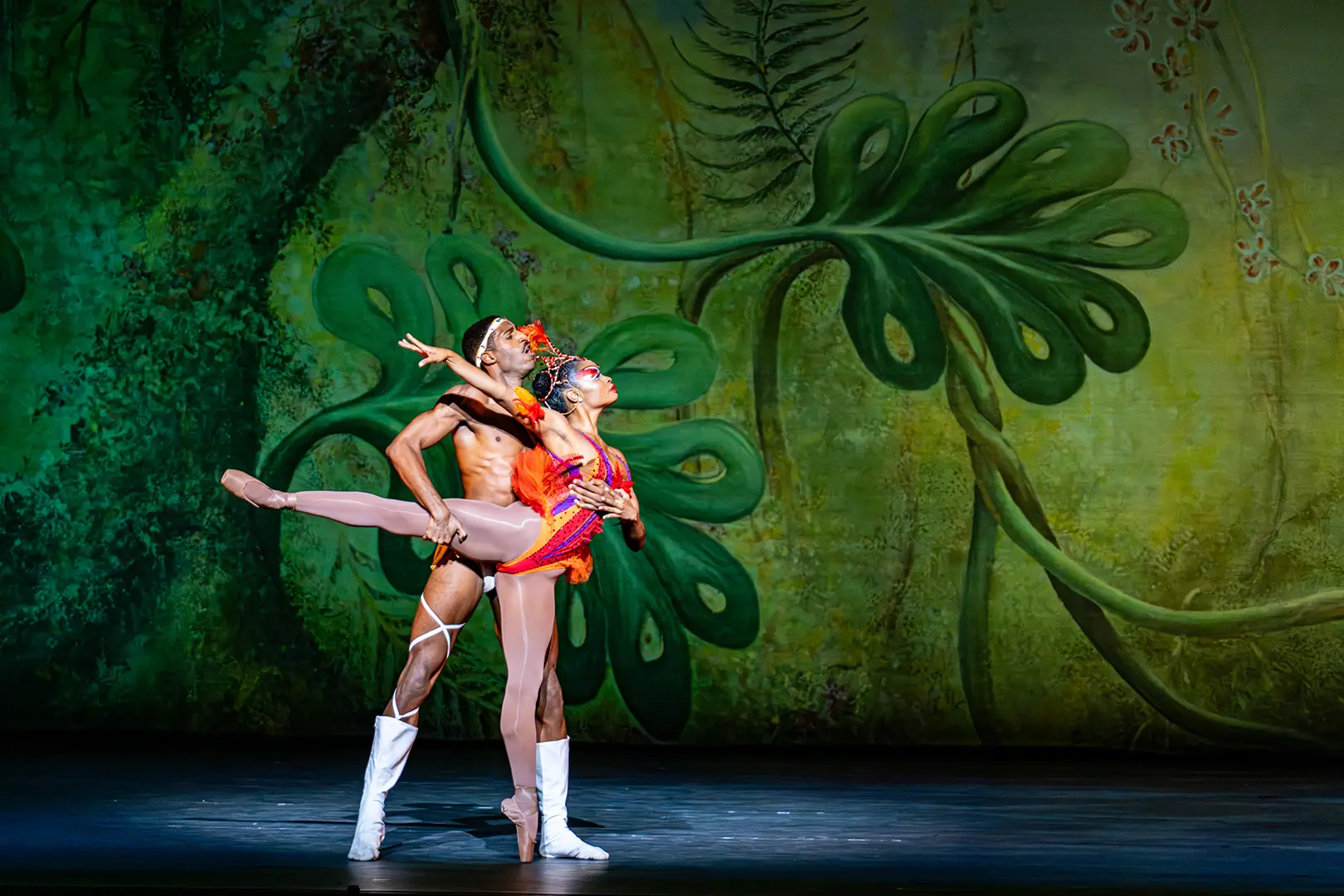
Last weekend, I also had the great opportunity to take in one of Dance Theatre of Harlem’s sold out spring performances at New York City Center (RECOMMENDED). As with New York City Ballet’s aforementioned opening night program, the performance was also anchored by Firebird. Featuring choreography by John Taras, the company’s version — a classic in DTH’s repertory — was created in 1982 and was directly influenced by Balanchine’s one act staging, likely paying homage to Arthur Mitchell and the distinction he holds as being the first African-American dancer at City Ballet. In his re-imagining, Taras has set the ballet on an enchanted Caribbean island (the evocative sets and costumes are by Geoffrey Holder), inherently altering the tone of the ballet, turning it into a distinctly alluring and exotic experience — both visually and in movement. Thankfully, the choreography is less static than Balanchine’s production, particularly the segment involving the princess and her maidens, which here flows to Stravinsky score in wave-like undulations. Also worth pointing out is the sequence depicting the onslaught of the evil jungle minions, which maintains the chaos of the attack without resorting to dada-like stomping. And with the inclusion of the spirit of the Firebird — triumphantly elevated — in the final tableau, Taras’s storytelling bypasses the picture-perfect yet anticlimactic conclusion of City Ballet’s version. At the performance I attended, Ariana Dickerson was the epitome of fierce commitment in the title role, even withstanding a scary fall with gritty determination. In arguably the bigger role as the Young Man was Micah Bullard, who effortlessly oozed regal princely-ness throughout. In a not insignificant coup, live music-making was provided by the Gateways Festival Orchestra, an ensemble comprised of all-Black musicians. Apart from Firebird, the eventful program I attended included three other works that showed off the company’s stunning dancers, particularly the women. Starting things off was William Forsythe’s Blake Works IV: The Barre Project, a show-stopping piece that was created by Forsythe during the depths of the global pandemic. Danced with power and attitude by DTH, the work has emphatically emerged as one of the company’s signature dances (the Sunday afternoon performance marked the retirement of Ingrid Silva). The other works on the bill were Jodie Gates’ Passage of Being — a bittersweet vision of introspective reflection — and Robert Garland’s Nyman String Quartet No. 2, a crowd-pleasing if overlong piece that features the choreographer’s penchant for playfully combining the casual modern shimmy and classical ballet.
 Copyright © 2026
Leave a Reply