
VIEWPOINTS – Nights at The Joyce: GIBNEY COMPANY continues to hone its identity, JOHNNY LOVES JOHANN finds joy in Bach through dance
- By drediman
- April 15, 2026
- No Comments
Over the past few days, I found myself at The Joyce Theater mulling over a number of premieres from Gibney Company, as well as an inspired collaboration between unlikely musical and dance bedfellows. As per usual, read on for my thoughts.
JOHNNY LOVES JOHANN
The Joyce Theater
Through April 19
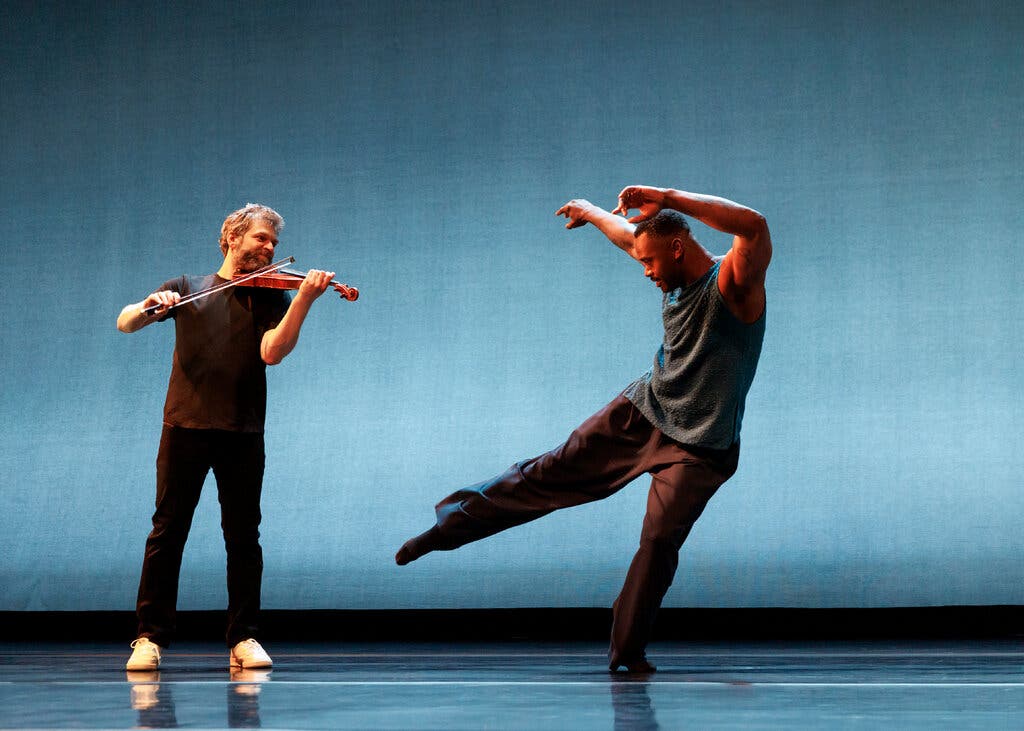
This week at The Joyce Theater saw the New York premiere of Johnny Loves Johann (RECOMMENDED), a fascinating collaboration between Grammy-winning violinist Johnny Gandelsman and renowned choreographers John Heginbotham, Caili Quan, Jamar Roberts, and Melissa Toogood. The performance combines Gandelsman‘s folk interpretations of Johann Sebastian Bach’s complete cello suites with original choreography performed by the aforementioned dance-makers to reveal the rich humanity underlying the suites. The full-length work is essentially structured as four solos and two ensemble segments — symmetrically ordered and separated by one intermission — all melded seamlessly into an artful whole. Because of the accomplished talents involved, the piece has the air of an event rather than your typical premiere. Indeed, the four choreographers, with their notably divergent backgrounds and aesthetics, brought their own distinct personalities to their choreography and performances, bringing out strikingly different aspects — often of the joyful variety — of Bach’s rhythmic music. More specifically, Toogood and Heginbotham imbued their solos with a manic and quirky energy, while Roberts and Quan brought discernible formality to their contemporary dance contributions (Roberts is particularly poetic, dancing simultaneously with majesty and an interiority that seems uncannily connected to the music). Not everything works ideally, however. Quan’s penultimate section lacks the specificity of her peers, creating a bit of a lull when the piece should be accelerating to its conclusion. Additionally, the overall laidback nature of the evening arguably leads to a lackadaisical cadence, and its numerous gags, although amusing, are stretched far too thin. My minor quibbles aside, at the center of it all is Gandelsman’s spirited and musically inspired playing, on its own is a worthy occasion just to listen to. But more than that, the bond he earnestly creates with the dancers is a winning sight. Johnny Loves Johann is a meaningful collaboration.
GIBNEY COMPANY
The Joyce Theater
Closed
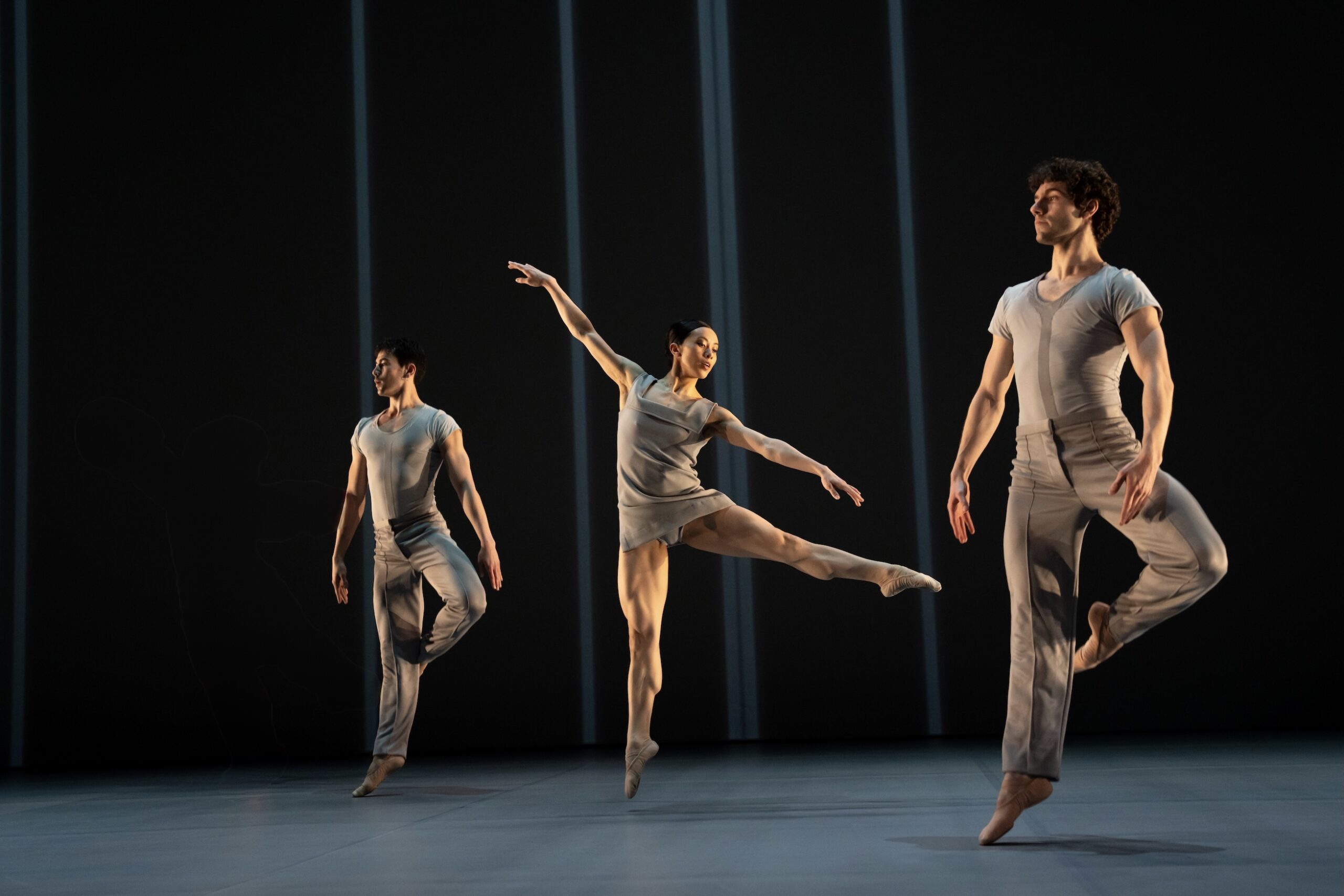
Just a few days prior to the opening of Johnny Loves Johann, I was able to catch the final performance of Gibney Company’s weeklong stint at The Joyce (RECOMMENDED). For this year’s spring program, the company danced a program of premieres — two company premieres by Lucinda Childs and Medhi Walerski, one world premiere by Jawole Willa Jo Zollar, and one Joyce premiere by Mthuthuzeli November. In short, the bill found the company — which was established only a few years ago coming out of the global pandemic — still very much in the midst of its search for an identity. Going a long way to accomplish this quest is the recent decision to take on Childs as Gibney’s new resident choreographer. With a storied career behind her, she’s the kind of dance-maker of great distinction and renown that could steer the company in a stylistically bold direction in a meaningful manner. Indeed, although the shortest piece in the program, the choreographer’s Canto Ostinato from 2015 was the most memorable and purposefully crafted of the bunch — a methodical yet uncommonly elegant (at least for Childs) meditation on the nature of light. Then there was On Contemplation of Wailing, the world premiere by Zollar, a striking if overly relentless choreographic depiction of life in the modern world — particularly as it relates to our increasing isolation amidst overwhelming chaos. Less memorable were the works by Walerski and November. Walerski’sSilent Tides was certainly pretty but little else in its gentle depiction of love and mortality, while November’s Vukani was oddly derivative of Nacho Duato’s Gnawa, which Hubbard Street Dance Chicago just recently performed, to greater effect, during their event visit to The Joyce this spring. Although I applaud Gibney’s attempt at growing its repertoire by collaborating with high profile choreographers, I found the program on the whole a bit lacking in aesthetic variety. Nevertheless, the company looked to be in superb shape, dancing with exquisite fluidity, poise, and precise technique. I’d just like to see more of their personalities shine through.
 Copyright © 2026
Leave a Reply