
VIEWPOINTS – European theater, ambitiously staged: Musing speculatively in Tiago Rodrigues’s LA DISTANCE and Dead Centre’s DEAF REPUBLIC
- By drediman
- November 20, 2026
- No Comments
There’s something about alluring about the sense of scale, vision, and freedom afforded by well-funded European theater, especially if they’re as ambitiously and inventively staged as the ones I encountered this past week. Here are my thoughts on a pair of all-two-brief New York engagements, both of which muse speculatively about the direction human civilization may be heading.
DEAF REPUBLIC
Dead Centre at NYU Skirball
Closed
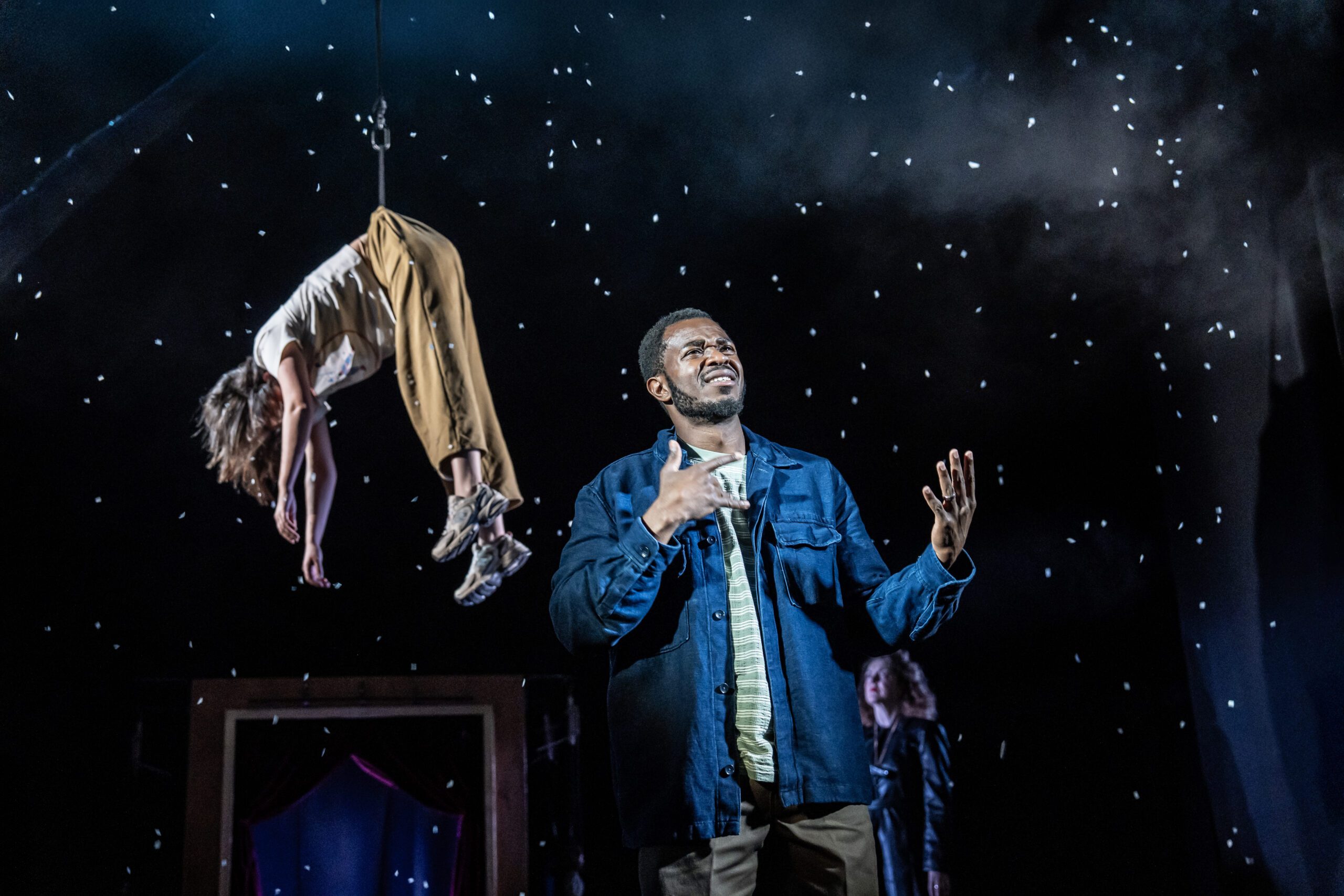
Last weekend at NYU Skirball, I caught one of only a handful of performances of Dublin-based Dead Centre’s production of Deaf Republic (RECOMMENDED). The New York engagement marked the North American premiere of the theatrically vivid production, which had its world premiere last year at the indispensable Royal Court Theatre in London. Austerely adapted for the stage — and into ASL and English — by Zoë McWhinney from Ilya Kaminsky’s 2019 collection of poetry of the same name, the allegorical piece tells the tale of a fictitious town whose residents, in solidarity, resort to sign language and silent resistance when a deaf boy is murdered at the hands of occupying military forces. The use of sign language not only makes the work accessible, but also plays an integral role in the play’s narrative and timely matter of taking a stance in the face of authoritarian regimes (throughout, English translations are projected above the stage action). McWhinney and co-directors Bush Moukarzel and Ben Kidd have opted for a boldly meta-theatrical approach, which smartly eases audiences into the work’s unsettled, vaguely recognizable world. Indeed, occasionally characters observe themselves in third person via live multimedia production and puppetry, suggesting a world in careful surveillance. It also suggests that the constant state of terror and trauma the townspeople live in induces in them, regularly, out of body experiences. A sense of menace and distress permeates the piece, which escalates as the resolutely silent denizens of the town are put to death one by one. Although some may find the piece to be overly oppressive for a night out at the theater, there’s no denying the power and visceral impact of the undeniably creative staging, like the visual imagery of the hoisted corpses of the townspeople dangling in mid-air.
LA DISTANCE
BAM Harvey Theater
Through November 29
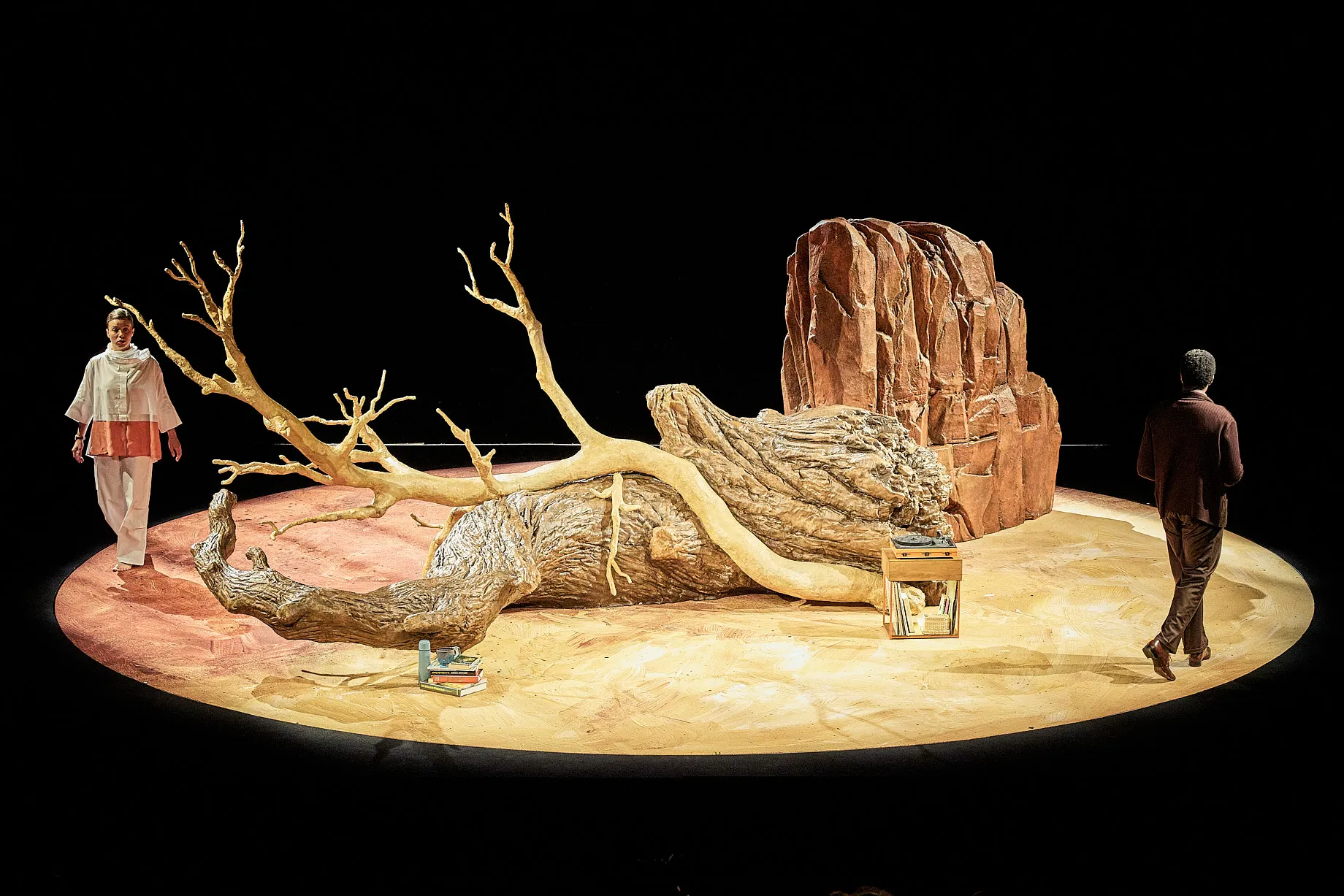
Then over at BAM Harvey Theater, you’ll find Tiago Rodrigues’s heartbreaking La Distance (HIGHLY RECOMMENDED), which arrives in New York courtesy of Brooklyn Academy of Music’s Next Wave Festival (the work was previously seen, to great acclaim, at the 2025 Festival d’Avignon). Rodrigues is no stranger to BAM, having been represented there with his productions of By Heart (2021) and Catarina and the Beauty of Killing Fascists (2024). This latest piece, which he wrote and directed, may just be his most accessible and emotionally naked work, signifying an artist undaunted by working across form and substance, as needed. Set in 2077, the piece depicts the recorded voice message exchanges, in turn tender and strained, between a concerned father and his adult daughter, a headstrong woman who has chosen to spend the rest of her life on Mars as part of the mission to assure humanity’s continuity beyond its diminishing existence on a dying Earth. Obviously, the title of the piece refers to the distance between father and daughter. However, “distance” takes on another, more potent meaning beyond merely physical separation. You see, as part of the daughter’s mission, she must undergo a partial memory re-setting, namely to erase memories of her time on Earth so as to ensure that the new society her community is trying to create is built on a blank slate. As the clock ticks down to complete erasure, the urgency and intensity of their messages — particularly those from her father — escalate to a searing boiling point, which is not only reflected in the acting, but also the increased rotational velocity of Fernando Ribeiro’s sculptural set, a circular disc that artfully suggests the blasted Earth and the new frontiers of Mars. This imbues the staging with a kind of kinetic energy not usually associated with intimate two-handers. Although the piece is performed in French (with projected English titles), the performances by Alison Dechamps and Adama Diop shine through with startling clarity and emotional depth as an aching meditation on love and loss. Suffice to say, these are piercing performances that will stay with me.
 Copyright © 2026
Leave a Reply