
VIEWPOINTS – Docu-dramas that use history to expose today’s woes: Assessing the return of KRAMER/FAUCI and the US premiere of FOUR WALLS AND A ROOF
- By drediman
- October 28, 2026
- No Comments
Over the last week, I took in two theatrical docu-dramas that keenly reconstructed historical happenings, stealthily exposing today’s woes in the process. Read on for my assessments on the return of Daniel Fish’s Kramer/Fauci at St. Ann’s Warehouse and the North American premiere of Rabih Mroué and Lina Majdalanie’s Four Walls and a Roof at NYU Skirball, both of which reached across time and space with startling urgency.
KRAMER/FAUCI
St. Ann’s Warehouse
Closed
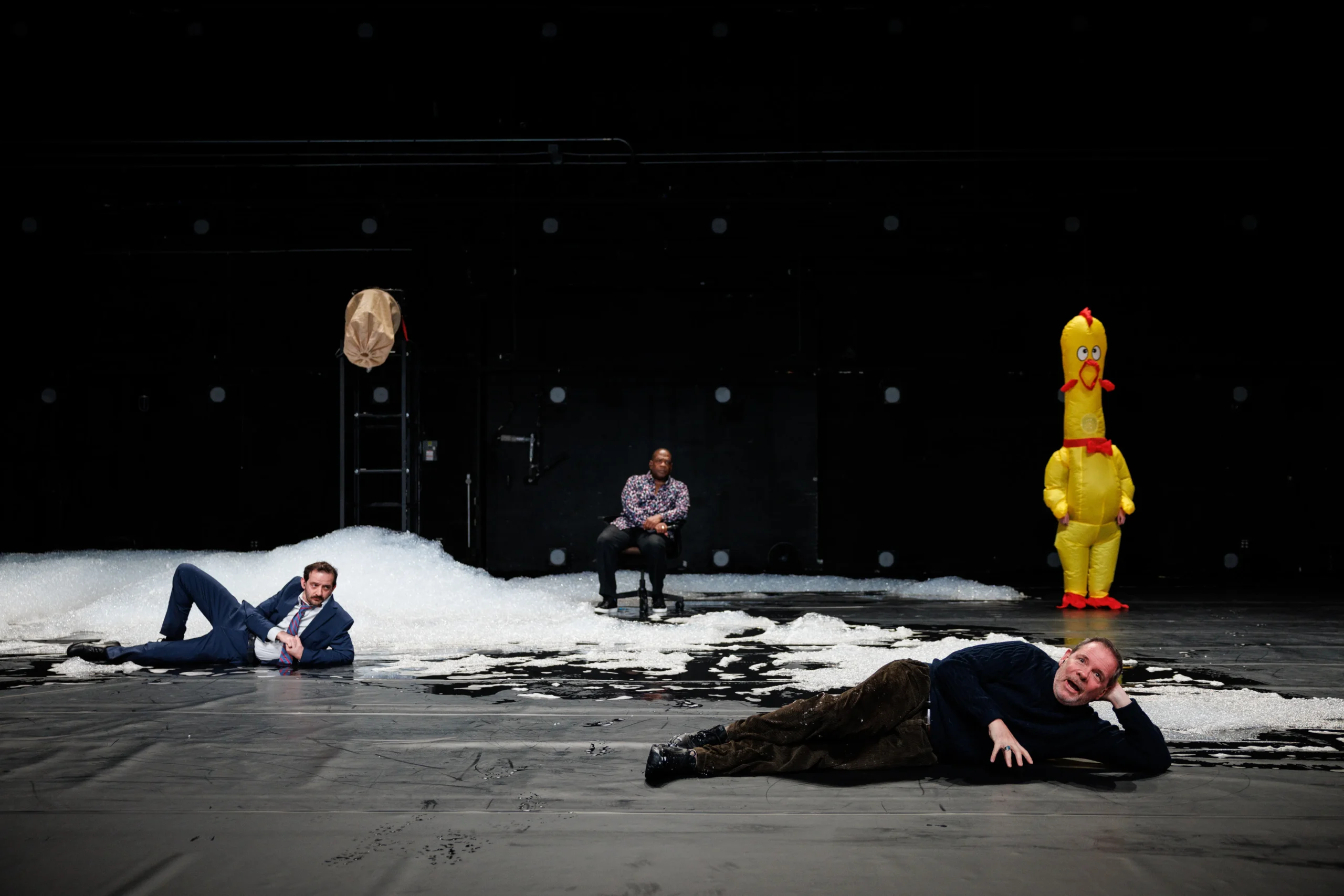
Over at St. Ann’s Warehouse, documentary theater and the avant-garde collided in the return engagement of OHenry Productions’ presentation of Kramer/Fauci (HIGHLY RECOMMENDED), experimental theater-maker Daniel Fish’s verbatim re-enactment of the televised 1993 C-SPAN exchange between measured infectious diseases researcher/expert Dr. Anthony Fauci — who would be tapped to come back into the public eye nearly three decades onwards to tackle another healthcare scare — and playwright/activist Larry Kramer, a notoriously outspoken activist and fierce advocate for gay rights. A volatile love/hate intimacy infuses this heated debate between two brilliant minds over the political/medical handling of the AIDS crisis, especially as animated by knockout performances by Tony-winner Will Brill as Fauci and a combustible Thomas Jay Ryan as Kramer, both of whom were even more invested in their performances in this encore run (which unfortunately just ended its limited run this past weekend). Brill gave Fauci an air of steadfast resiliency that was ideal for Fauci, while Ryan was just as frustrated and excitable as you’d expect Kramer to be. More impressive was the way these fine actors navigated the complicated relationship between the two men, as they, in turn, antagonized and championed the other. In just only an hour, Brill and Ryan gave full weight and color to the long and knotted history between these two giants, who were able to find a way to work together and move forward despite their intrinsic differences. Indeed, Kramer/Fauci is a potent reminder of how political dealings have sadly devolved into bipartisan mudslinging since then. Also featured in the cast were Greig Sargeant as a calmly-played moderator, as well as Jenny Seastone, who skillfully portrayed the various people calling in during the program. As conceived and directed by Fish, a sense of deadpan absurdity permeated the proceedings (including roller skating, the proliferation of soap suds that took over the stage, the donning of a giant chicken costume), artfully theatricalizing the seemingly insurmountable and often surreal challenges faced by Kramer and Fauci. On St. Ann’s Warehouse larger stage, Fish’s deliberate blocking and the precise spacial relationships he creates between the characters were even more strikingly pronounced than they were during the show’s world premiere run at NYU Skirball.
FOUR WALLS AND A ROOF
NYU Skirball
Closed
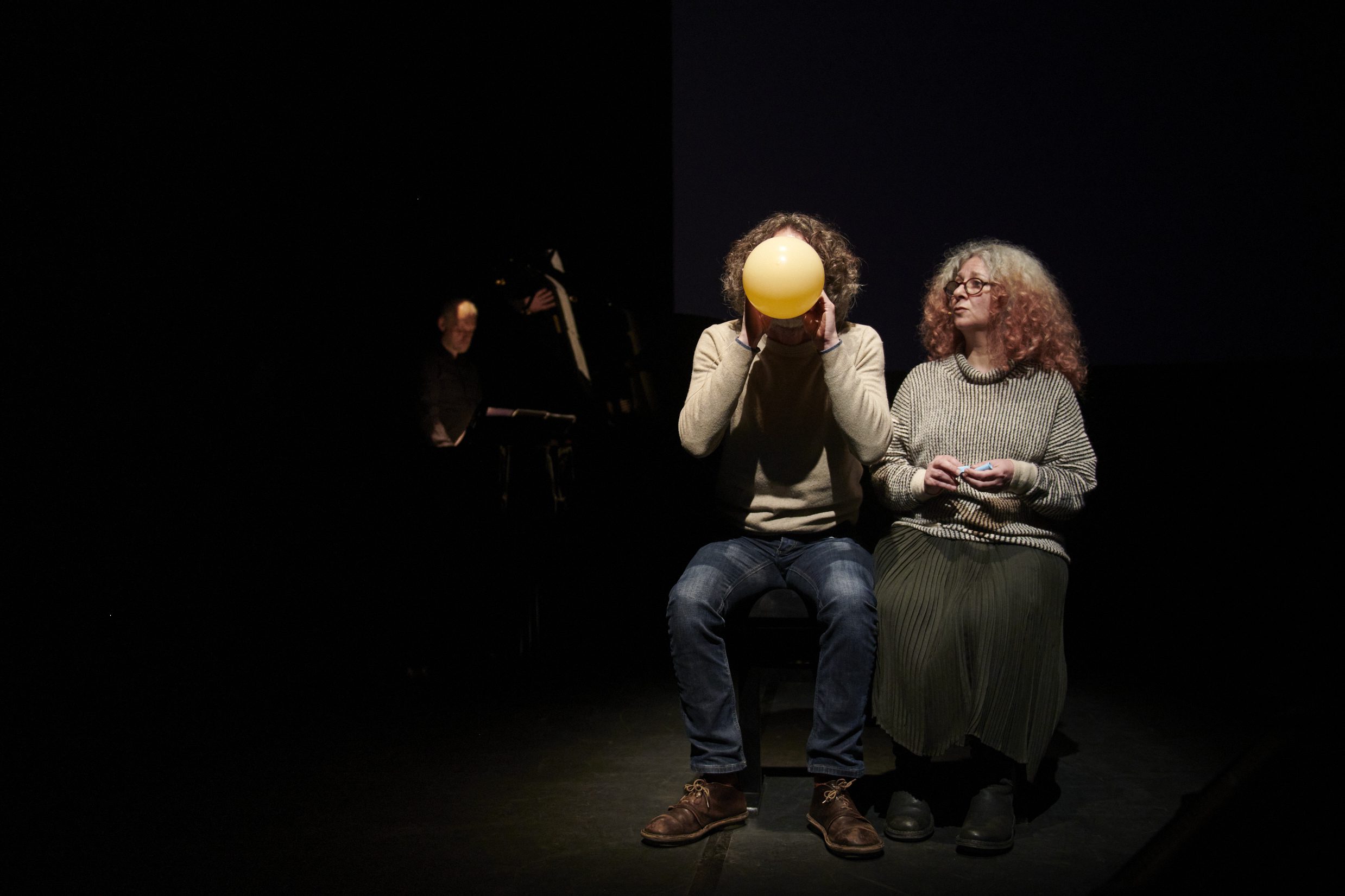
Then over at NYU Skirball in much too short of a run, Rabih Mroué and Lina Majdalanie presented the North American premiere of their piece Four Walls and a Roof (RECOMMENDED). The carefully researched work dissects and analyzes the life of Bertolt Brecht in great detail, particularly tracking the playwright’s escape from Germany in 1933, which took him on a tenuous journey across multiple countries, taking him in total eight years to reach in the United States. However, after only over five years of residing in this country, he was investigated by the US government — namely the House Un-American Activities Committee — for his alleged affiliation with the Communist party. Although Brecht nonchalantly evaded the committee’s line of questioning, the occurrence was so distasteful to him that it instigated his quick and decisive return to post-war Europe. Casually reading from scripts, Majdalanie and Mroué’s show takes the vague form of a lecture, complete with illustrative images projected above the desk where the two are largely seated. Originally from Lebanon, the duo themselves were exiled from their home country for the art they created (they now reside in Berlin). Certainly, their own experience as theater-makers in exile mirrors that of Brecht’s life trajectory and is a stark reminder that the world is once again heading to similarly fraught times. Sprinkled throughout are songs written by Brecht and Hanns Eisler — sung and performed with wistful austerity by pianist Henrik Kairies — that bring Brecht’s spirit into the otherwise measured theatrical experience. Although the overall presentation of Four Walls and a Roof may seem laidback, at least initially, the show’s meandering musings cumulatively harness a force that conveys a palpable sense of urgency. What’s impressive about Majdalanie and Mroué’s performances is that, although English is not their first language, they were able to express complex thoughts and intellectual connections with clarity, and often times with a wickedly subtle sense of humor. The net result is a sobering yet playful piece of theater that meditates on the notion of home vis-à-vis exile and the cost of losing access to free speech.
 Copyright © 2026
Leave a Reply