
VIEWPOINTS – Classical music roundup: A vocally splendid MACBETH opens The Met season, The BERLIN PHILHARMONIC lives up to its reputation at Carnegie Hall
- By drediman
- October 13, 2026
- No Comments
This fall, two of the most anticipated happenings in the realm of classical music included the season-opening new production of Verdi’s Macbeth at The Metropolitan Opera, as well as the series of concerts by the world-renown Berlin Philharmonic that kicked off Carnegie Hall’s season. As per usual, read on for my thoughts.
MACBETH
The Metropolitan Opera
In repertory through October 20
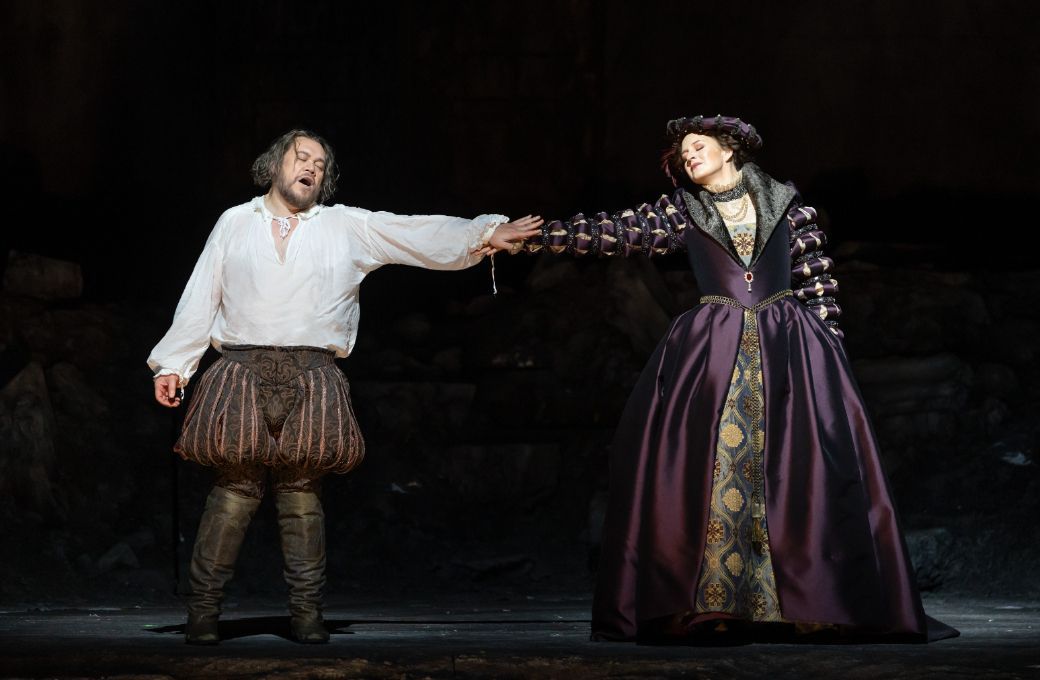
The Metropolitan Opera’s 2026/2027 season got underway earlier this fall with the unveiling of the company’s new production of Verdi’s Macbeth (RECOMMENDED). Making her directorial debut at the Met was Louisa Proske, whose well-judged staging — set in a vaguely authoritarian state — manages to satisfy both traditionalists and more adventurous opera-goers, calling to mind both the Goya-esque shadings of David McVicar’s sturdy current production of Il Trovatore and François Girard’s grimly stylized Parsifal (although a part of me is getting somewhat tired of the war-torn, bomb-blasted look of many of the Met’s newer crop of productions). Another inspired touch is the decision to employ Georgian folk dance choreographer Jorrell Lawyer-Jefferson and action director Ran Arthur Braun. Together, they inject thrilling, urgent kinetic energy to the production, which otherwise relies on a handsome progression of scenes — mostly transitioning in and out via turntable — bringing a steady cinematic quality to the proceedings. Although not a natural choice for Lady Macbeth, soprano Lise Davidsen was nevertheless captivating in the role, exuding a welcome sense of humanity in the conniving role. Vocally, however, the Norwegian superstar was exceptional, her powerful, gleaming voice handling the demands of Verdi’s vocal writing with command and comfort. Blending more naturally into the darker hues of the Bard’s famous tragedy — to which librettist Count Andrea Maffei has introduced some fascinating shifts to character motivations — is baritone Quinn Kelsey, whose textured singing and lived in dramatic performance fully embodied the outsized ambitions and psychological twists-and-turns of the title role. Rounding out the cast were bass-baritone Ryan Speedo Green and tenor Freddie De Tommaso, who brought distinction to the smaller roles of Banquo and Macduff, respectively. In the pit, maestro Yannick Nézet-Séguin led a richly nuanced orchestral account of Verdi’s accomplished score. And as always, the Met Chorus gave a sonically burnished performance that was one of the evening’s musical highlights.
THE BERLIN PHILHARMONIC
Carnegie Hall
Closed
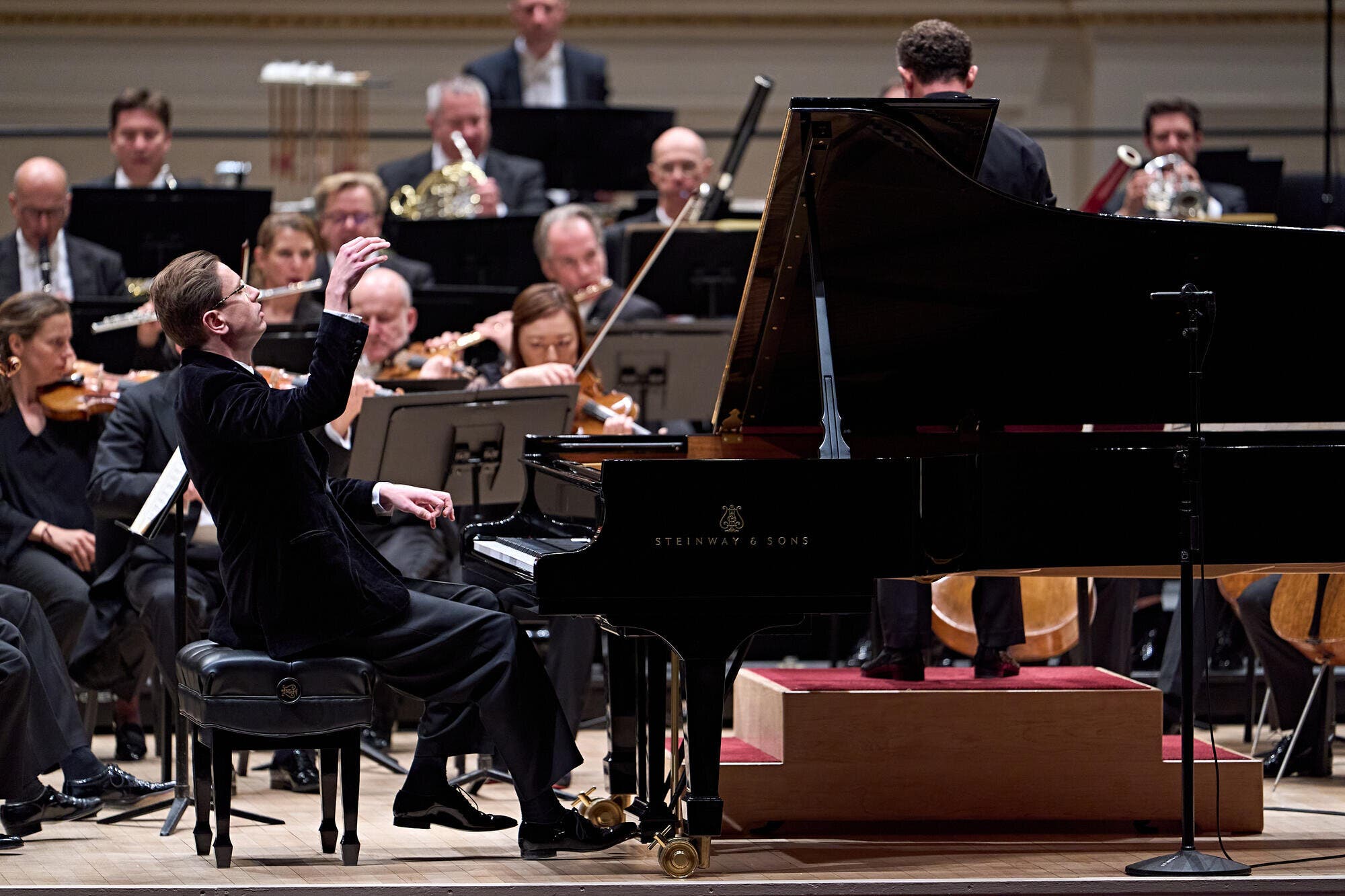
Kicking off Carnegie Hall’s season in high style was the conscription of the world famous Berlin Philharmonic, who performed at the iconic Stern Auditorium / Perelman Stage for four consecutive days (including the hall’s bespoke gala performance last Thursday). Due to an unfortunate incident involving a patron accident immediately before the commencement of Sunday’s concert, the start time was pushed back for more than an hour to give the medical team the chance to get to the venue on the rainy afternoon and assess the situation. During this unexpected interlude, the musicians seemed in upbeat spirits as they prepared to embark on their final New York concert. And what a performance it was (HIGHLY RECOMMENDED). On the bill were two staples of the classical music repertoire, Brahms’ Piano Concerto No. 1 — featuring superb soloist Vikingur Olafsson (taking over from ailing Russian pianist Daniil Trifonov) — and Richard Strauss’s Also sprach Zarathustra. Unfrazzled by the afternoon’s occurrence, the Berlin forces launched into the well-worn pieces with vitality and freshness. Indeed, as unfussily led by maestro Kirill Petrenko, who holds the title of the ensemble’s Chief Conductor, the Philharmonic played with both extraordinary unity — exhibited by the instinctive symbiosis between the different sections of the orchestra — and vigorous personality. In the Brahms concerto, both Olafsson and the orchestra worked together as equal partners (often not the case for piano concertos) to deliver a beautifully calibrated and fully satisfying account of the piece. Notably, the Adagio was rendered with exquisite intimacy and musicality, while the encroaching orchestral participation of the closing Rondo was tempered by the impressive control and finesse of Ólafsson’s sterling playing. Apart from the primordial and forceful grandeur of the opening — instantly recognizable even to the most casual of classical music listeners — much of Strauss’s nine-chapter tone poem is actually intimately scaled, which was conveyed with expressive detailing as it organically unfolded. Altogether, the Berlin Philharmonic lived up to its considerable reputation as being the among the world’s very finest orchestras — no small accomplishment, this.
 Copyright © 2026
Leave a Reply