
VIEWPOINTS – Chekhov, boldly remixed: Dmitry Krymov’s UNCLE VANYA, SCENES FROM COUNTRY LIFE and Alexander Molochnikov’s SEAGULL: TRUE STORY
- By drediman
- April 3, 2026
- No Comments
Earlier this week, I enjoyed a deliciously improbable doubleheader of Chekhov riffing that included spending the afternoon with Dmitry Krymov’s refocused Uncle Vanya, scenes from country life at La MaMa, followed in the evening by Alexander Molochnikov’s semi-autobiographical Seagull: True Story a few blocks away at the Public Theater (to boot, there’s New American Ensemble’s revival of Ivanov; you can find my review of that sensational production here). Read on for my thoughts on these striking remixes of Chekhov classics by two notable Russian directors, both exiled artists who have openly criticized the Russian government.
UNCLE VANYA, SCENES FROM COUNTRY LIFE
Krymov Lab NYC at La MaMa Experimental Theatre Club
Through April 12
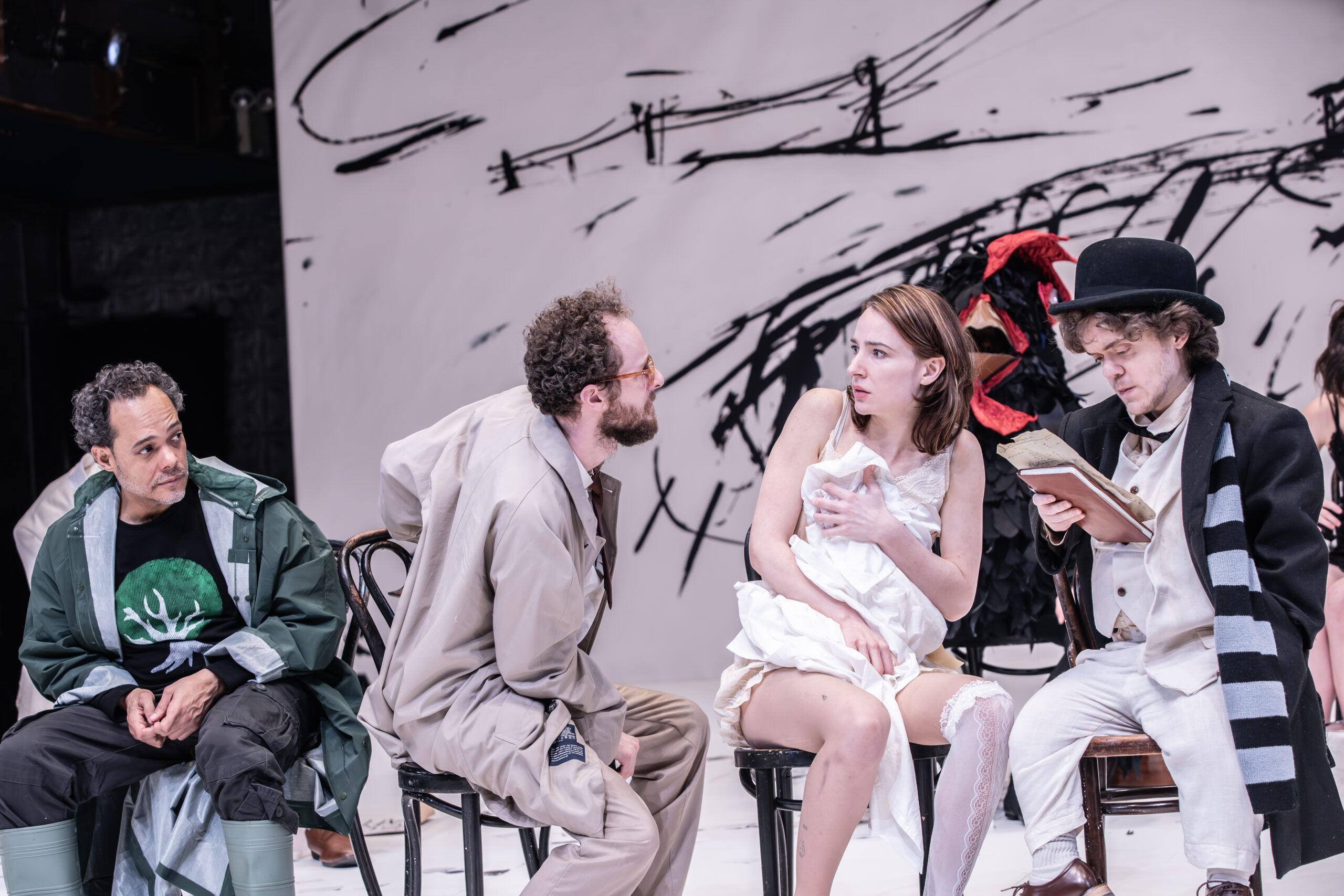
First up is Krymov Lab NYC’s production of Uncle Vanya, scenes from country life (HIGHLY RECOMMENDED), Dmitry Krymov’s bold and surreal revisionist take the ubiquitous Chekhov classic. In short, this distilled adaptation is a sort of mixtape of the oft-performed play — scenes are reordered, motivations are reconsidered, some more significantly than others. Perhaps the production’s boldest and most surreal stroke is the inclusion on two additional characters — two chickens residing on the estate (literally played by two actors in elaborate chicken suits). Tellingly, the chickens’ tragedy — no spoilers here! — introduces the most potent emotional content of the evening. Taken as a whole, these incisive alterations shed new light on the familiar characters’ personal dilemmas, ultimately refocusing the play’s punchline — which now takes on a more severe, apocalyptic tone. Throughout, you’ll notice the heavy influence of vaudeville (albeit it, a depressing one) centering on the character of Yelena — played by Shelby Flannery in a shell-shocked performance — from whose perspective the play is prominently viewed, much to Vanya’s dismay. More specifically, Yelena’s interactions with each of the play’s other characters are staged like vaudevillian numbers, which often fizzle in a question mark. That is, until the whole construction of Krymov’s absurd set up comes crashing down. Indeed, the production culminates in a harrowing final scene that’s shocking in the same way that Daniel Fish’s acclaimed avant-garde revival of Oklahoma! was. Taken as a whole, Krymov’s staging — thanks to the efforts of a game, utterly fearless ensemble cast — is an astute social commentary on the dire current state of the world that thankfully stays clear of obvious didacticism. Instead, the director uses artful theatricality to impart sadness, confusion, and finally horror of humanity’s predicament. Suffice to say, I’m still reeling from this stunning and profound piece of theater.
SEAGULL: TRUE STORY
Mart Foundation at the Public Theater
Through May 3
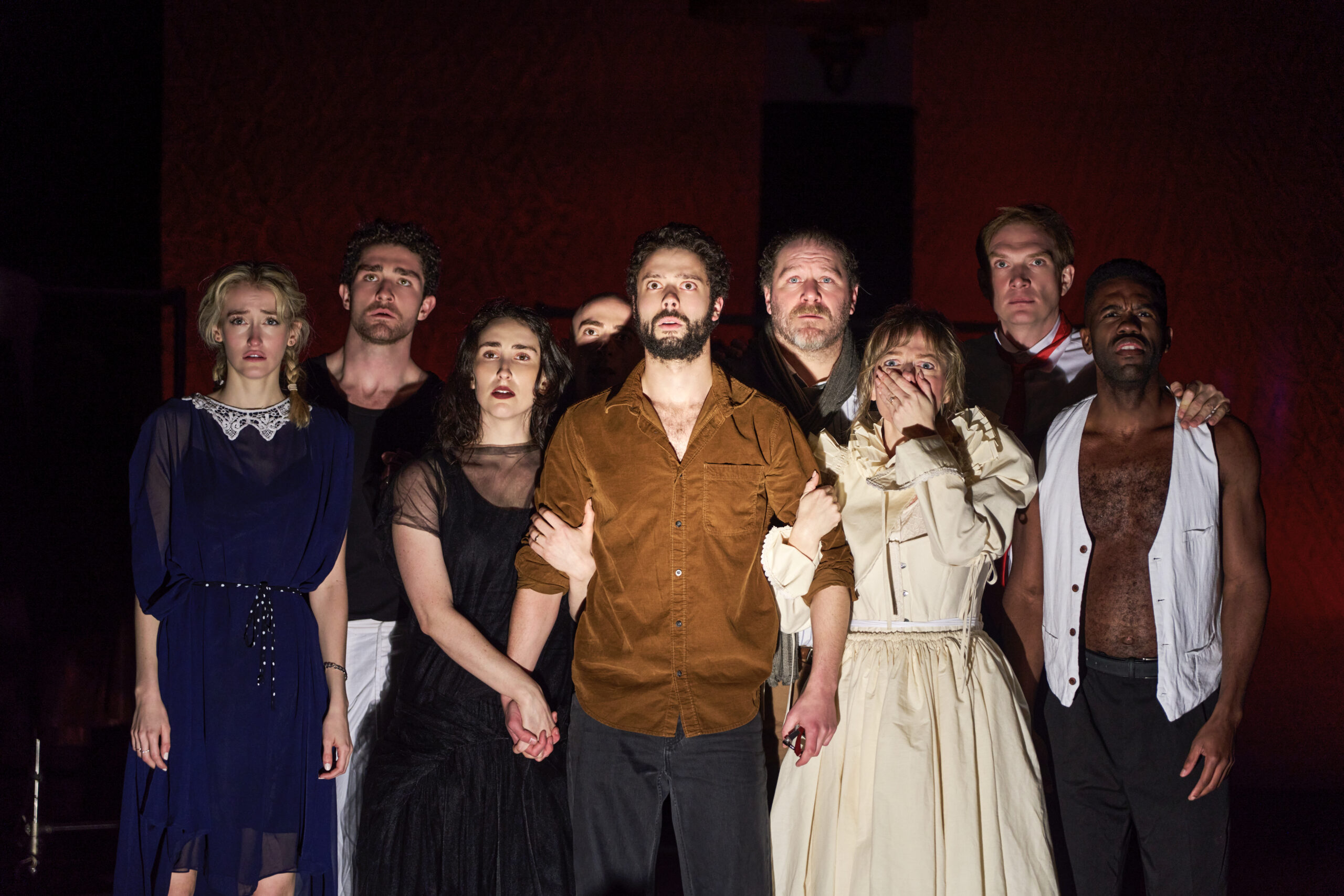
Later that very same day, I caught Alexander Molochnikov’s Seagull: True Story (HIGHLY RECOMMENDED) at the Public. I had seen the staging when it was previously mounted in New York (coincidently at La MaMa, where Krymov’s aforementioned Uncle Vanya is currently playing), and I found it to be exciting, fascinating theater. Indeed, the production, which has retained much of the same cast, remains a gloriously freewheeling experience that ingeniously grafts theatrical memoir, biting political commentary, and of course Chekhov’s seminal titular play. If anything, it feels more focused at the Public. Although staged and conceived by Molochnikov based on the events of his own life, the loose adaptation was actually written by Detroit-based Eli Rarey, who is likely responsible for bringing a more American sensibility to the script (particularly in the second act), as well as establishing less of a strictly autobiographical sensibility. Taking place entirely in 2022 Russia, the first act finds Kon — Molochnikov’s stand-in — in the midst of staging a production of The Seagull at a prestigious and well-funded theater. When the troubles commence, his prospects as an outspoken artist start to look grim, and the act culminates in Kon’s escape to America. Almost immediately upon his stateside arrival, Molochnikov and Rarey begin cleverly weaving the plot of Chekhov’s play into the director’s efforts to establish himself as a theater-maker in New York, bringing refreshing new motivation and context to Chekhov’s underlying play, as well as more than a small hint of meta-theatricality to the production. As Kon, Eric Tabach comes across as immensely likeable in a role that can easily be grating. Also terrific are downtown stalwarts Zuzanna Szadkowski as Kon’s mother Olga and character actor Elan Zafir in various roles. But perhaps best of all is Andrey Burkovskiy as the play’s gleefully caustic, somewhat menacing emcee, who drives the proceedings with biting commentary and alluring physicality.
 Copyright © 2026
Leave a Reply