
THE HANGOVER REPORT – Getting up to speed with the Apples in 2026, in real time: Richard Nelson’s latest installment WE’LL SEE finds the family retreating into art
- By drediman
- November 4, 2026
- No Comments
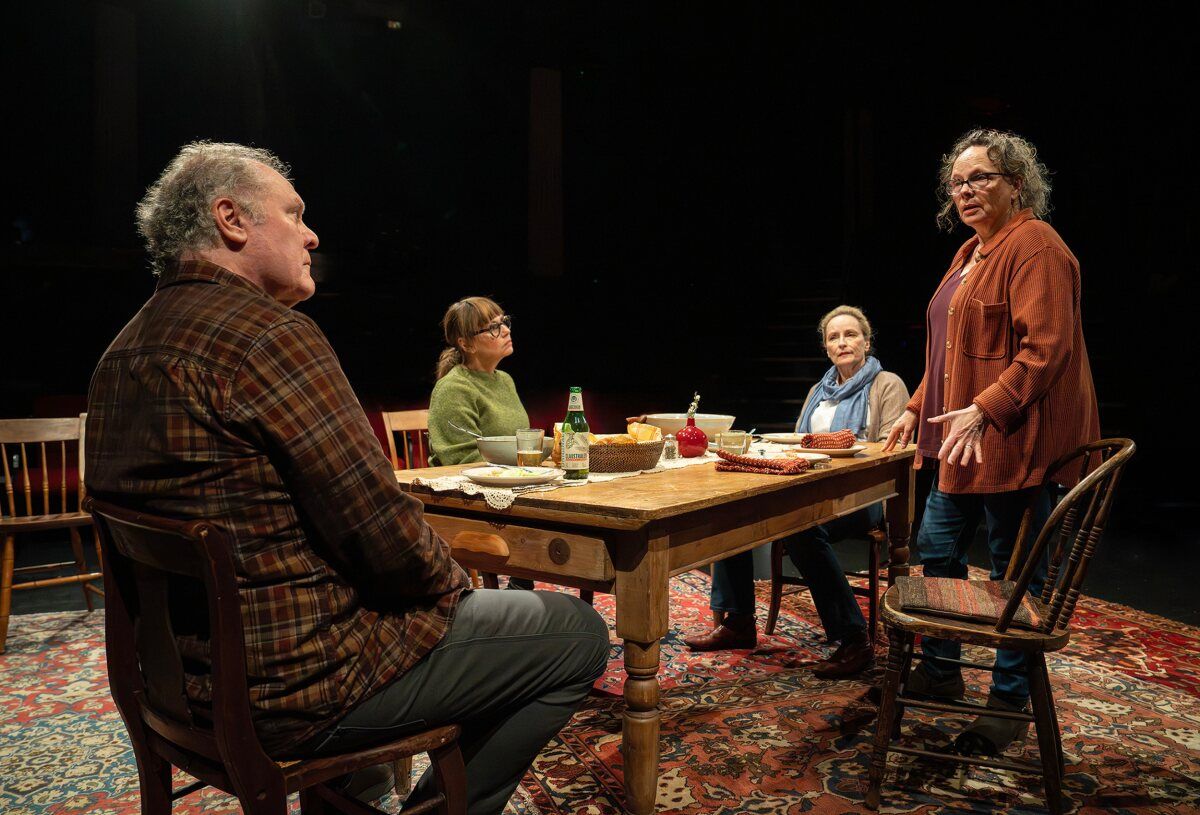
For about sixteen years now over the course of seven plays — four IRL (That Hopey Changey Thing in November 2010, Sweet and Sad in September 2011, Sorry in November 2012, and Regular Singing in November 2013) and three in quick succession via Zoom live-stream by necessity (What Do We Need to Talk About? in April 2020, And So We Come Forth in July 2020, and Incidental Moments of the Day in September 2020) — I’ve been closely following the Apples, four middle-aged siblings from a liberal family based out of the Hudson Valley town of Rhinebeck in upstate New York. The astute creation of playwright Richard Nelson, each play finds them navigating the shifting societal and political landscape of the country, existentially grappling with how to approach contemporary life — often times in neo-Chekhovian conversations over meals that are cooked right before the audience’s eyes. In fact, given my longtime association with them, these characters have become more real to me than many things in my own life. Besides the gorgeous intimacy of these works, perhaps their most striking feature is that their openings have precisely coincided — in real time — with when they’re actually set to take place.
Now we have the eighth entry, We’ll See, which like most of the previous plays is being presented by The Public Theater. Opening last night, the play is set during last night’s midterm elections. You can’t get any more current — or anxiety-ridden — than that, especially being in attendance during the performance. Thankfully, the Apples are a thoughtful, generally well-meaning bunch, and their authentic exchanges only allude to larger matters at play without hitting audiences over the head. In this latest installment of the family saga, the four siblings have arranged a small informal gathering at two of the sisters’ home in Rhinebeck, with the intentional goal of unplugging from politics (especially refraining from mentioning he who shall not be named) and simply being with each other on the fateful night. As an honorary family member, which many of us now feel we are at this point, it was meaningful to see what each sibling has been up to since the last time we saw them. Barbara, a former school teacher, has been an unsuspecting victim of cancel culture due to an unfortunate interaction with a student. Marian seems pretty stable, even dating a bit, after the tragic death of her son in a previous play. Visiting from Brooklyn, Jane subtextually seems to be having issues with her actor boyfriend Tim and has chosen to abstain from voting due to an overall disillusionment with both parties (there is also light suggestion of maybe some financial difficulties arising from living in the city). Richard, the only brother, is back from working abroad and has brought his pseudo-girlfriend Yvonne, an actress recovering from cancer and the sole new character in the play, to join the gathering.
Most revealing is how, during these fraught times, each character has chosen to increasingly retreat into the bosom of art. Whether it be participating in the creation of theater (Yvonne), watching it (Jane), or penning stories of their own creation (Barbara), Nelson seems invested in highlighting the role of art in both rejuvenating the body/mind/soul and providing an escape from dire realities. The ensemble acting in this latest volume remains as exquisite as ever. In these times of frustration and conflict, it was a great comfort to once again be soothed by grace and transparency of the company’s work. Returning to the roles they originated back in 2010 are Jay O. Sanders as Richard, his real life wife Maryann Plunkett as Barbara (arguably the fragile heart of each of the Apple plays), Sally Murphy as Jane, and Laila Robins as Marian (Yvonne Woods as Yvonne brings a welcome new energy into the mix). As if by muscle memory, each has slipped back into their respective well-trodden roles like hand in glove. The grounded naturalism of these performances is second to none, a feature which continues to be one of the key distinguishing aspects of these works. After their pandemic-era plays — the last time I encountered the family — coming back to the Apples now is a treat I was not expecting.
HIGHLY RECOMMENDED
WE’LL SEE
Off-Broadway, Play
The Public Theater
1 hour, 50 minutes (without an intermission)
Through November 29
 Copyright © 2026
Leave a Reply