
VIEWPOINTS – Transporting dance theater outings: Taking a look at Sankai Juku’s swan song TOTEM, and sweat variant’s ADAKU, PART 2
- By drediman
- November 13, 2026
- No Comments
This past week, I bid farewell to Japan’s Sankai Juku, one of the most distinctive companies in global dance, as well as immersed myself in the latest interdisciplinary by sweat variant (i.e., the collaborative efforts of Okwui Okpokwasili and Peter Born). As per usual, read on for assessments of these two transporting dance theater outings.
TOTEM—VOID AND HEIGHT
NYU Skirball
Closed
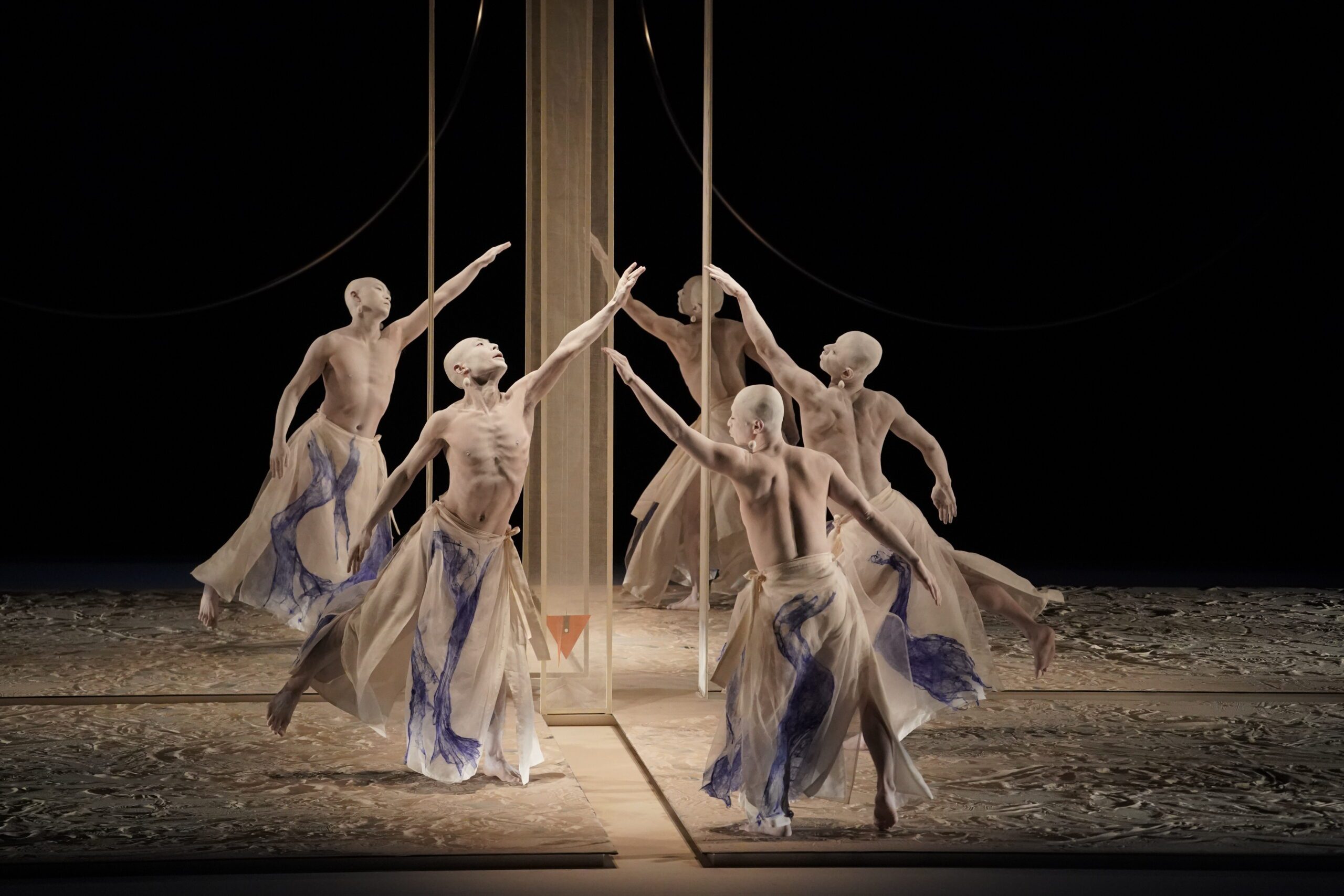
Last weekend at NYU Skirball, I had the great privilege of taking in Sankai Juku’s presentation of TOTEM – Void and Height (RECOMMENDED), the final work by master butoh dance-maker Ushio Amagatsu, who sadly passed away in 2024 at the age of 74. The performances — which were made possible by support from Dance Reflections by Van Cleef & Arpels and Harkness Foundation for Dance — also likely marked the last New York appearance of the iconic Japanese troupe (at least in its current iteration) after about a half a century in existence (it was founded in 1975 by Amagatsu). The last time I saw the company was in 2023 at The Joyce Theater, where they performed KŌSA: Between Two Mirrors, an evening length piece comprised of excerpts from the company’s extensive body of work. In hindsight, such a “greatest hits” program seems like awfully prescient programming. So is TOTEM, Amagatsu’s career-capping meditation on mortality, particularly with respect to a resigned willingness to submit oneself to the larger designs of the universe. Butoh is marked by an astute relationship between tension and unfiltered expressiveness (as well as the utilization of all-male casts, invariably bald and caked in white body makeup), in effect imbuing performances with an organic, undulating “build and release” quality that evokes both universality and the avant-garde. These traits continued to be in evidence in this final piece, easily one of Amagatsu’s most austere, clear-eyed creations. The ritualistic dance took place around a stylized totem that rose from stage, at the center of which was a prism-like pendulum, indicating finite time slipping away. Detached and otherworldly, the choreography unfolded with a sense of symmetry and calmness in the face of the unknown. Despite the occasionally trite soundscape, the company’s movement quality mesmerized throughout. Indeed, dancers Semimaru, Sho Takeuchi, Akihito Ichihara, Dai Matsuoka, Norihito Ishii, Taiki Iwamoto, Makoto Takase, and Sotaro Ito have dedicated their lives and bodies to Amagatsu’s singular aesthetic and vision, and it’s evident that they’ve been fully ingrained into their very being.
ADAKU, PART 2: SHE SHIVERS WITH IT
BAM Next Wave at BAM Fisher
Through November 15
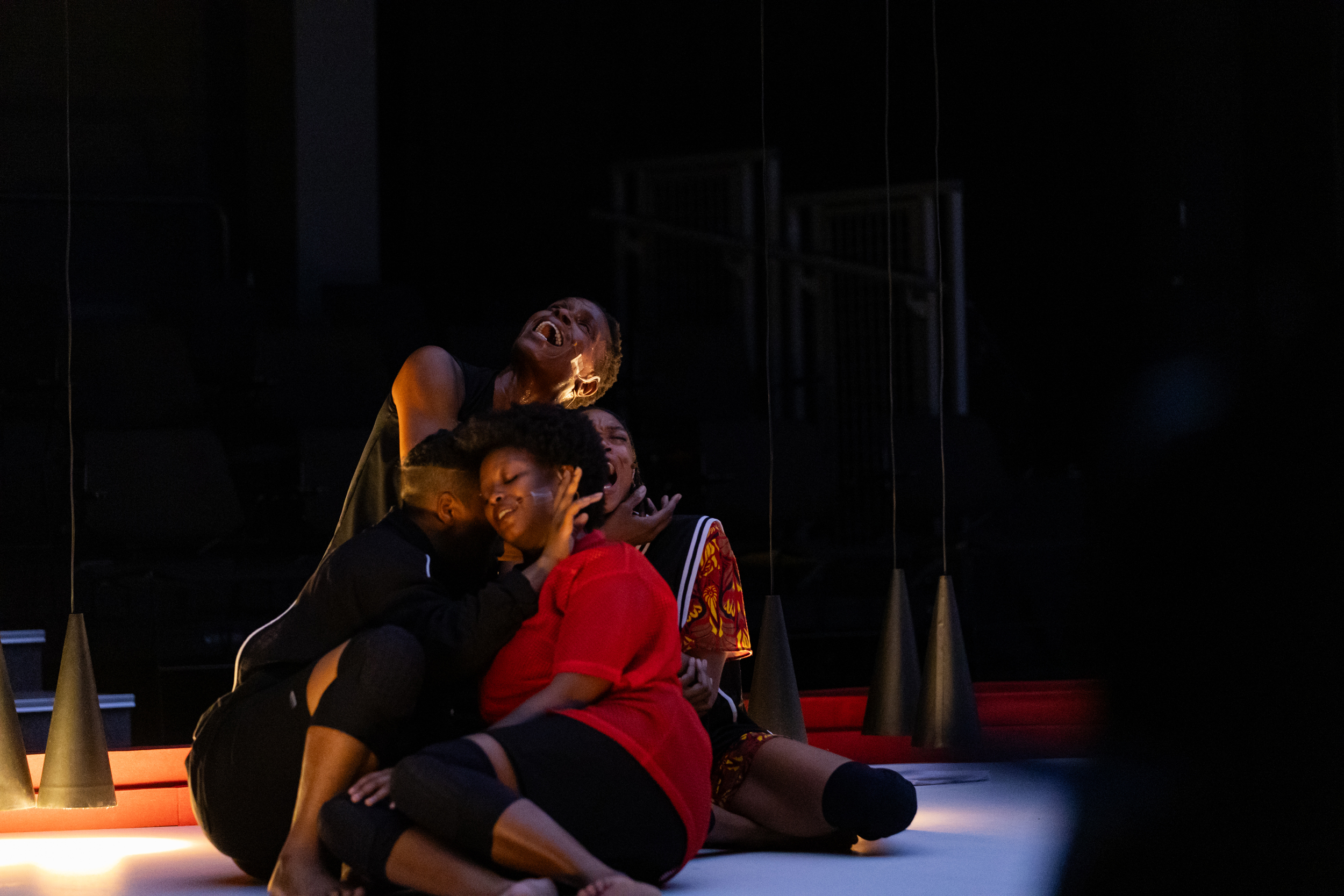
Then over at BAM Fisher, there’s adaku, part 2: she shivers with it (RECOMMEWNDED), the second installment of Okwui Okpokwasili and Peter Born’s adaku trilogy, which commenced in 2023 with adaku, part 1: the road opens. Presented as an offering of Brooklyn Academy of Music’s flagship Next Wave festival, the piece is a multidisciplinary performance for four women that embraces, in equal measure, music/soundscapes, spoken word, art installation, and dance, altogether creating a haunting sonic and visual tapestry. As conceived and artfully executed by Okpokwasili and Born (whose collaborative efforts are billed under the umbrella “sweat variant”), it’s a visceral experience that asks its audience to surrender themselves to their senses — thereby allowing for compete empathetic engagement — beginning with an opening sequence of primal wails that evokes the inconceivable sorrow and confusion of forcedly journeying across the vast ocean on slave ships (adaku, part 1, largely set in an African village, concluded with this horrific journey of wails). Starting with just a single voice, the segment builds to an overpowering chorus of overlapping shrieks and guttural cries that’s gut-wrenching and unavoidable. Together with atmospheric lighting and projections of the relentless seas, as well as the visual imagery of the huddled masses of the performers’ intertwined bodies, the overall sensory impact was overwhelming. The work then segues into a spoken word segment that’s at once amusing, sad, and telling — fragmented chronicles of life as a Black woman in this country. Although this middle section brings a welcome layer of specificity to the largely abstract experience, it’s only a matter of time before we come to realize the limitations of language to unlock the cumulative trauma trapped within the Black bodies before us. This is when the piece turns to dance and movement to convey the unspeakable. This final segment finds the four idiosyncratic performers in a constant state of collapsing and support, in the process finding each other and a forming a community amongst themselves. The final tableau is one of resilience and hard-won hope as they move forward together. I’m eager to see how Okpokwasili and Born wrap it up in part 3.
 Copyright © 2026
Leave a Reply