
VIEWPOINTS – Dance roundup: LONDON CITY BALLET returns to The Joyce, Oona Doherty’s SPECKY CLARK haunts Irish Arts Center
- By drediman
- October 30, 2026
- No Comments
In the world of dance, this past week saw the return of London City Ballet with a pair of mixed bills to The Joyce Theater, as well as the New York premiere, just in time for Halloween, of Oona Doherty’s new dance theater piece Specky Clark at Irish Arts Center. Here are my thoughts on these two dance outings.
LONDON CITY BALLET
The Joyce Theater
Through November 1
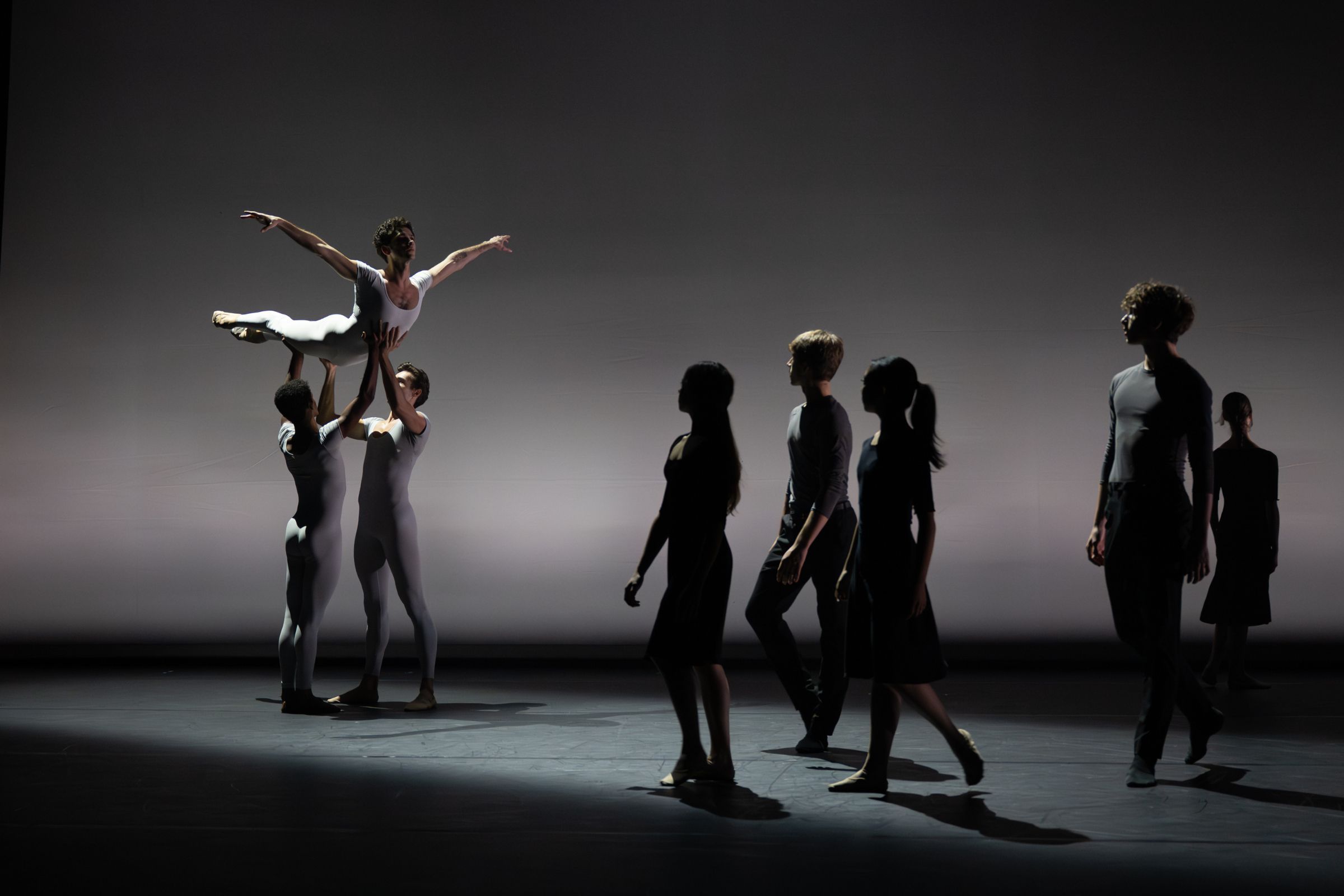
Through this weekend, New York dance-goers are able to catch London City Ballet (RECOMMENDED) at The Joyce Theater in Chelsea. For all intents and purposes a rebooted company, London City Ballet re-emerged a few years back from a decades-long haitus a sleeker, slimmer ensemble, featuring young, fresh dancers that seem eager to grow as they embark on the next chapter of the storied company’s evolution (London City Ballet was formerly the resident company of Sadler’s Wells). Given the company’s mission to revive rarely-performed works and commission new pieces, the troupe’s performances are likely to entice dance fans interested in seeing works new to them. Such was the case for Program A, an eclectic and well-balanced bill which included two US premieres and the revival of a rarely seen piece by Jerome Robbins. The evening commenced with Ashley Page’s Mephisto Waltz, a crisp and energetic opener set to the Viennese swirl of a Strauss waltz. Open to the possibilities of invention afforded by neoclassical dance, Page’s choreography is sparklingly assertive and an exciting counterpoint to the predictable waltz count. Then came Tasha Chu’s Soon, which drastically shifted gears. The somber piece is loosely narrative, and is in essence an attempt to choreographically articulate loss-induced anxiety, whether actual or anticipatory. Chu’s work is moody and firmly contemporary (fluid, loose-limbed), unfolding with a series of variations — or visions — of loss (the music is by Sam Robinson and Gavin Bryars, namely Bryars’ “Jesus’ Blood Never Failed Me Yet”). For many New Yorkers, one of the primary reasons for attending is to catch the return to the stage of Robbins’ Quiet City, which has not been seen in the city since 1991. Created for New York City Ballet in 1986, the work is a fleeting and haunting meditation on mourning and hope — a perfect balance between elegant suggestiveness and abstraction — featuring three male dancers in white who perform amidst a small group of shadowy onlookers. Its diagonal orientation and the lilting flow of the choreography reminded me a bit of Robbins’ more weighty Opus 19/The Dreamer. Closing out the evening was the evocative if overlong Ghost Light by John Neumeier. Aptly titled, the piece transpires on a bare stage with a lone ghost light, around which ghostly imprints of past performances, across dance genres (classical ballet, neoclassical, contemporary, even some backstage drama), interlock. Featuring beloved former Royal Ballet principal Alina Cojocaru as a lovely vision of classical ballet, the work eventually becomes repetitious, however, the distinction between choreographic styles not quite as sharply delineated the could be. Set to a recording of a piano score by Franz Schubert, the performance could have also benefitted from the sonic depth and instinctual rhythms that live music can offer.
SPECKY CLARK
Irish Arts Center
Through November 15
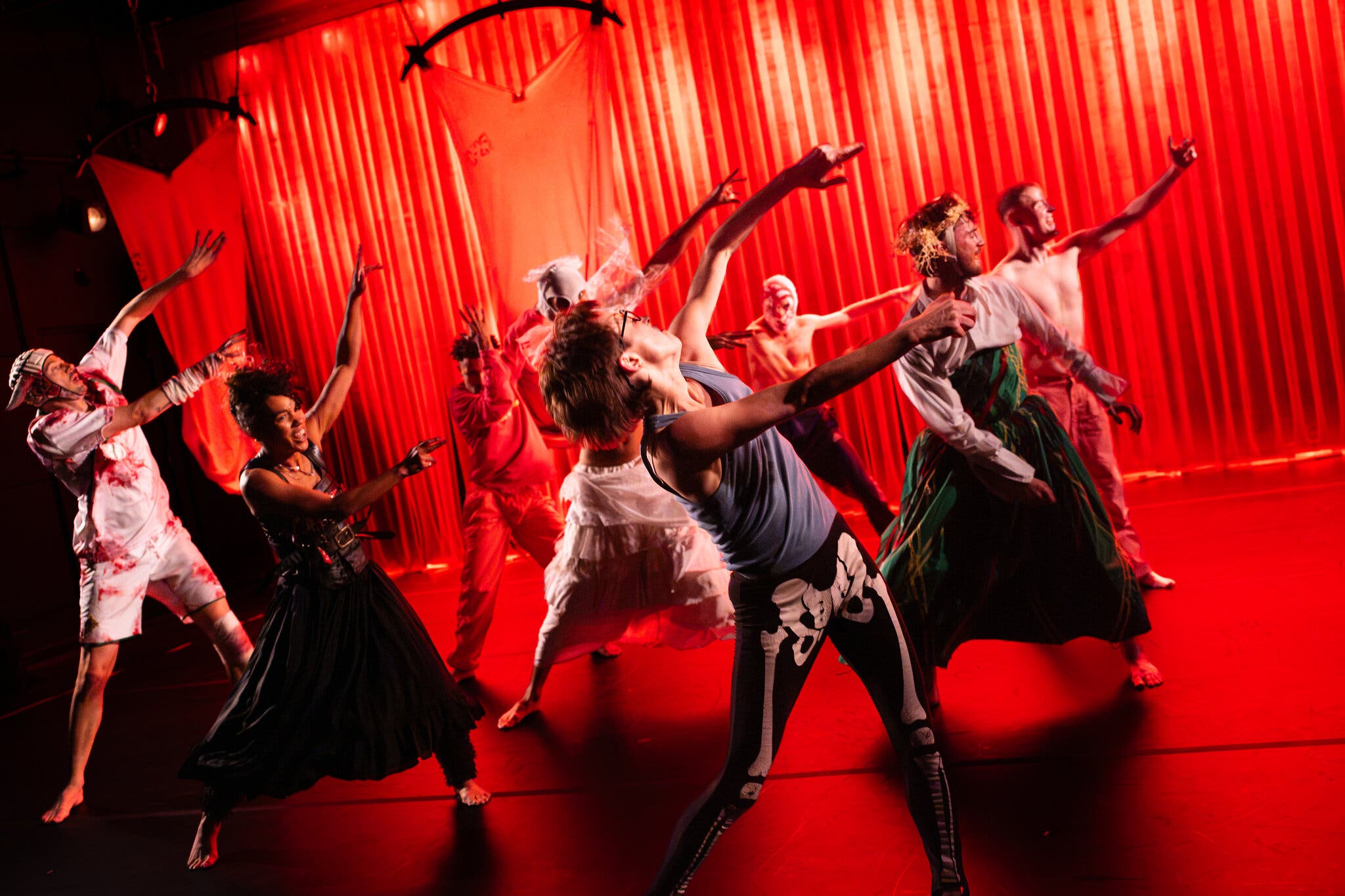
Last night, just in time for Halloween, Oona Doherty’s Specky Clark (HIGHLY RECOMMENDED) opened at Irish Arts Center in Hell’s Kitchen. Over the last few years, the Belfast-based choreographer has emerged as one of the most distinctive dance-makers in contemporary dance with guttural, brilliantly idiosyncratic works that create nuanced, unaffected connections between movement and psychological states of mind. Devised with her company of dancers, this latest creation is an hourlong dance theater piece, perhaps her most accessible work to date, that tells the story of Doherty’s great-great-grandfather, particularly an episode early in his life when, upon the unfortunate death of his mother, he is shipped to Belfast to live with two sinister spinsters — the Clark sisters — at the tender age of 10. Upon arrival, the orphan is nicknamed “Specky Clark” because of his spectacles, and is sent to work at a slaughterhouse, where his first task is to kill a pig with a gun. These parade of events unspool through an efficient progression of scenes as seen through the tormented eyes of Specky. The storytelling is aided by subtly creepy verbal narration, which is augmented by artfully projected titles above the stage, as well as exquisitely detailed miming distinguished by nervous energy and bold, aggressive gestures. To deal with the collective trauma caused by these successive events — his mother’s sudden death, his brusque transplant to Belfast, the suffocating overbearance of the Clark sisters, and the grim work situation — Specky instinctually turns to physical movement to process his inner turmoil. The climax of the work occurs on the night of Samhain (i.e., the Irish equivalent of Halloween), a Gaelic festival during which the liminal barrier between the living and the dead can be penetrated. On that fateful night, to Specky’s utter shock, the pig he shot starts conversing with him (ironically, the pig, played by with giddy punk energy by Gerard Headley, is the only character who actually speaks in the show), successfully convincing him to go to a local pub together. Along the way, they collect a motley band of souls and demons from “the other side”, who feed off of Specky’s uninhibited dancing, ultimately culminating in an unhinged rave-like sequence of pagan energy, delirious release, and potential catharsis. The tone throughout is macabre yet quirky, with real danger — psychological, physical — lurking around every corner, made all the more palpable by the tense, disorienting music and soundscapes of the band Lankum and Gavino Murgia (featuring David Holmes and raven Violet), packaged atmospherically by sound designer Maxime Jerry Fraisse. In the titular role, Erin O’Reilly brings just the right amount of moodiness and aching vulnerability to their emotionally frayed performance. In short, Specky Clark is succinct yet sublime dance theater — tinged with pitch back humor that nicely counterbalances the underlying trauma — and yet another winner by Doherty.
 Copyright © 2026
Leave a Reply