
VIEWPOINTS – Chinese dance theater spectacles take over the Koch Theater: Assessing the eye-popping productions of A DREAM OF RED MANSIONS and MULAN
- By drediman
- September 22, 2026
- No Comments
Before New York City Ballet reclaims the David H. Koch Theater — the company’s home base at Lincoln Center — with its fall season opener Jewels, a series of Chinese dance theater spectacles took up residence at the venue for a number weeks during the late summer. Here are my thoughts on two of these eye-popping productions.
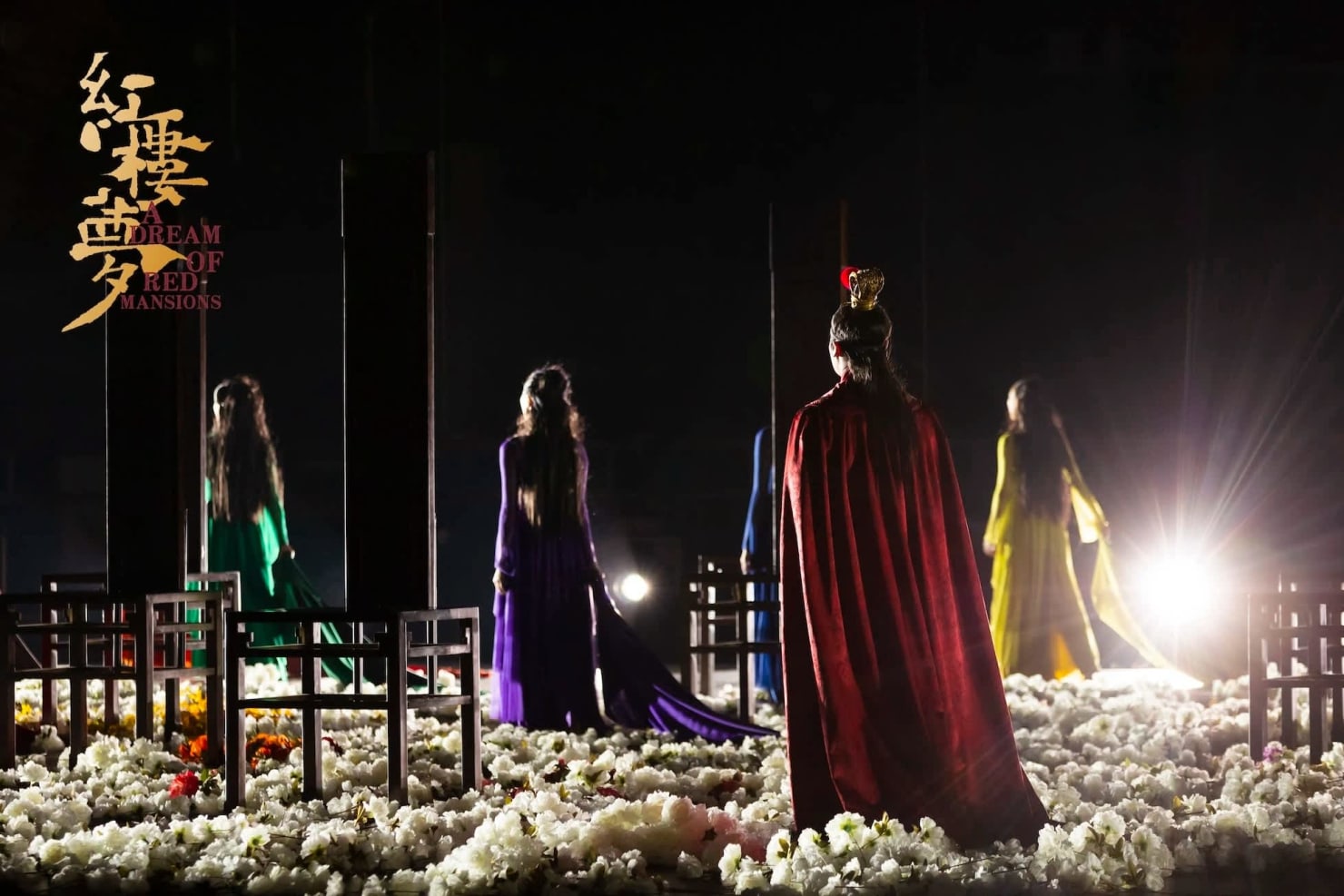
A DREAM OF RED MANSIONS
David H. Koch Theater
Perhaps the more artful of the two productions I caught at the Koch Theater was A Dream of Red Mansions (RECOMMENDED). Produced by the Jiangsu Centre for the Performing Arts, the production is a lavish dance drama adaptation of Cao Xueqin’s 18th-century Qing Dynasty literary masterpiece of the same name. Featuring a myriad of characters in a tale that spans over many years, Red Mansions more specifically tells the story of one man’s complicated relationship with a family. The stage version follows the narrative structure of the underlying novel, unspooling over 12 distinct chapters (Entry, Illusory Land, Covetous Whispers, Imperial Visitation, Promenade, Burial of Flowers, Lantern Festival, Loss of Jade, Warding-off Evil, Family Reunion, Flower Burial, and Back to the Great Wilderness) in a stately, ritualistic manner that seamlessly blends traditional Chinese opera infused and contemporary dance. Even though I admittedly got lost in some of the plot’s labyrinthine twists and turns, I nonetheless picked up on the universal human emotions of Xueqin’s characters, thanks largely to the expressiveness of Li Xing and Li Chao’s choreography. The staging makes effective use of the depth of the Koch stage, particularly through the ingenious use of curtains and fabrics, which are arranged in various configurations, giving the production an ethereal quality as it gracefully and fluidly transitions between scenes. The only time this flow was noticeably disrupted was unfortunately a scene change pause in preparation for the haunting culminating scene of the production (which paid homage to the choreographic aesthetic of influential Belgium contemporary dance-maker Anne Teresa De Keersmaeker).
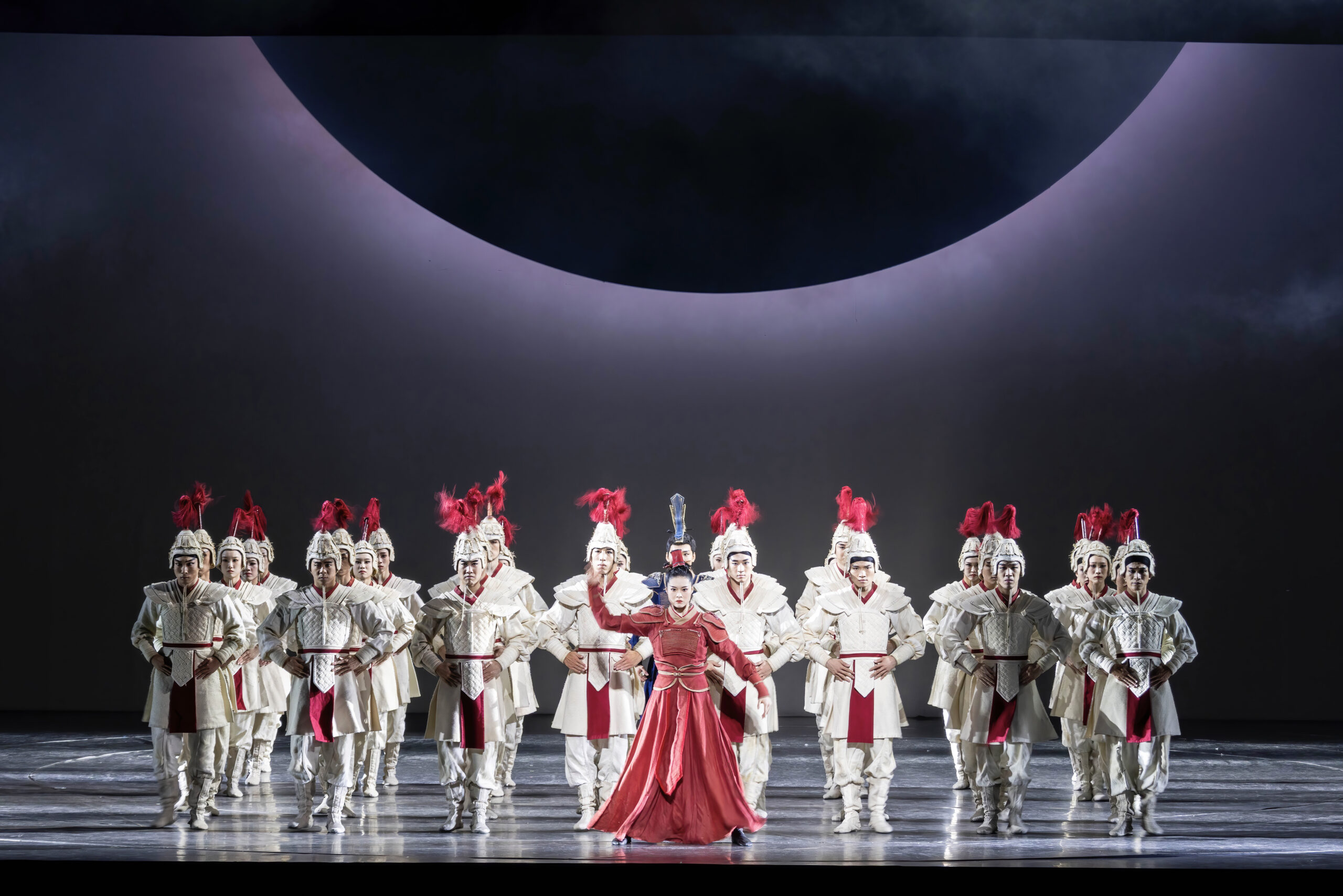
Then this past weekend, the Koch Theater saw the arrival and departure of four performances of the dance theater adaptation of the famous Chinese folklore Mulan (RECOMMENDED) (most Americans are likely to be familiar with the tale through Disney’s 1998 feature length animated film or its recent live action remake). Presented by China Ningbo Performance & Arts Group, the epically staged spectacle by Zhou Liya and Han Zhen boasts boldly stylized designs — dominated by a large, cinematically utilized turntable — and a sizable cast. Instead of the artful yet knotted familial drama that drives the aforementioned production of A Dream of Red Mansions, Mulan has opted to market itself as more accessible fare. Set to a conventionally filmic score (alas, pre-recorded like Red Mansions) composed especially for the production by Du Ming, Mulan unfolds in a relatively predictable telegraphed manner across a prologue, four separate acts, and an epilogue. With its action/adventure sequences and relatable coming-of-age dramatic arc, it’s the kind of entertainment that can be consumed and enjoyed by the entire family. Although the choreography is credited in the program to five people, the resulting numbers — which are influenced in equal measure by martial arts, military corps formations, and modern dance — are presented with a unity of vision. Particularly impressive are the show’s strikingly lit battle numbers, which are evocative without resorting to simply mimicking action scenes. Throughout, I was impressed by the thrilling athleticism and precision of the dancers — led sensationally by Tang Xinyi as Mulan and Xia Tian as General Wei as Mulan and General Wei, respectively — who throw themselves into the choreography, even if some of their acting veers towards the melodramatic.
 Copyright © 2026
Leave a Reply