
VIEWPOINTS – Classical music roundup: EL ÚLTIMO SUEÑO DE FRIDA Y DIEGO is a vibe at The Met, LISE DAVIDSEN dazzles at Carnegie Hall with an all-Schubert recital
- By drediman
- June 11, 2026
- No Comments
With the recent conclusion of The Metropolitan Opera’s 2025/2026 season, it seems a good time to look back at the final new opera of the company’s season, composer Gabriela Lena Frank’s El Último Sueño de Frida y Diego. The timing was also perfect for the opera season’s biggest star, soprano Lise Davidsen — with only a collection of Franz Schubert lieder in her arsenal — to absolutely dazzle in her Carnegie Hall recital last week. As per usual, read on for my thoughts.
EL ÚLTIMO SUEÑO DE FRIDA Y DIEGO
The Metropolitan Opera
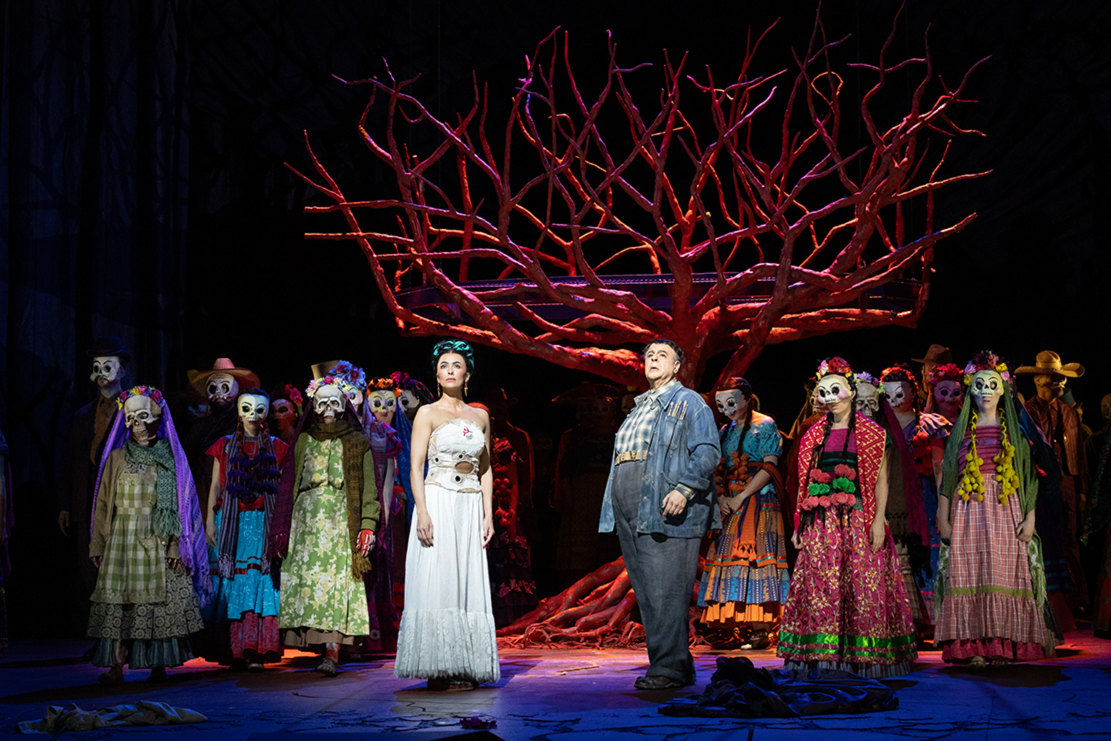
One of the more notable offerings to close out The Metropolitan Opera’s season was El Último Sueño de Frida y Diego (RECOMMENDED), a new opera about Mexico’s legendary artist couple Frida Kahlo and Diego Rivera featuring a score by Gabriela Lena Frank and libretto by Pulitzer Prize–winning playwright Nilo Cruz. More specifically, the opera is a sort of reversal of the ubiquitous Orpheus and Euridice myth — in this version, a deceased Kahlo leaves the underworld when an aged, ailing Rivera summons her on the Day of the Dead. While nothing much actually transpires plot-wise during the piece, it nevertheless casts a distinctive spell. Indeed, El Último Sueño is a total vibe, an organic pageantry that’s infused with pungent magic-realism and a seductive meditation on artists and how they view the world through their art. Frank’s score is a rich tapestry that’s musically varied and orchestrated with color and culturally-conscious instrumentation. Even if its evocative sonic effects — beautifully rendered by maestro Yannick Nézet-Séguin — are at times more captivating than Frank’s underlying composition, I was nonetheless taken by the mood the score set, which is also artfully captured by Deborah Colker’s atmospheric staging. As Kahlo, beloved American mezzo-soprano Isabel Leonard delivered a naturally acted and warmly sung performance, while Spanish baritone Carlos Álvarez, although at times vocally underpowered, affectingly embodied the character of Diego and his intrinsic connection to Kahlo. Soprano Gabriella Reyes, however, invariably stole the show whenever she appeared onstage with her incisive and forceful portrayal of Catrina (Keeper of the Dead). Just as over-the-top and nearly as eye-catching was Nils Wanderer as the vivacious cross-dresser who convinces Kahlo to ascend to the world of the living. The production also marks the first time The Met has collaborated with MoMA, which has assembled a small but wonderfully curated exhibit (which is ongoing) that gives visitors a rare opportunity to see many of the works by Kahlo and Rivera in the same room, while at the same time creating an insightful and synergistic dialogue between the two icons’ artwork and the Met’s production, particularly as it relates to John Bausor’s vividly conceived set and costume designs.
LISE DAVIDSEN
Carnegie Hall
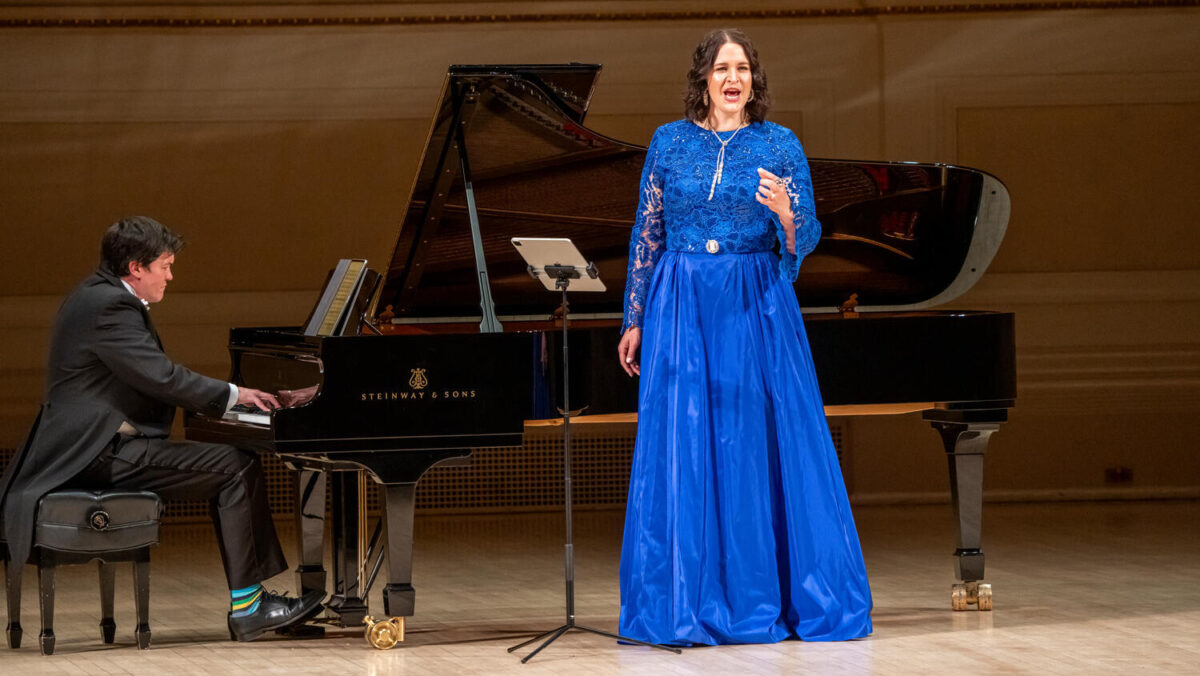
Last week, Norwegian soprano Lise Davidsen returned to Carnegie Hall in a sold out recital comprised of a thoughtfully curated collection of lieder by Franz Schubert (HIGHLY RECOMMENDED). In the past few seasons, Davidsen has emerged as the most sought after singer on the operatic stage, and a star and artist of the highest order. Her sound is extraordinary, capable of astonishing power and force to cut through any orchestra, yet also able to exude elegance and disarming introspection. Given that her abilities as an actress don’t quite rise to the level of her preternatural vocal talents, she absolutely blooms in the concert hall, and few other venues are as revered and acoustically ideal as Carnegie Hall’s Stern Auditorium / Perelman Stage. Although accompanied only by piano — albeit brilliantly — by Schubert specialist James Baillieu, the recital proved to be musically and dramatically satisfying. Indeed, the excitement in the auditorium was palpable as she launched into the program, sensitively conveying the gamut of human emotions that Schubert miraculously conjures in mere voice-and-piano compositions, which often take the form of astutely observant short stories or vividly conveyed life-altering eureka moments (in his life, he composed over 600 lieder, an altogether impressive feat). Between sets of lieder, Davidsen occasionally took to the microphone to provide context to certain songs, wherein she drew the audience in with her classy, even demure personality, beguilingly setting aside the self-important, tough-as-nails stereotype of the “opera diva”. Some of the early highlights included “Gretchen am Spinnrade”, an early work depicting a heartache that culminated in a piercing vocal climax, which raised the hairs on my neck. Also memorable were the evocatively and dramaticaly-sung selections from Gesänge aus Wilhelm Meister, which chronicles the travails of a kidnapped Italian girl via songs of nostalgia and terror. After the intermission, Davidsen returned to the storied stage — with a new gown! — to embark on a parade of largely life-affirming lieder (e.g., “Die Allmacht”, “Die junge Nonne”, “Der blinde Knabe”) that continued to articulate what it is to be human. Throughout, her singing was glowing, inviting, and nuanced, and her interplay with Baillieu piano-playing was instinctive and as natural as breathing. Suffice to say, the audience response was overwhelmingly enthusiastic, resulting in a pair of well-received encores — “An die Musik” and “An der Natur”.
 Copyright © 2026
Leave a Reply