
VIEWPOINTS – Classical music roundup: Mirga Gražinytė-Tyla conducts the NY PHILHARMONIC, the PHILADELPHIA ORCHESTRA conjures a mighty Mahler “Resurrection”
- By drediman
- March 17, 2026
- No Comments
Over the past week or so, I took in a pair of notable concerts performed by the New York Philharmonic and the Philadelphia Orchestra at, respectively, David Geffen Hall at Lincoln Center and Carnegie Hall. Here are my thoughts on these classical music outings from these two storied ensembles.
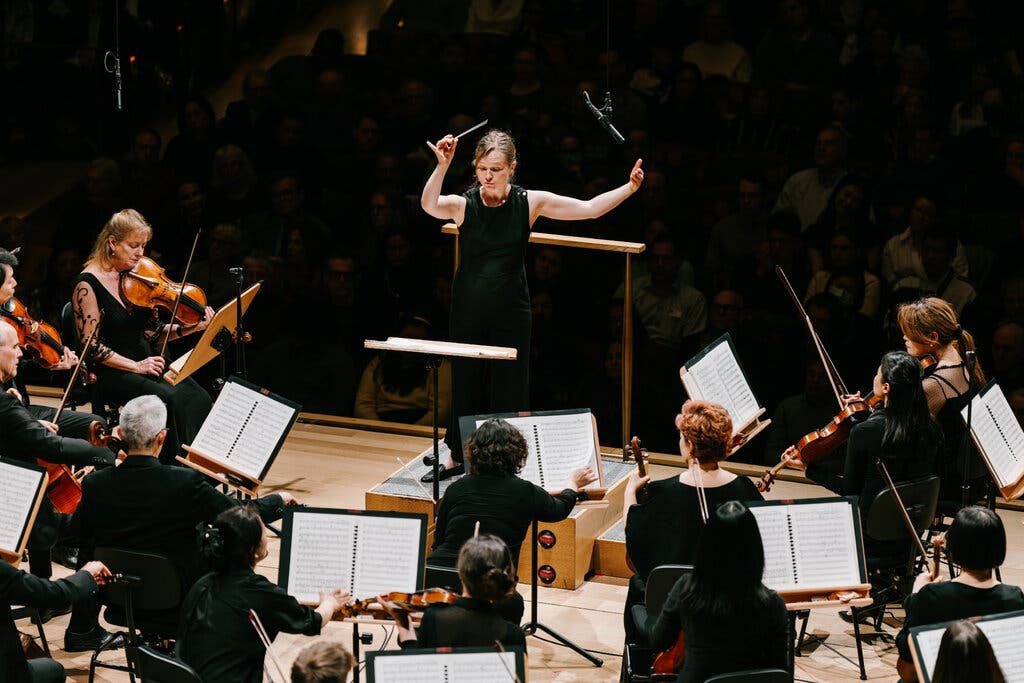
NEW YORK PHILHARMONIC
David Geffen Hall
Immediately prior to Gustavo Dudamel’s current stint conducting the New York Philharmonic (the incoming music director will also be conducting this upcoming weekend’s highly anticipated performances of David Lang’s the wealth of nations), amiable Lithuanian conductor Mirga Gražinytė-Tyla led the hometown orchestra in a bill comprised of Elgar’s Violin Concerto, György Kurtág’s Brefs messages, and Schumann’s Symphony No. 1 (RECOMMENDED) (just previous to the concert, Gražinytė-Tyla also conducted the New York forces in a separate program, which included the debut of a new piano concerto by beloved film composer John Williams). Elgar’s Violin Concerto featured excellent soloist Vilde Frang, who brought a refreshingly straightforward approach to the heavy romanticism of the work. Although at times this rendered the piece a tad less overtly exciting than other renditions that you may have heard, it nonetheless landed with honesty and an extra dose of unadorned elegance. The evening continued with Brefs messages, Kurtág’s 2010 deconstruction and distilled evocation of the orchestra, aggressively stripping down orchestral music-making its bare essentials. With a chamber-sized ensemble made up of strings, woodwinds, and brass, the austere piece — which was programmed to commemorate the composer’s landmark 100th birthday — starkly paired with the romantic flourishes of the aforementioned violin concerto and the buoyancy and color of the symphony that followed. Speaking of which, Gražinytė-Tyla brought energy and warmth, if not necessarily interpretive inventiveness, to the bright fanfare and pastoral glow of Schumann’s First, just in time to usher in spring, especially welcome after the arduous challenges of the winter New Yorkers have had to endure.
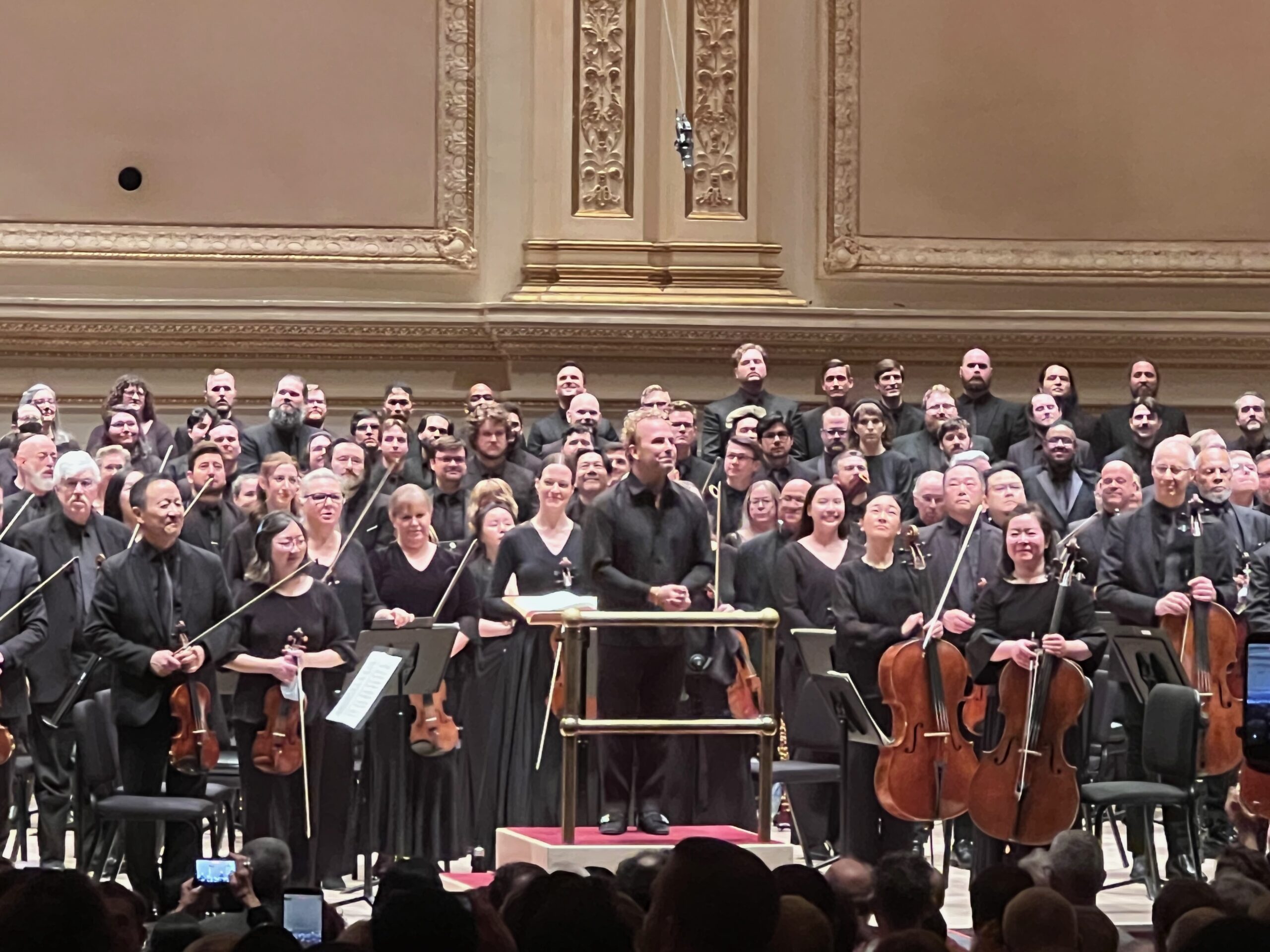
THE PHILADELPHIA ORCHESTRA
Carnegie Hall
Last week for one night only, the Philadelphia Orchestra played a magnificent account of Gustav Mahler’s expansive Symphony No. 2 (“Resurrection”) at Carnegie Hall (HIGHLY RECOMMENDED). Conducted by maestro Yannick Nézet-Séguin and featuring ideally equipped soloists Ying Fang and Joyce DiDonato — alongside the wonderfully calibrated sound of the Philadelphia Symphonic Choir — the performance was a captivating, encompassing journey through the gamut of life and beyond. Suffice to say, the large-scale affair was a night to remember, and a promising preview of maestro Nézet-Séguin’s ambitious plan to tackle the entire Mahler symphony cycle next season (with various orchestras). Throughout, the playing was objectively gorgeous — articulate, rich, and well-shaped, both within the context of each contained movement and the overarching existential journey of the symphony at large — thanks in large part to Nézet-Séguin’s attention to detail and his growing familiarity with the sprawling five-movement piece. The performance began evocatively enough, although the establishing funeral march of the opening Allegro maestoso movement could have mustered more gravitas to more effectively establish the work’s premise. The ensemble fared better with the following two “earthbound” movements, bringing ample character and lived-in cadence to their folk dance and waltz-like qualities. Nézet-Séguin and his Philadelphia players really stepped up to the challenge in the work’s final two movements, mightily conveying both the tension and depth of feeling of existential crisis and the powerful release of transcendence and divine redemption. DiDonato was in radiant voice, her mezzo sound burnished yet tinged with sensuality. Fang, on the other hand, sang with an ecstatic brightness that reached upwards towards the heavens. Indeed, the contrasting qualities of these two vocal performances was superbly rendered.
 Copyright © 2026
Leave a Reply