
VIEWPOINTS – O Canada!: Assessing the unique wonders of the repertory model via the STRATFORD FESTIVAL and the SHAW FESTIVAL
- By drediman
- September 6, 2025
- No Comments
Last week, I took a trip up north to Ontario, Canada to re-acquaint myself with two of North America’s remaining repertory theater companies, the Stratford Festival in Stratford and the Shaw Festival in Niagara-on-the-Lake. This being my first visit to these bucket list theater destinations since pre-pandemic times, I was eager to re-assess the repertory theater model, a resourceful but dying approach to theater-making that demands that actors, creatives, and venues collectively tackle a season of shows (e.g., a single actor may be asked to partake in a number of different theatrical productions that play on alternating nights). Apart from the fun of seeing how such an ambitious puzzle all comes together, there’s also the opportunity to witness the shows in these highly curated seasons in dialogue with each other, vis-à-vis the current state of the world.
STRATFORD FESTIVAL
This year presenting eleven fully staged productions out of four distinctly designed theaters, the Stratford Festival is arguably North America’s largest and elaborately run non-profit theater company. Taken as a whole, the entire operation is an impressive feat of planning, coordination, and artistry (not to mention a exquisitely satisfying experience for playgoers when paired with the town’s uncommonly rich culinary scene). This year at the festival, friction between the sexes — namely as it relates to male toxicity facing off with female empowerment — was thematically front of mind. Indeed, harmony and discord are abound in Stratford’s generally outstanding 2025 season, of which I was able to catch nine offerings.

No other company in North America does Shakespeare with quite the care and thoughtfulness that the Stratford Festival does. In this year’s crop of Shakespeare productions, audiences not only got a well balanced trio spanning comedy, tragedy, and romance — but also three very different stagings in three different theaters. Perhaps the best of the lot was Stratford artistic director Antoni Cimolino’s timeless production of The Winter’s Tale (HIGHLY RECOMMENDED). Despite the play’s convoluted plot, the acting throughout was nuanced, deeply felt, and crystal clear — kudos particularly to Graham Abbey as Leontes and Yanna McIntosh as Paulina (audiences were also treated to the great Geraint Wyn Davies’ only appearance of the season as Autolycus) — qualities that also marked the director’s previous production of the play at the old Tom Patterson Theatre in 2010. Then we have perhaps one of the most grim renditions of As You Like (HIGHLY RECOMMENDED) that I’ve ever seen — and that’s a compliment. In many ways, Chris Abraham’s vision for the popular comedy felt like a mediation on our world today, a journey from darkness to hard-won light and harmony that gave audiences a pause for reflection about the things in our lives that are worth cherishing and fighting for. Having also caught his excellent production of The Great Comet in Toronto on this same trip, I’m getting the sense that Abraham is a theater director of real distinction; I’ll certainly be keeping an eye out for what he works on next. Then over at the Avon Theatre, there was Robert Lepage’s highly anticipated Macbeth (SOMEWHAT RECOMMENDED), which he audaciously overlaid onto a world of biker wars between Québécois gangs. Although there were theatrical tricks aplenty, the tragedy mainly fell flat in this adequately acted production — led by Tom McCamus and Lucy Peacock as Mr. and Mrs. Macbeth — mainly because the French Canadian auteur has demoted Shakespeare’s pitch black examination for humanity’s capacity for horrific acts to his boisterous yet empty theatrics (oddly, he also omitted the key scene in which Macduff’s wife and son are murdered). To be sure, Lepage’s uniquely cinematic approach was much better served in Stratford’s 2018 production of Coriolanus.
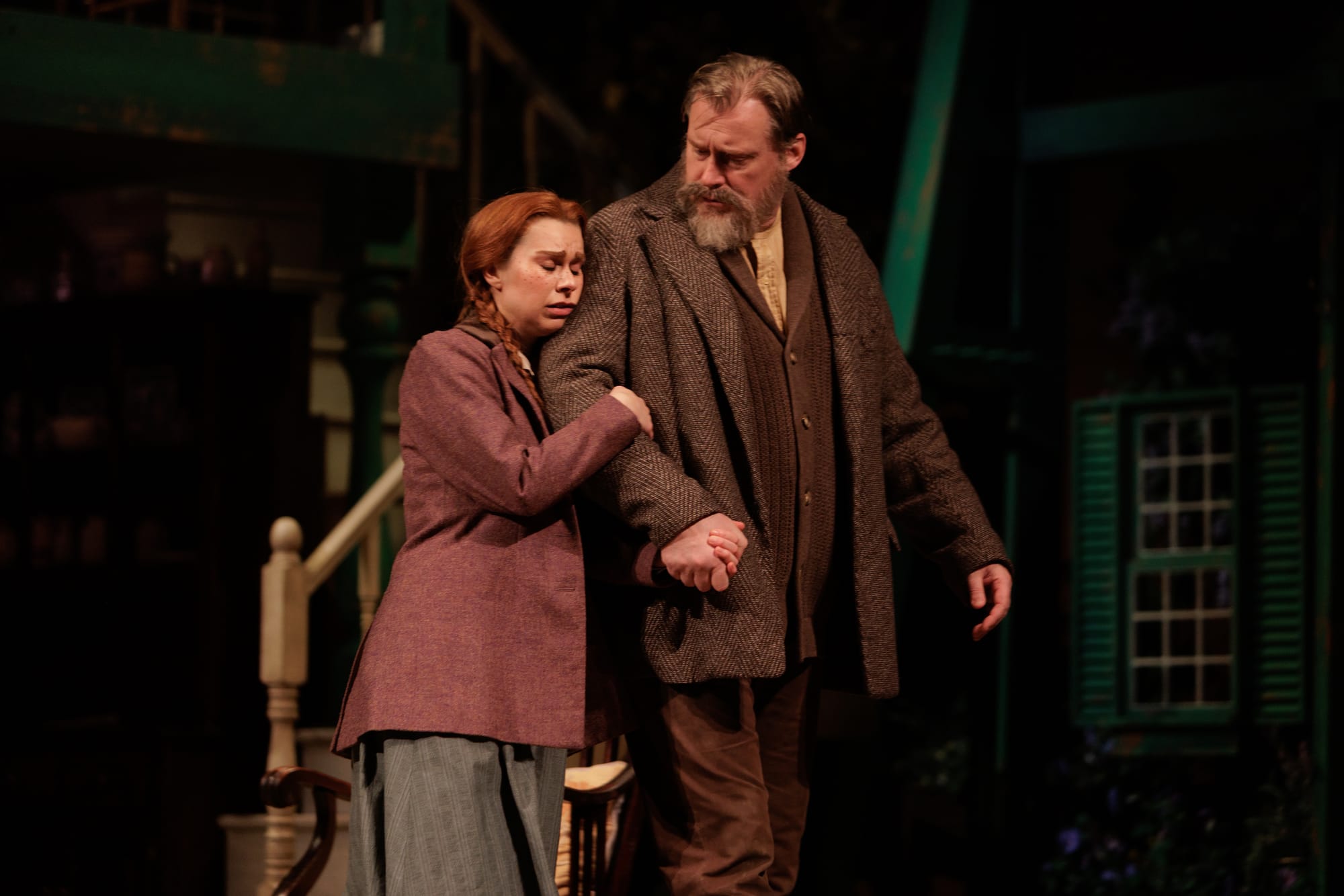
Then we have the adaptations. Easily topping the list at the Avon Theatre was this season’s family fare (alongside Annie, of course), Kat Sandler’s terrifically heartfelt stage adaptation of Lucy Maud Montgomery’s beloved young adult novel Anne of Green Gables (HIGHLY RECOMMENDED). Vivid performances were delivered by the entire company, namely Caroline Toal’s incandescent star-making turn in the title role. As directed by Sandler, the ensemble driven storytelling gave the production a seamless quality that worked well for the episodic nature of the Montgomery’s plot. There’s also a coup-like shift that occurs in the second act (no spoilers here) that brings relevance and urgency to Anne Shirley’s well-trodden coming-of-age tale. Then there was Forgiveness (RECOMMENDED) at the Tom Paterson Theatre. Adapted for the stage by Hiro Kanagawa from the book Forgiveness: A Gift from my Grandparents by Mark Sakamoto, the play tells the parallel stories of two families — one white, the other of Japanese descent — as they navigate the horrors of World War II from a uniquely Canadian perspective. Thanks largely to the enhanced technical capabilities of the gorgeous new Patterson Theatre, Stafford Arima’s staging fully immersed audiences into the knotted events of Sakamoto’s often wrenching tale. Additionally, the piece has given actors with Asian backgrounds the welcome (and rare) opportunity to take charge of a high profile production. Although not an adaptation of a literary work, Erin Shields Ransacking Troy (RECOMMENDED), also at the Patterson, is a spin of the latter pivotal events of the Trojan War, but told from the perspective of the women. Utilizing an all-female cast and a mostly all-female creative team, this world premiere production — a Stratford Festival commission — was a playful but ultimately bittersweet contemplation on women’s place in the world by way of Greek mythology. Director Jackie Maxwell has given the work a devised quality that allowed some of Stratford’s finest actresses — particularly Maev Beaty as Penelope (and others) and Irene Poole as Clytemnestra (and others) — to truly put their own stamp on their respective roles.
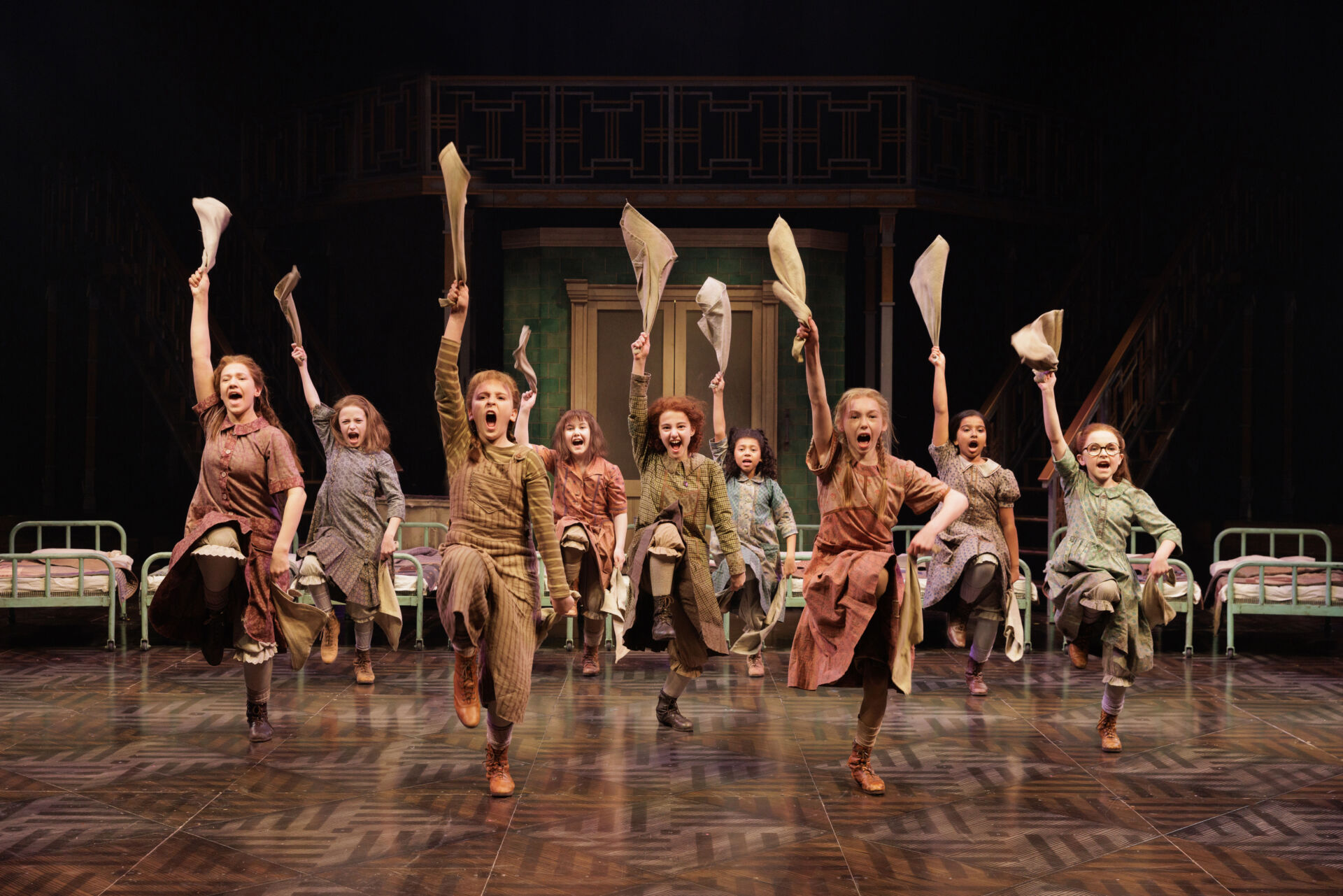
To round out the festival’s offerings, we also have a number of established works of Western theater, starting with this season’s two requisite musicals, Annie and Dirty Rotten Scoundrels. As directed and choreographed by the hugely talented and prolific Donna Feore, Stratford’s production of Annie (HIGHLY RECOMMENDED) at the Festival Theatre — which commences, fascinatingly, with the playing of the Canadian national anthem — takes a good hard look at the sense of American exceptionalism that pervades the piece. Indeed, in Feore’s dynamic and purposeful revival — solidly led by Harper Rae Asch as Annie and Dan Chameroy Oliver Warbucks — the orphans are more defiant, the white men in charge a little more inexplicably brazen, and the overall economic and moral landscape a bit more desperate. More directly commenting on the decrepitude that’s crept into contemporary society is the nevertheless shamelessly entertaining production of the 2004 musical adaptation of Dirty Rotten Scoundrels (RECOMMENDED) at the Avon. Tracey Fyle’s direction and Stephanie Graham’s choreography have taken obvious inspiration from Jack O’Brien’s original Broadway staging (which featured dances by Jerry Mitchell). Although this isn’t necessarily a bad thing, it makes making direct comparisons between the two productions difficult to avoid. Thankfully, the two lead performances by Jonathan Goad as Lawrence Jameson and Liam Tobin as Freddy Benson were class acts in unabashed crassness and expert comedic timing; they made the roles emphatically their own. Finally, over at the Festival Theatre, there was Dangerous Liaisons (SOMEWHAT RECOMMENDED). With its exaggerated, heightened costumes, director Esther Jun’s leisurely-paced production has given Christopher Hampton’s 1985 play the “Bridgerton” treatment. She also endeavors her best to inject the play with real feminist juice, particularly as valiantly manifested by Celia Aloma in the central role of the manipulative Madame de Tourvel. Despite these efforts to inject relevance and shift the paradigm of the piece, it continues to suffer from its weirdly sympathetic portrayal of the unforgivably predatory Valmont (convincingly portrayed by Jesse Gervais).
SHAW FESTIVAL
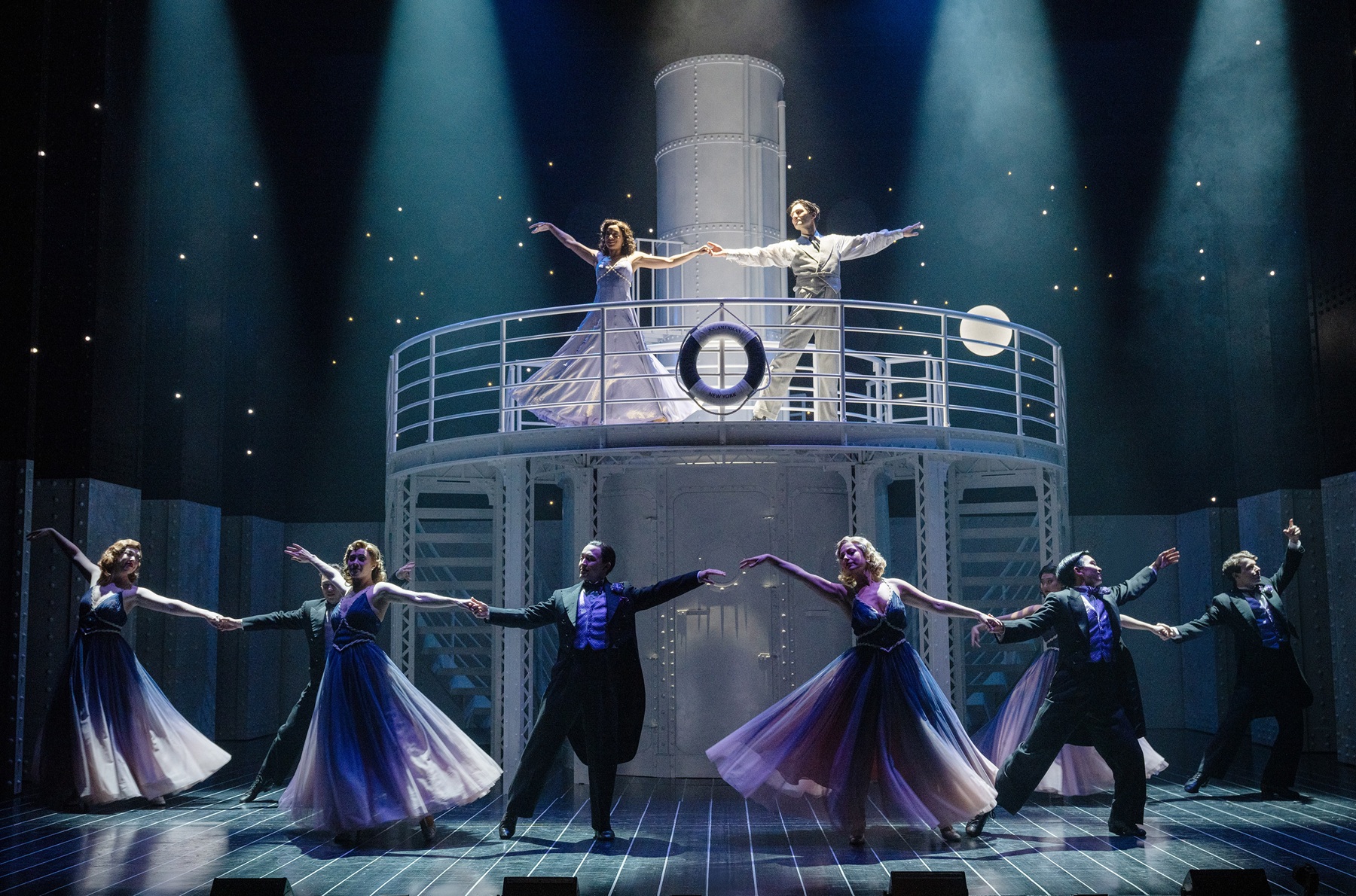
Over at the picturesque Niagara-on-the-Lake, I also had the pleasure of spending a few days immersing myself in Canada’s other flagship repertory company, the Shaw Festival. Overall, the name of the game — at least in terms of the three productions that I caught — was unadulterated escapism, starting with a sparkling revival of Cole Porter’s Anything Goes (RECOMMENDED) at the Festival Theater. Smartly and kinetically directed and choreographed by Kimberley Rampersad on Cory Sincennes attractive, stage-filling set, the production featured a slew of notable performances, starting with Mary Antonini, who imbued Reno Sweeney with the necessary brass and an imposing presence. Also worth mentioning is golden-voiced Celeste Catena who made for a lovely Hope Harcourt. But perhaps best of all were Jeff Irving as Billy Crocker and Michael Therriault as Moonface Martin, both of whom brought uncommon texture and terrific physicality to their performances. Better yet over at the charmingly vintage Royal George Theatre was a rare revival of Will Evans and Valentine’s delightfully British Tons of Money (HIGHLY RECOMMENDED), the only out-and-out comedy of the entire trip. The play’s farcical elements were masterfully and hysterically delivered by a game, impressively in sync company of actors, with a particularly eye-catching Mike Nadajewski in a deliciously over-the-top turn. Eda Holmes’ well appointed production — with on point sets and costumes by Judith Bowden — fit snugly on the cozy Royal George stage and was an utterly delectable experience from start to finish. Finally, there was Ella & Louis (RECOMMENDED), which was essentially an evening of classic jazz and blues songs put over by legendary jazz icons Ella Fitzgerald and Louis Armstrong, who were portrayed with conviction and uncanny vocal and physical resemblance by Alana Bridgewater and especially Jeremiah Sparks. Staged at the intimate and atmospheric Spiegeltent — which the Shaw Festival will be retiring at the end of this season — the piece is little more than a glorified cabaret act, and there’s absolutely nothing wrong with that. As affectionately directed by Kimberley Rampersad, the show was a bonafide crowd-pleaser, just like the other two Shaw offerings I caught during my time in Niagara-on-the-Lake.
 Copyright © 2026
Leave a Reply