
THE HANGOVER REPORT – The Met’s atmospheric new production LINCOLN IN THE BARDO manifests the strange liminal world between the living and the dead
- By drediman
- October 27, 2026
- No Comments
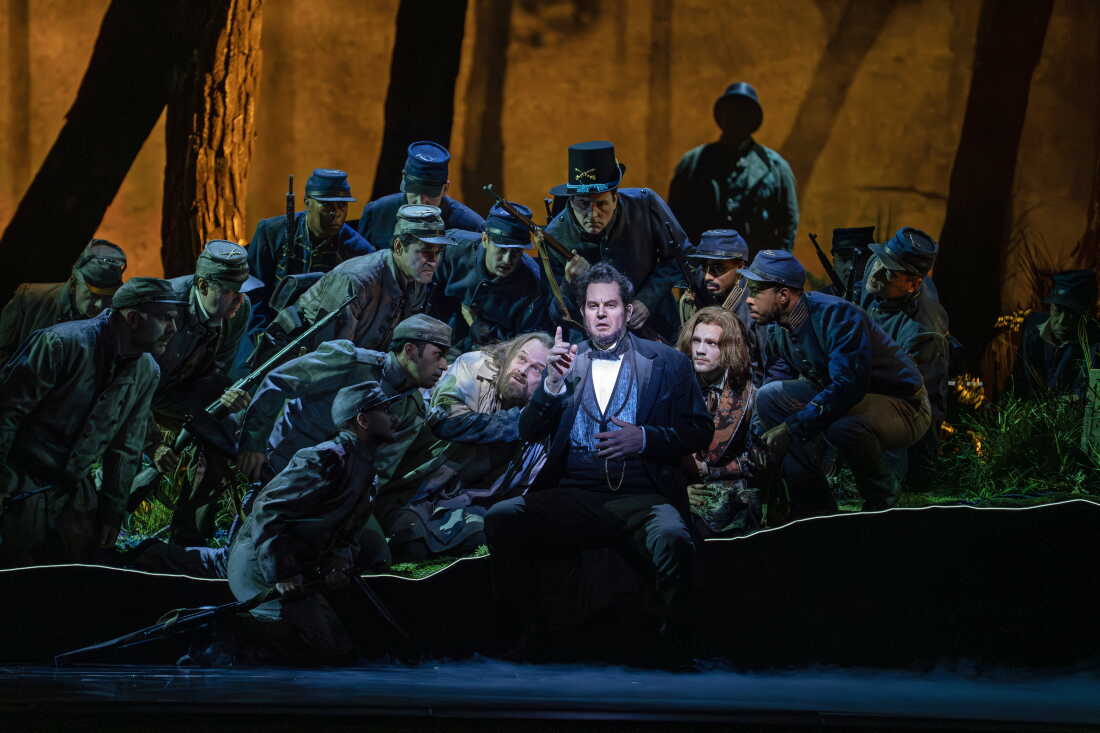
Last night, I was able to catch up with The Metropolitan Opera’s new production of Lincoln in the Bardo. Based on George Saunders 2017 Booker Prize–winning novel of the same name, this new opera adaptation features music by the wonderful American composer Missy Mazzoli and a libretto by her longtime collaborator Royce Vavrek, both in their Met debut (together, the duo previously adapted Lars von Trier’s 1996 film Breaking the Waves for the operatic stage, to devastating effect). Set during the 19th century around the time of the American Civil War, the piece focuses on the recently deceased Willie, Abraham Lincoln’s 11-year-old son, as he tries to navigate the bardo, the liminal purgatory-like world between life and death. In this supernatural plane, a motley band of lost souls — who uselessly continue to imprint themselves onto the world of the living — fear for Willie’s prospects in the bardo and come together to help him transcend his state of limbo.
Mazzoli and Vavrek have judiciously yet skillfully truncated Saunders’ sprawling book, downsizing the bardo’s many ghostly denizens to a select few without sacrificing the work’s multitudes of tones — from amusing farce, to utter heartbreak, to pure bizarreness, to ultimately a glimmer of hope. The music similarly straddles these different colors and shifts with inventiveness, fluidity, and a masterful sense of music theater storytelling, which maestro Yannick Nézet-Séguin and his mighty Met Orchestra manifested with attention to detail. The production has been staged with giddy theatricality by director Lileana Blain-Cruz — who helmed Lincoln Center Theater’s pitch-perfect revival of The Skin of Our Teeth a few seasons back — whose vivid and atmospheric production captures the menacing and pungent strangeness of the bardo. Using the entire height of the Met’s soaring proscenium and resourcefully utilizing the auditorium’s existing infrastructure (dim lighting, the flickering of The Met’s iconic crystal chandeliers), Blain-Cruz has created an experience that visually immerses audiences into this otherworldly realm. Set designer Adam Rigg conjures a creepy, decrepit wooded cemetery, complete with shadowy nooks, uneven hills, and towering trees. The permeating look is that of a peaty/mossy unkemptness, evoking the unknown mysteries of life after death. The staging also oozes organic kineticism, thanks largely to choreographer Raja Feather Kelly’s creepy-crawly movement, as well as James Ortiz’s alien-like puppets and creature suits.
As Willie, child soprano Everett Sobers was on hand on the night I attended. Throughout, his acting was disarming and his singing pure and ethereal. As the grieving Lincoln, baritone Peter Mattei gave an introspective dramatic performance, which was enhanced beautifully by the richness and smoothness of his vocal reading of the score. The opera also gives singers the opportunity to dig their teeth into outrageous character parts as the colorful residents of the bardo. Chief among these are Bevins, Vollman, and The Reverend — played by tenor Jonah Hoskins, bass-baritone Ryan McKinley, and soprano Christine Goerke (who nearly stole the show) with warmth and wit — the trio who take it upon themselves to give Willie a helping hand. Also taking their turn in the spotlight were countertenor superstar Anthony Roth Costanzo as the helplessly fluttering Miss Elise Traynor and stalwart mezzo-soprano Stephen Blythe as the conniving Mrs. Baron. Both were having a ball.
RECOMMENDED
LINCOLN IN THE BARDO
Opera
The Metropolitan Opera
2 hours, 45 minutes (including one intermission)
In repertory through November 14
 Copyright © 2026
Leave a Reply