
VIEWPOINTS – Chekhov and Molière, relevantly revived: Simon Stone’s wide-angle THE CHERRY ORCHARD at the Armory, Molière in the Park’s free DON JUAN in Prospect Park
- By drediman
- September 28, 2026
- No Comments
As the theater season kicks into full gear, here’s a look back at a pair of notable productions of Chekhov and Molière warhorses that bridged the gap between the summer doldrums and the hyperactivity of fall openings. Here are my thoughts on these stylish revivals, both of which spoke to audiences with relevancy, and in a compellingly contemporary voice.
THE CHERRY ORCHARD
Park Avenue Armory
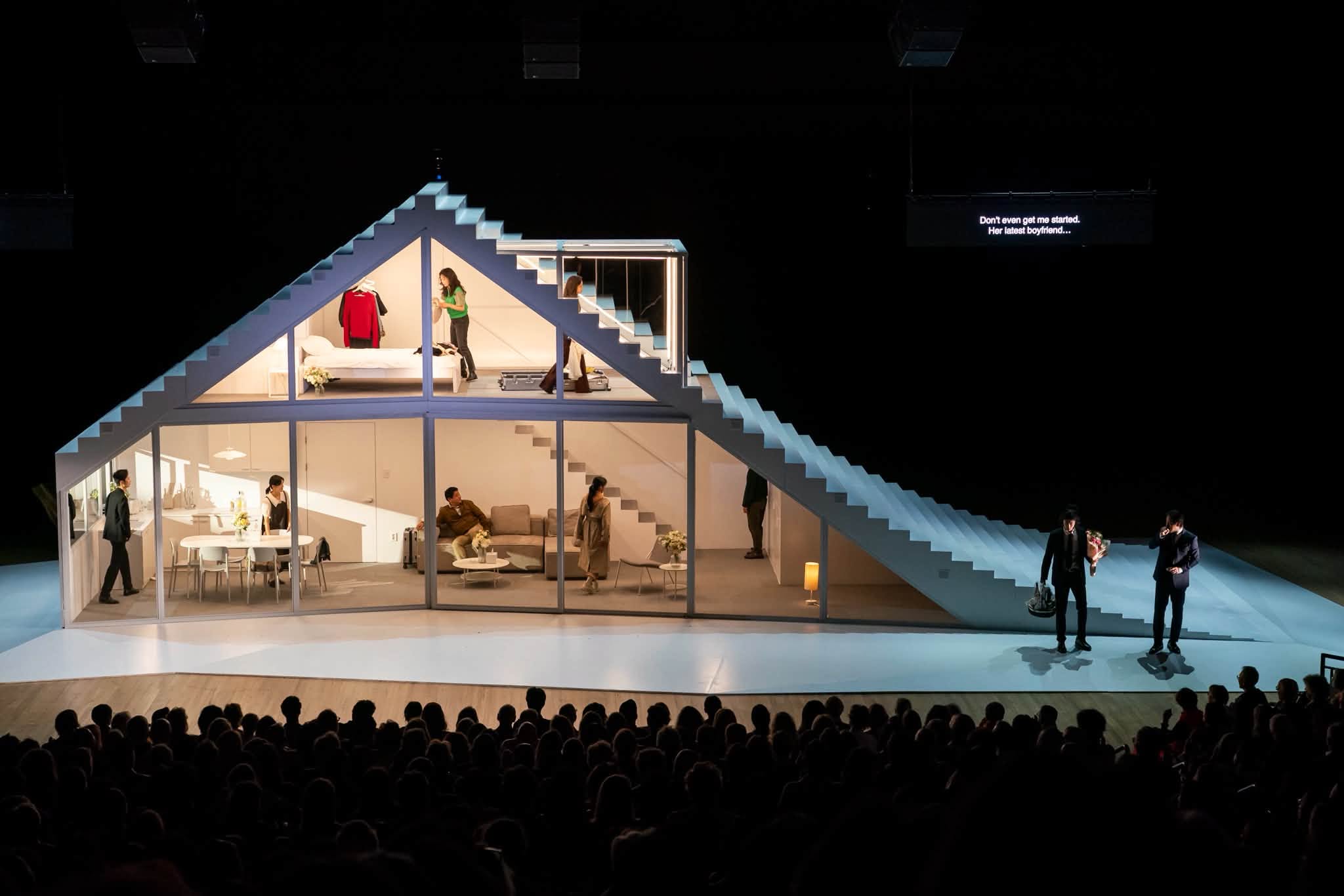
This September, Simon Stone’s high profile Korean-language The Cherry Orchard (HIGHLY RECOMMENDED) enjoyed a sold out limited run at Park Avenue Armory. For this adaptation, Stone has boldly reset Anton Chekhov’s play to modern-day Seoul, South Korea, where it takes place in, on, and around a strikingly sculptural home — courtesy of scenic designer Saul Kim — of an influential Korean family on the brink of a financial and reputational abyss. It’s no secret that Stone has become known for such aggressive updates of classic plays, often times to eye-opening effect (of these adaptations, I’ve seen his Yerma, Medea, and The Oresteia). For his Cherry Orchard, the Australian theater-maker has not only re-assigned the setting, he’s also excised some arguably extraneous characters (goodbye Charlotta and Firs!), while at the same time attempted to magnify certain relationships (e.g., the mother-daughter relationships) and more deeply explore broader class and societal struggles (e.g., fleshing out stories beyond those of the core privileged family). The net result is a version of the play that is keenly sensitive to Korean culture, while simultaneously staying true to Chekhov’s universal tragicomic investigation of human nature. Given his extensive career directing large-scale opera, it’s not surprising that Stone typically stages his productions with a wide-view lens. The Cherry Orchard follows this trend, taking full advantage of the epic expanse of the Armory’s drill hall beautifully, which can’t be said of everything I’ve seen in the unique space. From such a vantage point, it becomes fascinatingly clear just how much of an ensemble experience Chekhov’s plays actually are. Although the performances, led solidly by Jeon Do-yeon and Park Hae-soo, are delivered with conviction and carefully studied detail, it’s Stone’s overarching conceit and vision, which breathes significant contemporary life into a work many of us thought we know — thereby slightly altering the play’s DNA — that touch a chord and hit home with stunning force.
DON JUAN
Molière in the Park
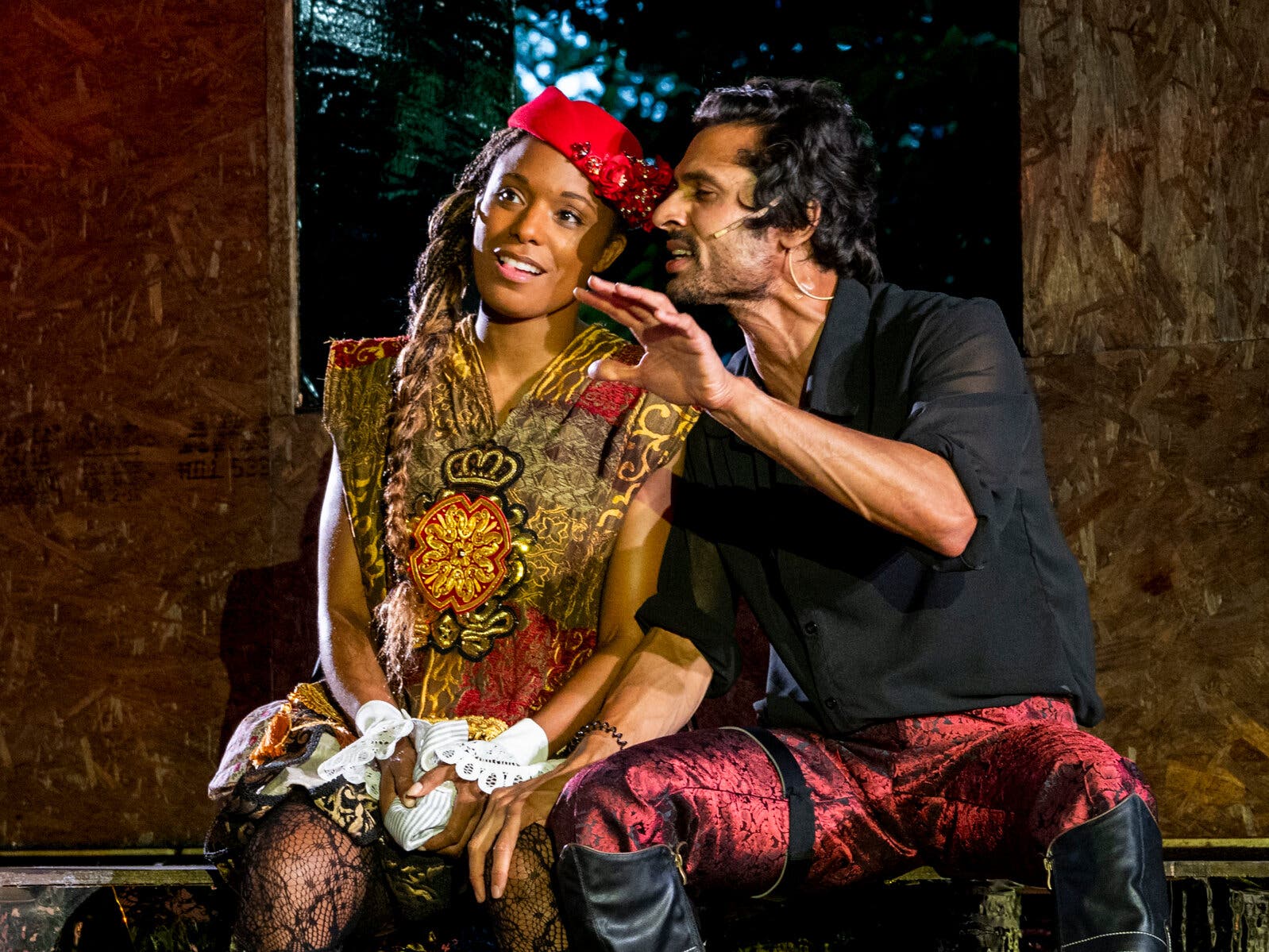
Also just recently wrapping up performances at the LeFrak Center in Brooklyn’s Prospect Park was Molière in the Park’s production of Don Juan (RECOMMENDED). Thanks to Stephen Wadsworth’s brisk and accessible single-act adaptation, the 1665 play feels remarkably fresh and relevant, especially during a time that, more often than not, rewards capitalism and self interest. Anyone who is familiar with the plot of the Mozart opera Don Giovanni will be able to follow Molière’s tale of the tawdry adventures of the ego-driven Don Juan — an insatiable womanizer, an unapologetic blasphemer, and a hedonist just overall unconcerned about the welfare of his fellow mankind — without a problem. The beauty of Keshav Moodliar’s charismatic yet grounded turn in the title role is that he doesn’t come across as all that egregiously selfish nor degenerate. Indeed, don’t most of us, by default, act by putting ourselves first, especially if these actions must co-exist with the intentions of other self-serving citizens and the blatant corruption societal systems? Arguably the more interesting role, however, belongs to the Keshav Moodliar, who plays Don Juan’s philosophically-divided servant Sganarelle with terrific presence of mind. As the play’s wholly relatable Everyman, Sganarelle is torn time and time again between chastising his master’s nonexistent moral standards and eagerly benefitting from the gains provided by Don Juan’s financial (if not sexual) conquests. Portraying the balance of Molière colorful roles are the trio of Daniel Pearce, Michelle Veintimilla, and Naomi Lorrain, each of whom snap into their multitude of characters with supreme skill and ease. Director Lucie Tiberghien’s clear-eyed production — which, as per Molière in the Park’s tradition, was presented to audiences free-of-charge — largely stays out the way of these wonderful actors, simply yet efficiently setting the play against the backdrop of scenic designer N. Wild’s stylish set design and Jonathan Moore’s evocative cello score (played live!).
 Copyright © 2026
Leave a Reply