
VIEWPOINTS – Bringing communities together through theatrical public spectacles: Taking a look at PUBLIC RECORD and RETURN OF THE BUFFALO
- By drediman
- September 25, 2026
- No Comments
In recent weeks, I participated in a couple of public theatrical spectacles that brought New York communities together in wonderfully meaningful ways. Here are my thoughts on Public Records at the Delacorte Theatre in Central Park and Return of the Buffalo: Tatanka Owe Akupi, which spilled through the streets of Brooklyn (and Lower Manhattan).

PUBLIC RECORDS
The Public Theater / Public Works at the Delacorte Theater
You know you’re entering the waning days of summer when Public Works presents its annual show over Labor Day Weekend at the Delacorte Theatre in Central Park. A programming arm of The Public Theater, Public Works was designed to bring New Yorkers from across the five boroughs together to participate in celebratory performances that integrate professional performers and members of the community. In contrast to previous years, the 2026 iteration, entitled Public Records (RECOMMENDED), was a less elaborate affair. Originally commissioned by the prolific National Theatre in London — that version had songs by Ross Millard and text by Stewart Pringle — the “living” work attempts to document how our city processes and facilitates the human experience. To further emphasize the documentary aspect of this unique theatrical project, each performance was recorded and is being made available to access at the New York Public Library for the Performing Arts. Whereas past productions (mostly) involved adapting Shakespeare plays (e.g., As You Like It, Pericles) into inclusive works of musical theater, this year’s offering was essentially a non-narrative concert featuring original songs by Michael Thurber and a “book” by Lisa Sanaye Dring (as with the London iteration, the production was directed by Emily Lim). That’s not to say that the production was static. Far from it — Dan Canham’s dynamic choreography made sure that each number was infused with infectious kinetic energy. And although the overall experience was a relatively brisk affair — Public Records‘ runtime was only a mere hour — it covered plenty of thematic ground and boasted the same exultant communal payoff as the Public Works presentations of previous years.
RETURN OF THE BUFFALO: TATANKA OWE AKUPI
St. Ann’s Warehouse, The Walk Productions, and KBH Arts
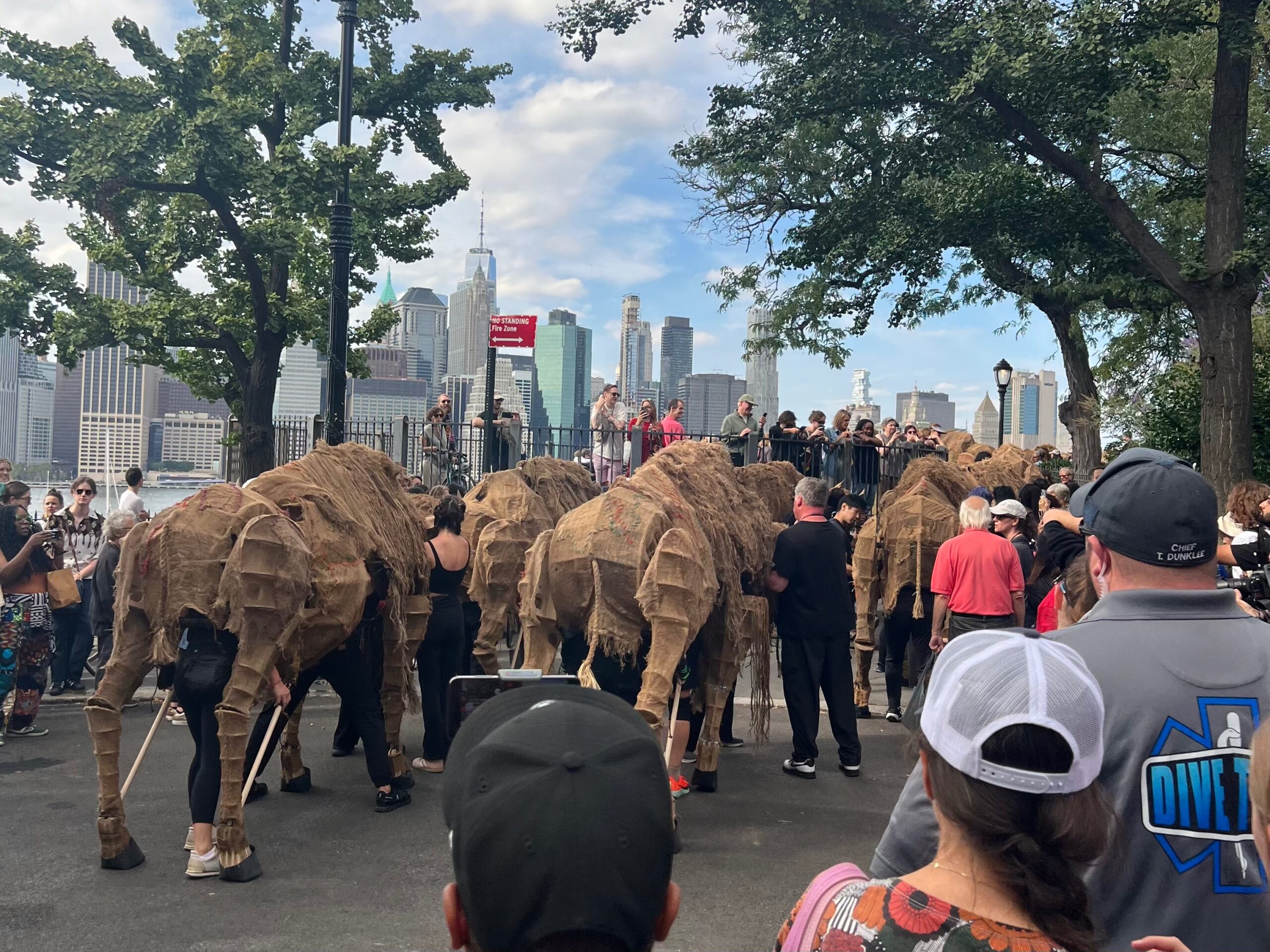
Last Friday and Saturday, New Yorkers were able to join 40 life-sized buffalo puppets as they roamed the streets and parks of Brooklyn and Lower Manhattan. Presented by St. Ann’s Warehouse, The Walk Productions, and KBH Arts, the free public event was called Return of the Buffalo: Tatanka Owe Akupi (HIGHLY RECOMMENDED), and it captured the imagination and enthusiasm of the hundreds who came out to participate. In equal parts interactive art installation and public theatrical spectacle, the event brought communities together to reflect upon the near extinction of buffalos during the late 19th century, as well as celebrate indigenous culture and heritage. The brainchild of Amir Nizar Zuabi in collaboration with Elders from Lenape and Lakota Nations, the ceremonial procession was punctuated by performances (e.g., music, dance, spoken word, ritual) from the likes of Rhiannon Giddens, Laurie Anderson, Pilobolus, Fogo Azul, Sam Waterston, Rosario Dawson, and Susan Sarandon. Resourcefully constructed from recycled material, the puppets themselves were a marvel. Individually, they exhibited convincing personalities of their own. Collectively, they created quite the monumental sight as they carved their way — herding and grazing — through the concrete jungle that is New York City, stopping traffic and piquing the interest of unsuspecting bystanders along the way. On Saturday, the march lasted approximately two hours as both buffalo and humans alike leisurely strolled through Brooklyn, commencing at Abolitionist Place and proceeding through Downtown Brooklyn and Brooklyn Heights before reaching its final destination in Brooklyn Bridge Park. Although not a completely seamless journey, the overall experience benefited from a variety of pacing. It also gave participants the freedom to socialize and/or immerse themselves in the spectacle of it all at will. Perhaps we’ve witnessed the birthing of a new New York tradition?
 Copyright © 2026
Leave a Reply