
VIEWPOINTS – The robust fall dance season continues: Program 2 of the ARPINO DANCE FESTIVAL and the return of PARIS OPERA BALLET
- By drediman
- October 12, 2025
- No Comments
This past week was a busy one for dance fans, with quite a number of enticing offerings from a number of institutions and festivals city-wide to choose from. Here are my thoughts on two of them.
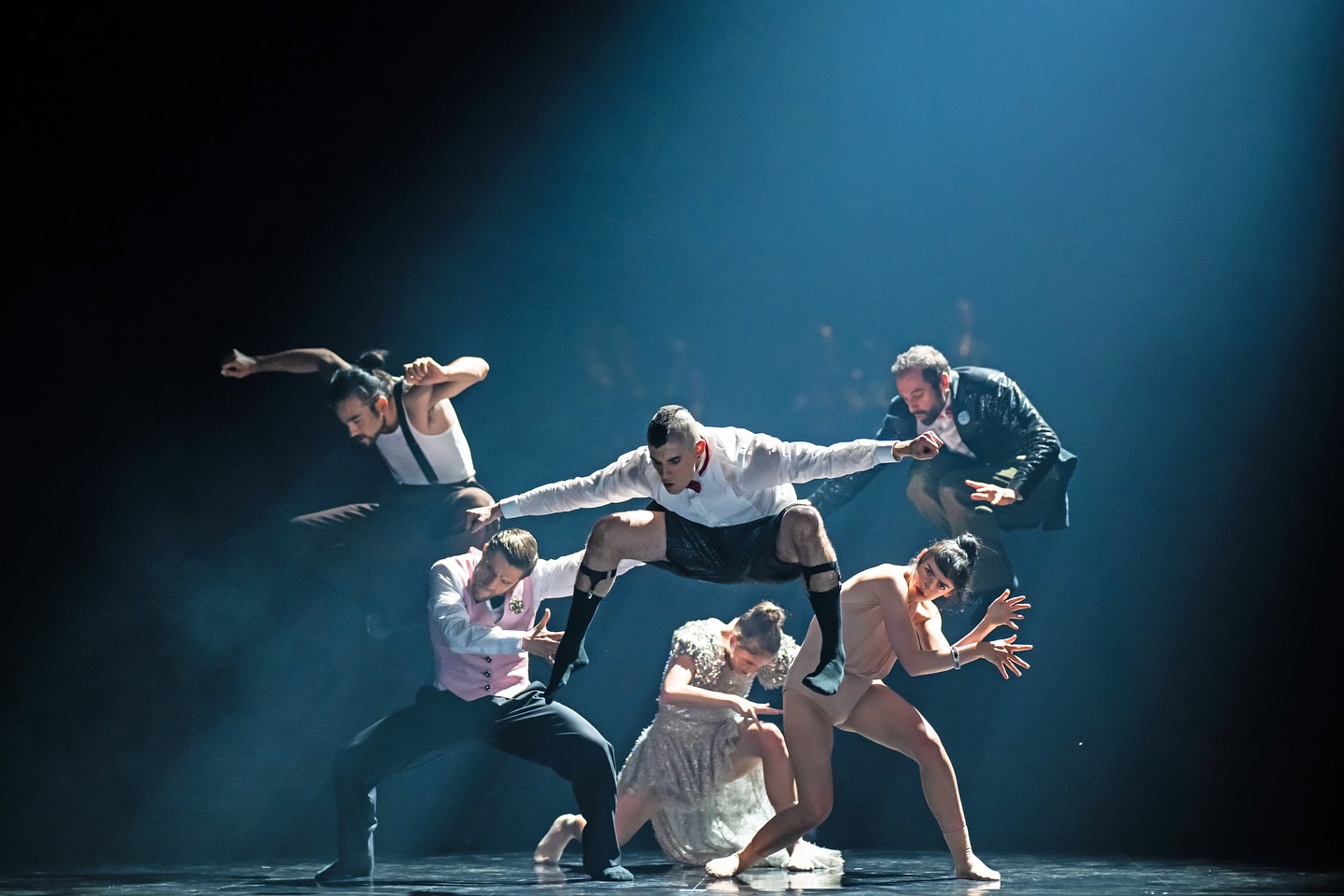
PARIS OPERA BALLET: HOFESH SCHECHTER’S RED CARPET
New York City Center
Through October 12
This past week, New York City Center played host to the Paris Opera Ballet. As the vehicle for its highly anticipated return to New York — the last time the company was in town was way back in 2012 — the esteemed ensemble chose Red Carpet (RECOMMENDED), a 75-minute full length piece for 13 dancers and a handful of musicians. The piece is the latest creation of London-based Hofesh Shechter, one of the current darlings of the European contemporary dance scene, whose choreographic style — very much like Sharon Eyal, another hot commodity in the dance world — is influenced by the movement aesthetic of Ohad Naharin (both trained and were former company members of the famed Israeli choreographer’s Batsheva Dance Company). Simultaneously glamorous and slightly sinister, the work vaguely begins suggesting a red carpet of a premiere, complete with fabulous costumes by Chanel. As the evening unfolds, the piece enters into a sort of a slow-burning strip tease, in which the dancers embark on a gradual metamorphosis from fierce individuality to a merged blob of humanity, ultimately slithering and slinking in symbiotic pulsations as if a single organism. The choreography is vintage Shechter — sweeping, obsessively rhythmic, and highly emotive — as if more interested in creating a vibe than intricate steps. Although the repetitive choreography grew somewhat tiresome as the piece wore on, the Paris Opera Ballet dancers were nothing less than sensational. Despite the understated elegance for which the company is world-renowned, they can be vividly idiosyncratic dancers when they’re asked to be — as they certainly are here. Indeed, each of them were able to conjure vivid characters within the relatively limited vocabulary of Shechter’s choreography, which often reverts to pregnant poses and tableaus in between feverish dancing. Perhaps the most interesting element of the production is its visual presentation, a kinetic progression of voluptuous swooping red curtains and the ascending/descending of an imposing chandelier — all illuminated by atmospheric, highly theatrical lighting. To be sure, Red Curtain is informed by a cinematic sensibility, particularly film noir, and the overall effect is striking. Throughout, four occasionally visible onstage musicians performed Shechter’s own moody yet often rollicking composition with abandon.
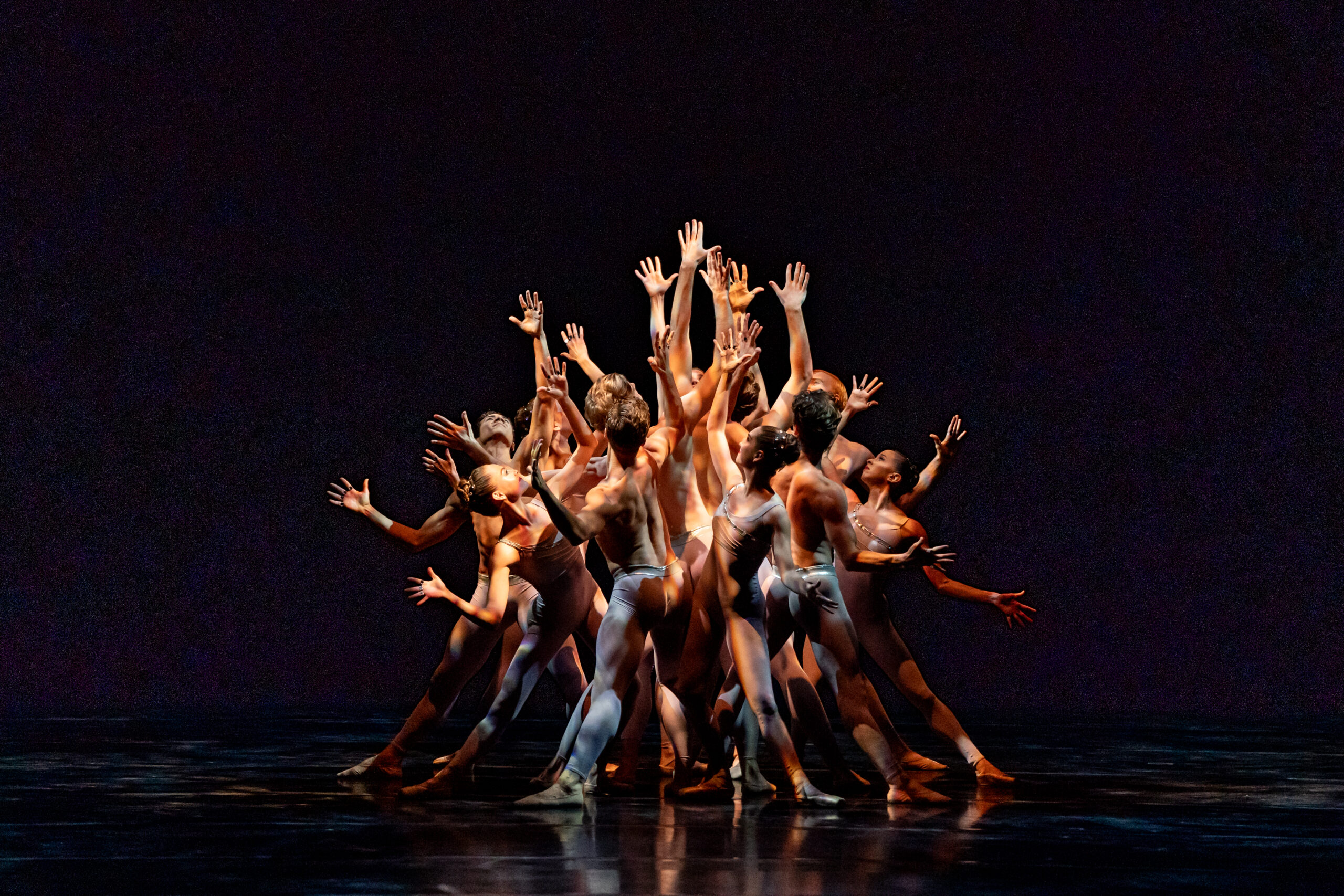
ARPINO DANCE FESTIVAL
The Joyce Theater
Through October 12
This week also saw the continuation of the Arpino Dance Festival (RECOMMENDED) at The Joyce Theater (the centennial celebration is being co-presented by The Gerald Arpino Foundation). The second program featured more Gerald Arpino nuggets (in total, seven distinct works are being presented over the course of the two-week festival), which have — as I have expressed previously — all but vanished from New York’s dance stages when the late Joffrey Ballet resident choreographer packed up and left with the company for Chicago in 1995. Like the first bill — you can read about my thoughts on that evening of dance here — the performance commenced with Confetti (1970), a lively ballet for three couples. Thankfully, the performance earlier this week by Artistic Ventures in Dance (“AVID”) was more technically secure than it was during last week’s opening night. Then came the battle-of-the-sexes that is Valentine (1971), a pas de deux set to the music of Jacob Druckman, which was deliciously played live onstage, in referee costume, by double bassist Debra-Seyoun Charles. Staged as if a boxing match, the dance is in turn absurd and erotic. And as danced by the towering Fabrice Calmels — one of the Joffrey Ballet’s indisputable stars over the last few decades, and still a formidable dancer — and the game Emily Speed, its overall effect was amusing, if only mildly so. The second half of the evening kicked off with Sea Shadow (1962), another pas de deux, which was performed with stoic and statuesque beauty by Dance Theatre of Harlem’s Kamala Saara and Kouadio Davis. Using the sweeping adagio movement of Ravel’s Concerto in G for Piano and Orchestra as its musical backdrop, Arpino’s early work is pleasantly diverting if a bit on the nose when it comes to choreographic and dramatic ideas about sensuality and romantic yearning. Saving the best for last, the evening closed out with Light Rain (1981) — Arpino’s bright ode to youth and clearly the program’s most substantial work — which was danced with sparkling clarity by the fantastic dancers of Ballet West. Although overall a success, both programs ultimately felt a bit slight; each could have used at least one more quirky Arpino creation to truly give his long-starved fans the full meal they were looking for.
 Copyright © 2026
Leave a Reply