
VIEWPOINTS – Inquisitive women choreographers PAM TANOWITZ, JULIANA F. MAY, and OGEMDI UDE make their mark with their distinctive, uncompromising visions
- By drediman
- January 14, 2026
- No Comments
Thus far this January, I’ve come across a number of challenging and nuanced new works from inquisitive women choreographers — namely Pam Tanowitz, Juliana F. May, and Ogemdi Ode — that have stuck with me. Read on as I articulate my thoughts on these layered and uncompromising evening-length dance creations, each of which have made their distinctive mark.
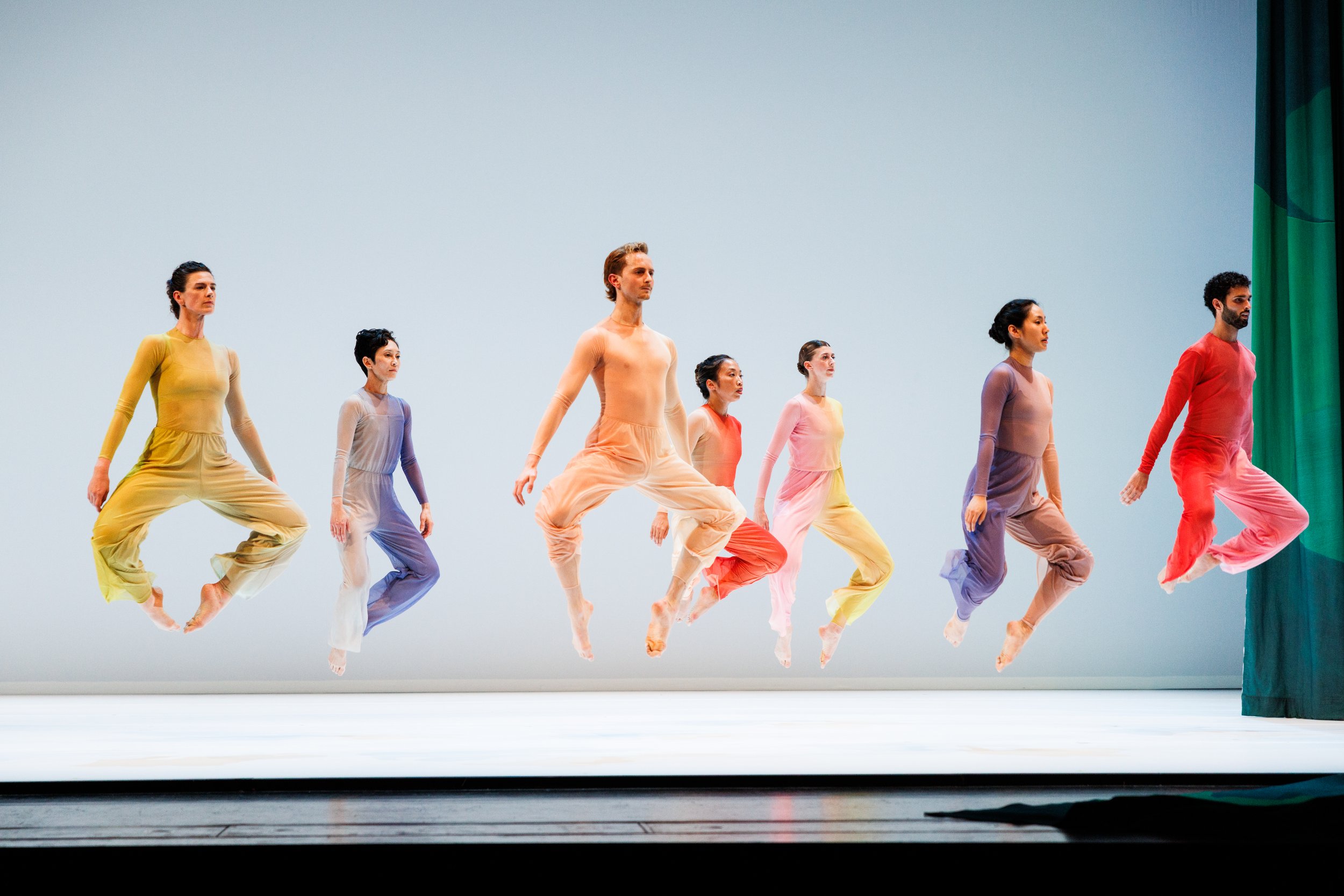
PAM TANOWITZ: PASTORAL
Rose Theater at Jazz at Lincoln Center
This week at the Rose Theater at Jazz at Lincoln Center, you’ll find the Fisher Center at Bard production of Pam Tanowitz’s Pastoral (RECOMMENDED) (the piece originally premiered at Bard SummerScape last year). Set to a score by Caroline Shaw, the cerebral piece is in part an homage to Beethoven’s Sixth Symphony (i.e., the composer’s “Pastoral” symphony). Despite its title, the work is less a contemplation on the natural world and our place in it than it is an exercise in remixing and derivation. Indeed, those of you looking for a straightforward pastoral depiction may be confounded, or even disappointed. Shaw’s score is an ingenious spin on Beethoven’s work, incorporating various recordings of it — as well as various other recorded soundscapes — all the while weaving through them musical threads (played live, beautifully, by a trio of live instrumentalists) clearly inspired by the aforementioned symphony and in engaged conversation with it. The end result is an experimental score that takes us one step farther from the natural setting that inspired Beethoven, which is also reflected in Tanowitz’s formal choreography. As rigorously performed with unadorned elegance by members of Tanowitz Dance, the work only occasionally manifests its namesake, particularly in instances when the dancers arrange themselves as if in a painting by Nicolas Poussin. Ultimately, however, what’s presented here is a completely fabricated depiction of nature — a hyper-saturated vision of 17th and 18th century pastorals (the production’s striking designs are by Sarah Crowner) that could very well benefit from repeat viewings.
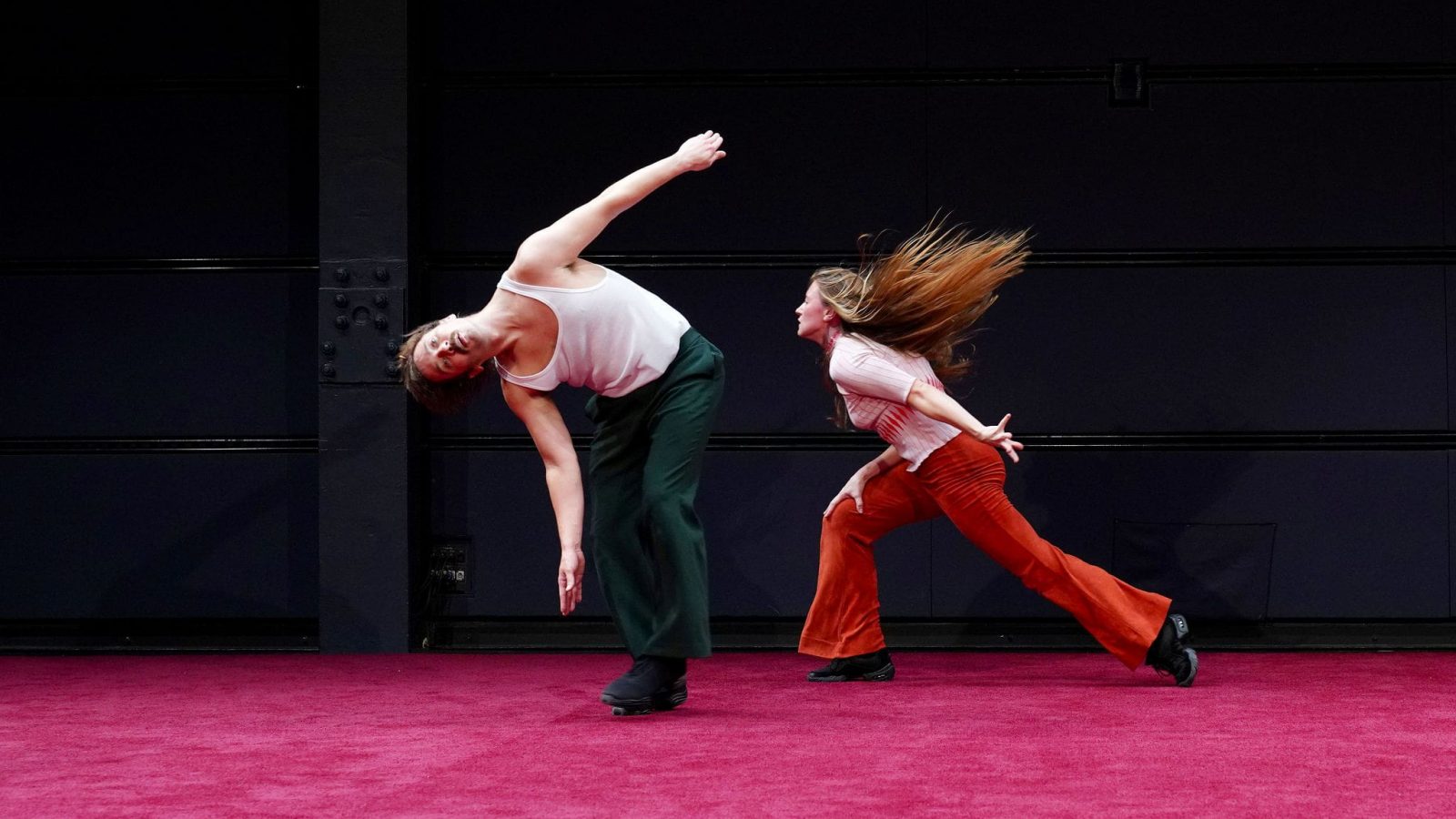
JULIANA F. MAY: OPTIMISTIC VOICES
The Chocolate Factory
This month for only a handful of performances, Juliana F. May’s Optimistic Voices (HIGHLY RECOMMENDED) made a return appearance at The Chocolate Factory in Astoria. Originally seen last fall at the Brooklyn Academy of Music (I missed that premiere), the work is in essence a heady dissection of family, eroticism, and motherhood. Filtered through a distorting lens — or is it a clarifying one? — that’s informed by post-modern dance and musical theater (May penned the deceptively simple tunes, many of which have the deceptively sing-songy innocence of nursery rhymes), the work draws connections between its awkwardly intersecting, at times contradictory subject matters. Although the hourlong work is awash in relentless choreographic and musical repetition and jarring rhythms, there is nevertheless pregnant meaning in its abstract depictions of the mundanities of everyday life, leaving frustration, desire, and hope in its wake as it organically expands and contracts. In its own sly and deadpan way, Optimistic Voices — which is unassumingly presented on a richly-hued red carpet as both a song cycle and a showcase for writhing movement — is an audacious statement. Its juxtaposition of frank sexuality and childlike play creates a tension that catapults its sensationally game cast (Justin Faircloth, Wendell Gray II, Lucy Kaminsky, Gwendolyn Knapp, Kayvon Pourazar, and Anh Vo) into a series of absurd situations — both physically and psychologically — all the while manifesting a palpable sense of community.
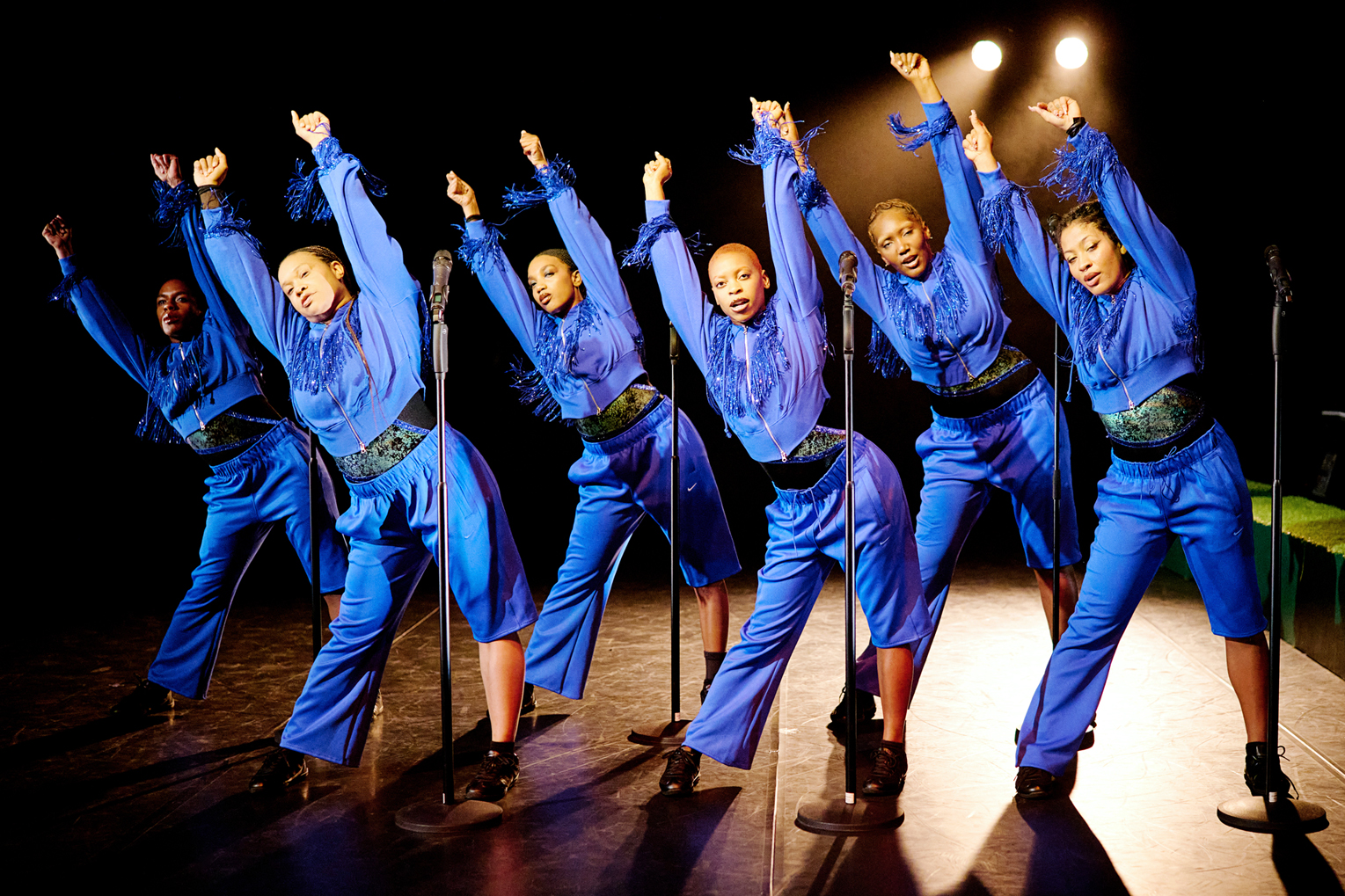
OGEMDI UDE: MAJOR
New York Live Arts
Last but not least was Ogemdi Ude’s MAJOR (HIGHLY RECOMMENDED) at New York Live Arts in Chelsea. Drawing from majorette dance — a form of dance that arose during the 1960s at historically Black colleges in the American South — the new work for (primarily) six dancers, which premiered last summer at the Kampnagel International Summer Festival in Hamburg, Germany, is an unabashed celebration and unleashing of Black femininity, and by extension unapologetic sexuality and in-your-face defiance. Combining the precision and teamwork of cheerleading and the bombast and sensuality of street dance, Ude taps into collective and individual pain and joy by showing audiences the body’s miraculous capacity for internalizing and latching onto memories. Leaning in on both improvised and scripted spoken word and a collage-like soundtrack that encompasses R&B, soul, drumlines, and hip-hop, the choreographer has concocted a potent brew that’s genuinely empowering and liberating stuff. Suffice to say, the dancers performed with fierce individuality, as well as the selflessness to proudly serve as part of the larger ensemble — as needed — diving headlong into the work’s unfolding episodes of resilience, sass, and hard won pride. Intelligently paced and constructed, MAJOR exuberantly culminates in a show-stopping finale that incorporates a full-on marching band and an enthusiastic sub-group of younger majorette practitioners.
 Copyright © 2026
Leave a Reply