
VIEWPOINTS – Global talent and a bevy of premieres distinguish City Center’s bountiful 2025 edition of FALL FOR DANCE
- By drediman
- September 23, 2025
- No Comments
One of the indicators of the arrival of New York’s busy fall performing arts season is the arrival of New York City Center’s Fall for Dance, a festival across pretty much across the entirety of dance disciplines. The 2025 edition (RECOMMENDED) — currently in the midst of performances — seems especially bountiful, with an uncommonly plentiful array of global talent on tap and a bevy of premieres (many of them City Center commissions) spread across five distinct programs. Here are my thoughts on the first three of the those bills.
PROGRAM 1
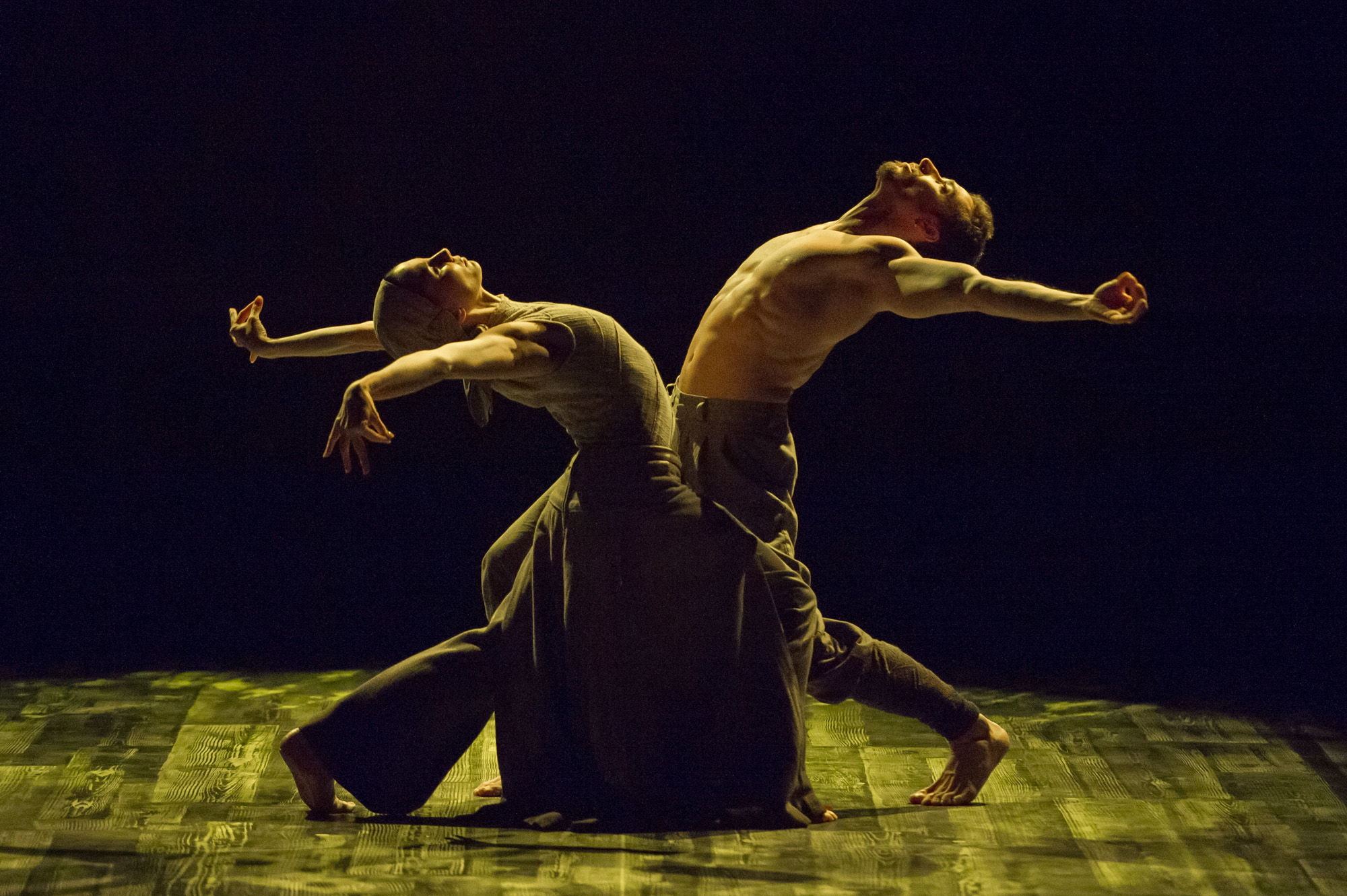
Fall for Dance kicked off with a balanced program, which commenced with Dance Is a Mother, which Jamar Roberts choreographed for New York City Ballet principal Sara Mearns for her Artists at the Center residency this past spring (the performance was a highlight of Mearns’ curated evening of dance). Featuring emotive music by Caroline Shaw performed live by Attacca Quartet and vocalist Raquel Acevedo Klein, the introspective piece reflects on a life dedicated to dance. Once again, the work came to vivid life as led by Roberts and Mearns, who continued to dance with sensitivity and soul. Then came Michelle Dorrance and Dario Natarelli’s The Man I Love, which was brought to life by the talented tap dancer Natarelli and handsome cellist Derek Louie. The solo seemed to be improvised around the fringes of the Gershwin standard (after which the dance is named), bringing a welcome queer sensibility and raw emotion to a classic song that seems to have become sanitized over time. The evening concluded with the great San Francisco Ballet dancing the belated New York premiere of Akram Khan’s large scale Dust, the celebrated British choreographer’s 2013 ode to the horrors of World War I. Despite its considerable ambition, the work registered as somewhat generic Khan — who is renowned for bringing together Indian kathak traditions and contemporary dance — leaning more towards trending European dance aesthetics of the time rather than a coming up with a distinguished hybrid dance vocabulary. Nevertheless, it’s always a treat to see the wonderful San Francisco dancers, who performed the pungent if histrionic piece with finesse and beauty.
PROGRAM 2
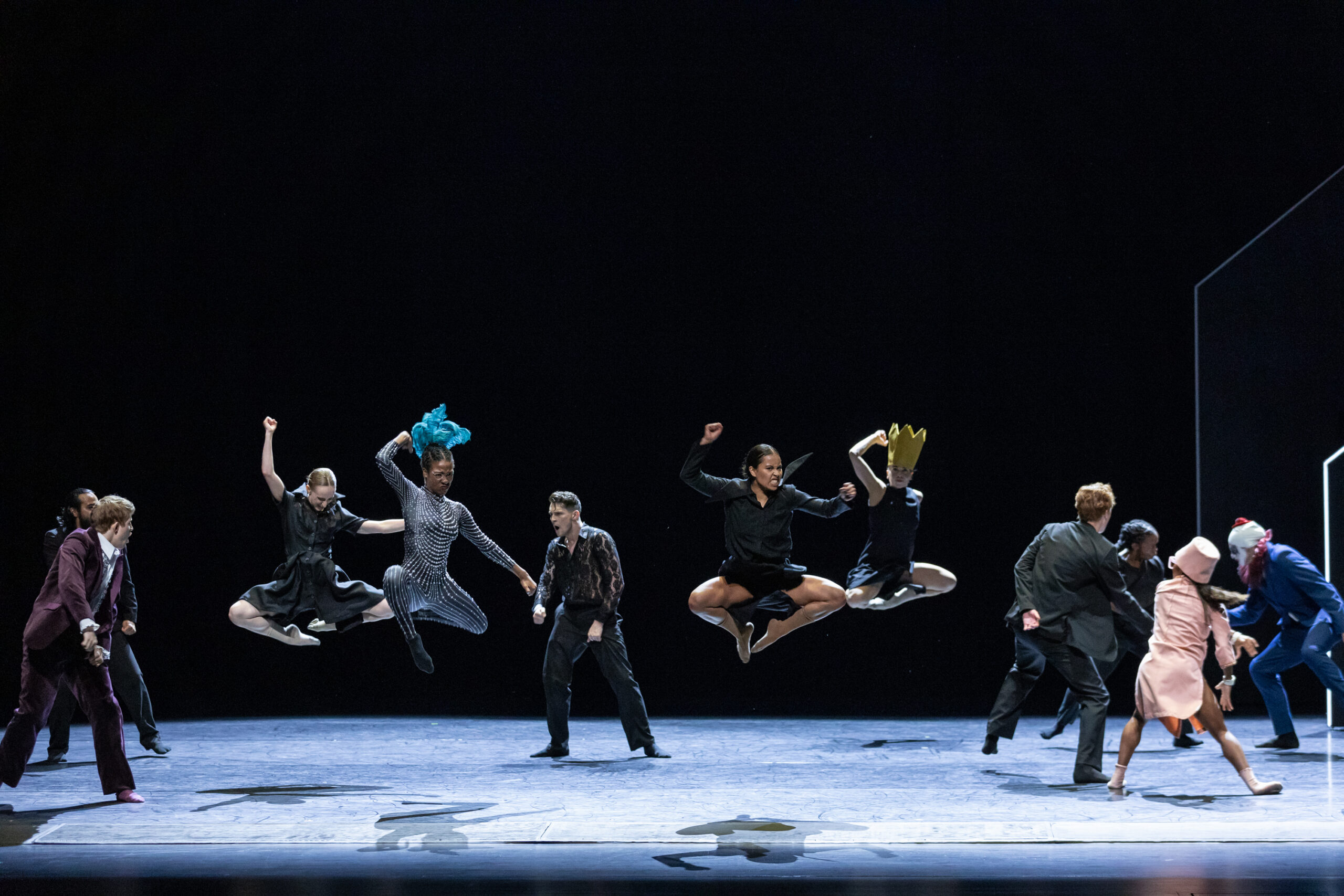
In a foray into more adventurous, riskier territory, Program 2 featured a pair of New York premieres, both of which were commissioned (at least in part) by City Center. The evening got off to a start with one of these premieres, Clara Furey/Bent Hollow’s divisive Dog Rising for three dancers. Although the piece may seem more an exhausting exercise in durational movement than dance, I nonetheless found it mesmerizing and hypnotic as an elemental physical manifestation of the relentlessly rhythmic electronic music to which it’s set. As such, the work seemed more akin to performance art — the gyrating bodies may not be to everyone’s taste — but such eclecticism is part of the beauty of Fall for Dance programming. The bill continued with another premiere, the Lil Buck and Davóne Tines duet Resurrection, which City Center co-commissioned with Vail Dance Festival. Similar to The Man I Love from the previous program, the collaborative effort intimately ties dance to music-making, this time intersecting the fluid street movements of Buck’s Memphis Jookin’ choreography and Tines’ gorgeous operatic singing of the Baptist spiritual “I’ll Fly Away”. The result was a brief yet soulful depiction of the Black experience that came across as timeless despite the specificity of the ingredients used. Concluding the evening was a rousing performance of Johan Inger’s Impasse by Hubbard Street Dance Chicago. Since being acquired by the company last year (the piece was first unveiled in 2020 by the iconic Nederlands Dans Theater), the crowd-pleasing ensemble piece has become somewhat of a signature closer for the company, utilizing a large ensemble and some rather quirky and surreal world-building.
PROGRAM 3
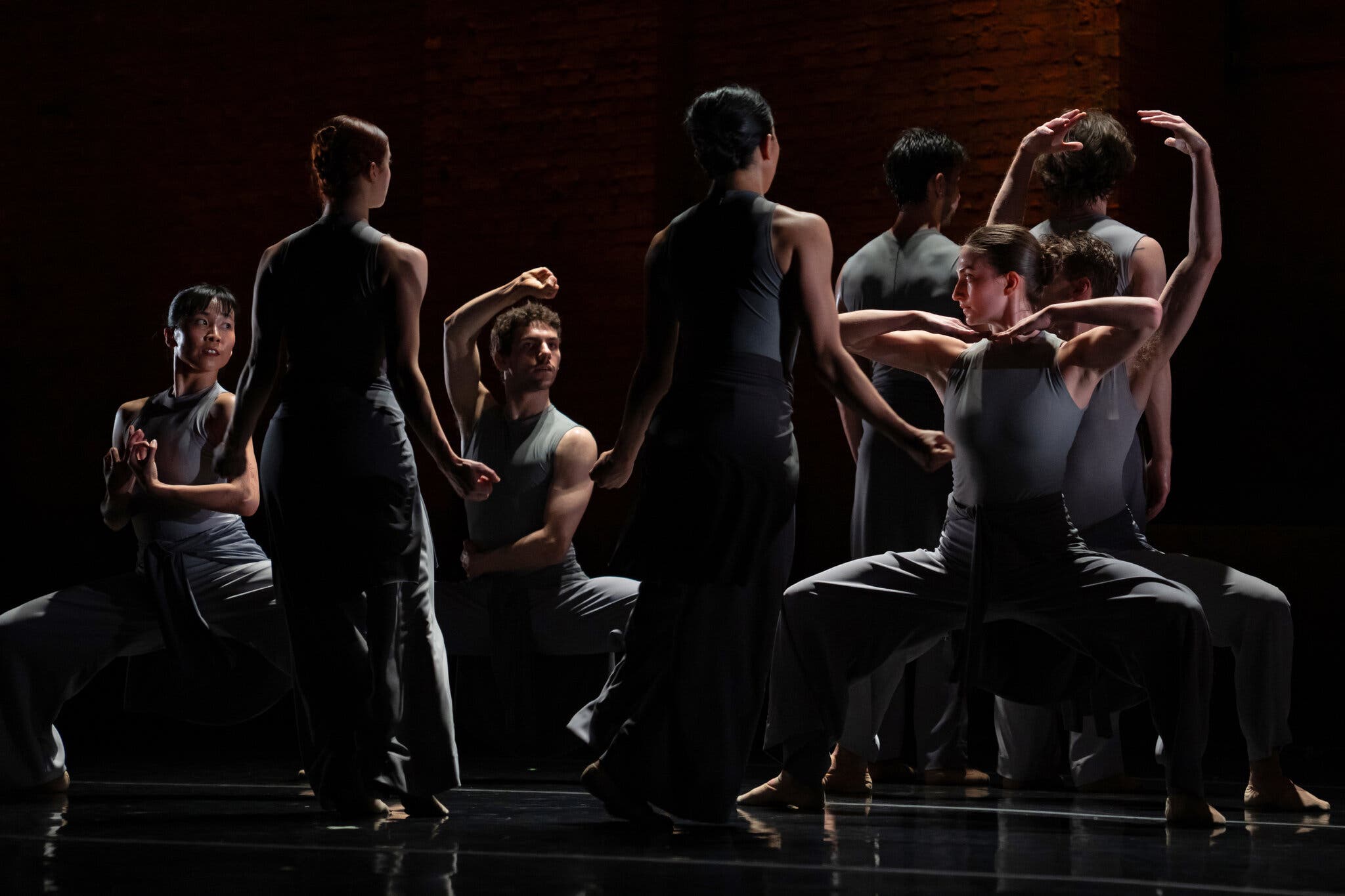
Program 3 commenced with Gibney Company’s technically terrific performance of Lucinda Childs’ Three Dances (for prepared piano) John Cage. Set to the John Cage’s 1944-45 composition “Three Dances”, Childs basks in the layered relationship between music and dance, leaning in on postmodern minimalism, including the usage of repetition and subtle progressions to convey Cage’s insistent music (Clara Furey/Bent Hollow’s aforementioned Dog Rising shared similar traits). Then came a pair of pas de deux by sublime Paris Opera Ballet étoiles Hannah O’Neill and Hugo Marchand — one planned, the other introduced last minute — that the sold out audience swooned over. First up of these was the surprise performance of the emotive pas from Angelin Preljocaj’s Le Parc, which the striking pair performed with understated lyricism and raw intimacy. Then after the intermission, the curtain rose on the duo in Jerome Robbins’ Afternoon of a Faun, featuring Michael Scales (on piano) and Alex Sopp (on flute) thankfully playing Debussy’s recognizable score live. Although O’Neill and Marchand’s performances were airy and dreamy, I did somewhat miss the distinctive tension that New York City Ballet dancers bring to the piece. After the high generated by these duets, the program came to an end with the world premiere of yet another City Center commission, Roderick George’s work-in-progress The Missing Fruit (Part I). The work is a dynamic creation for nine dancers that choreographically conveys the Black experience in America, highlighting the challenges of systemic oppression, as well as the resilience and joy in the face of it all.
 Copyright © 2026
Leave a Reply