
VIEWPOINTS – Contemporary dance premieres from distinctive European choreographers: Christos Papadopoulos’ LARSEN C and Angelin Preljocaj’s GRAVITY
- By drediman
- October 22, 2025
- No Comments
In recent weeks, fans of international contemporary dance have been treated to a slew of works from around the globe, namely Europe. Of particular note are two anticipated full-length creations — the American premieres of Christos Papadopoulos’ Larsen C at the Powerhouse: International festival and Angelin Preljocaj’s Gravity at The Joyce Theater. Read on for my thoughts on these highly stylized visions from two of Europe’s most distinctive choreographic voices.
LARSEN C
Powerhouse: International
Closed
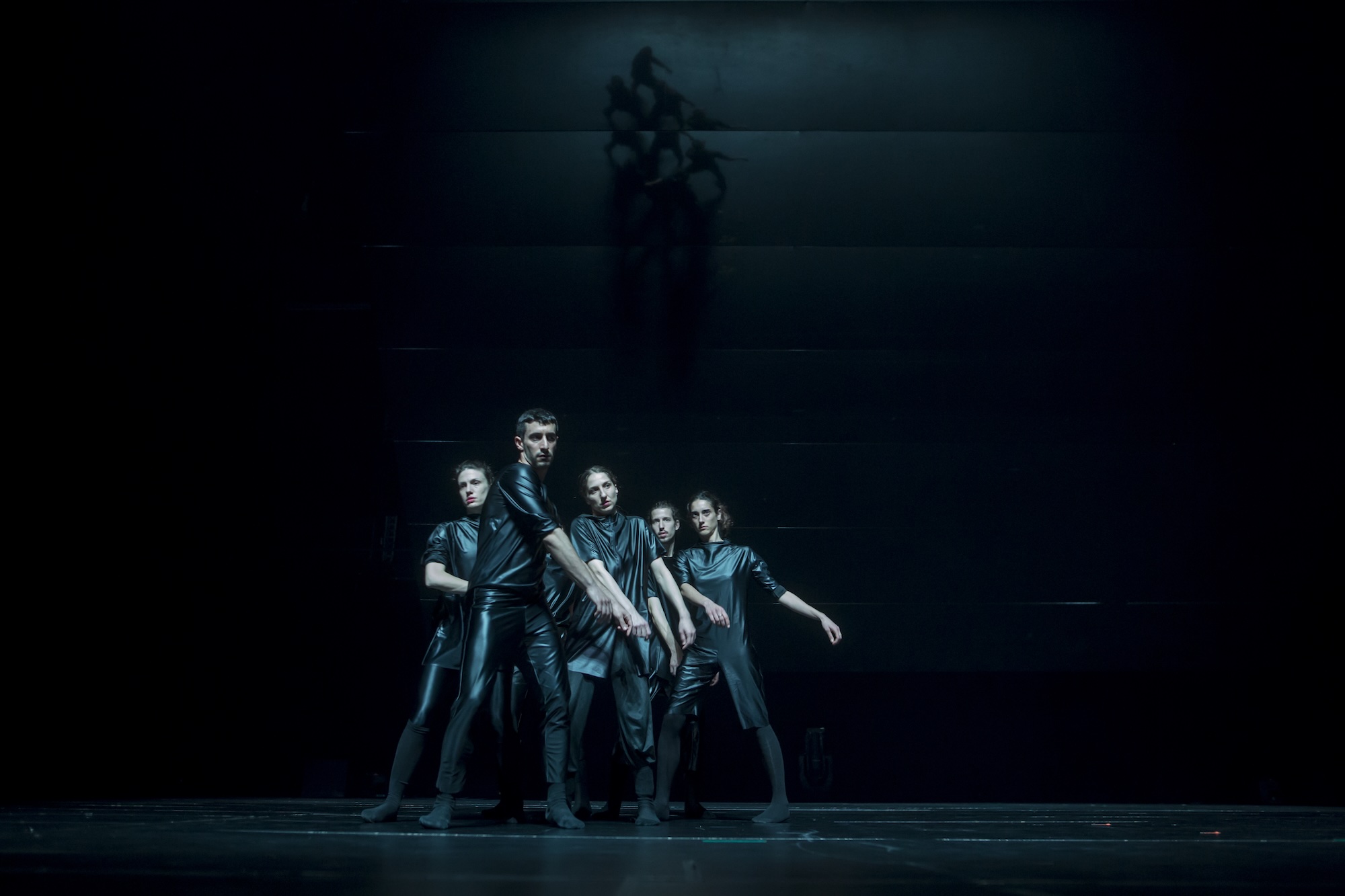
Last week in the Brooklyn neighborhood of Gowanus, Powerhouse: International presented the American premiere of Christos Papadopoulos‘s Larsen C (RECOMMENDED), the winner of the inaugural Sadler’s Wells Rose International Dance Prize. What makes Papadopoulos so distinctive is how he choreographs in micro-movements, which lends his works an ethereal aesthetic that’s unique to the Greek dance-maker. The hourlong piece builds organically, introducing each dancer one at a time before allowing them to react to one another’s presence — at first tentatively, then in time dynamically. As they organically achieve symbiosis amongst themselves — albeit, largely devoid of discernible humanity — they collectively develop a physical vocabulary from Papadopoulos‘s minutely deconstructed movements (which have the fluidity of the movements of early sea creatures like octopus, jellyfish, and squid), from which they emerge, gradually, dancing in the way we know it. But as with most things, the “dance” doesn’t last forever. The construct eventually topples and breaks into pieces, leaving us back in the primordial soup, where we began. The stunning lighting dominates the production’s design elements, engulfing most of the stage in total darkness, into which the dancers — garbed in relatively unassuming black costumes — fade in and out of. Much of the time, the dancers’ legs aren’t lit, which gives the impression that they are floating through an aquatic environment — an oceanic film noir, if you will. Although the company of only seven dancers — Papadopoulos does an impressive job of making the ensemble seem much larger — exhibited exceptional rigor throughout, their dancing was decidedly cool, disassociated, and interchangeable.
BALLET PRELJOCAJ: GRAVITY
The Joyce Theater
Through October 26
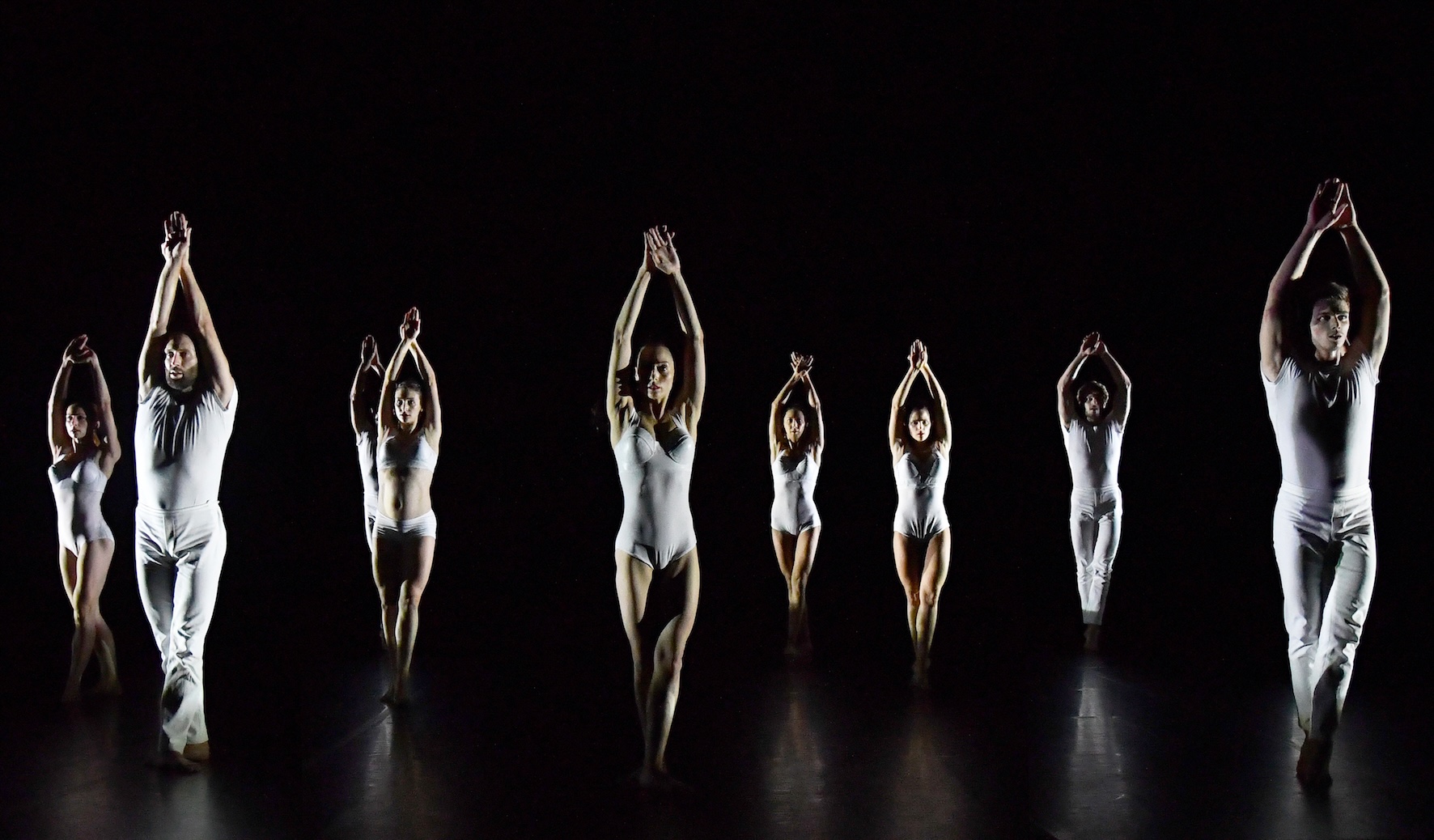
Last night marked the opening of another New York premiere, Ballet Preljocaj production of Gravity (RECOMMENDED), a full length piece by polarizing French choreographer Angelin Preljocaj. The 80-minute work is one of the more conceptual pieces I’ve seen of his, being essentially a mediation on gravity — the fundamental force of attraction between objects with mass or energy — both in its literal sense within the laws of physics, and as the concept metaphorically relates to the human experience. As a concept, the piece — which is set to an evocative pre-recorded patchwork score — brilliantly aligns with the Preljocaj’s choreographic aesthetic, particularly in his experiments of audaciously propelling limp bodies through space, often to beguiling and stunningly poetic effect (e.g., the central pas de deux in his dance adaptation of Snow White). But as is often the case with Preljocaj’s works, the choreographer’s eccentricities often creep in, and they do here during the work’s several extended stretches of repetitious movement, which are typically performed in unison and at times can try one’s patience. Thankfully, the most thrilling portion of Gravity is its daring finale. Although it could have been kitsch-ridden — with its circular Busby Berkeley formations and an overused soundtrack to Ravel’s Bolero soundtrack — I found this swirling kaleidoscopic climax to be a dizzying and powerful choreographic display of bodies repeatedly pulled together by “gravity” and pushed outward in evolving, revolving symmetry. A resigned yet striking denouement follows, leaving the stage as we first found it — strewn with lifeless bodies (until another life-force comes along to re-animate them, that is). Throughout, the Ballet Preljocaj dancers were sensational, displaying strength, stamina, and astonishing commitment.
 Copyright © 2026
Leave a Reply