
VIEWPOINTS – American Ballet Theatre’s fall season shows off the company’s astonishing range and style
- By drediman
- November 4, 2015
- No Comments
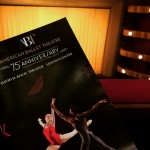 American Ballet Theatre’s fall season at the David H. Koch Theater showed the company to be in top-notch form. What’s astonishing to behold was the company’s range as it presented works from a wide array of choreographers, each with their unique brand of choreographic vocabulary. From Ashton to Taylor to Morris to Tharp, Ballet Theatre – particularly in this fall season – displayed easy mastery, musicality, and style. Over the course of two weeks, I was able to catch two very fulfilling programs that sent my heart and mind dancing into the night. Altogether, I saw six pieces that left me wanting more.
AfterEffect
Choreography by Marcelo Gomes
Music by Peter Ilyitch Tchaikovsky
Well-beloved Ballet Theatre principal dancer Marcelo Gomes’s wonderfully danced “AfterEffect” is a worthy effort but ultimately a mixed bag. As one of the company’s veterans, Mr. Gomes has worked with many of the world’s most exciting choreographers. In “AfterEffect”, I saw him trying to synthesize various influences to varying degrees of success. At its best, this large-scale dance was able to beautifully realize the larger tableaux. However, it’s the smaller moments that suffered from some generic choreography. I am eager to see what else Mr. Gomes up his sleeves as he continues to develop his own voice as a choreographer.
Monotones I and II
Choreography by Frederick Ashton
Music by Erik Satie
I was absolutely stunned by Sir Frederick Ashton’s stylish “Monotones I & II”, particularly as danced by Ballet Theatre this fall. I usually associate Ashton with classical story ballets, so I was intrigued by the pairing of these two short, intimate ballets (each ballet is choreographed for only three dancers). Although these ballets are abstract, there’s an air of timelessness about them that escapes much of modern choreography. All six dancers – Stella Abrera, Isabella Boylston, Joseph Gorak, Hee Seo, Alexandre Hammoudi, and Sung Woo Han – were outstanding, dancing with a controlled intensity that was mesmerizing to watch.
Company B
Choreography by Paul Taylor
Songs sung by The Andrews Sisters
Ballet Theater dancers got to let their hair down in Paul Taylor’s nostalgic ensemble classic “Company B”, which was exuberantly danced by the company. Set to recorded songs sung by The Andrews Sisters, the ballet conjures up the spirit of American youths during World War II. Although there’s energy, vigor, and character in their movement, Mr. Taylor also imbues the dance with a touch of underlying melancholy. This piece requires its ensemble to be engaged dancers as well as actors – and the Ballet Theatre dancers were admirably able to rise up to the challenge.
After You
Choreography by Mark Morris
Music by Johann Nepomuk Hummel
One of the most anticipated works in Ballet Theatre’s fall season was the world premiere of Mark Morris’s “After You”. It did not disappoint. “After You” is trademark Mark Morris – it’s indisputably musical, structurally interesting, and altogether human. In many ways, the new ballet, which is light as a feather yet deeply moving, reminds me of a mini “L’Allegro” (right down to the flowing costumes). That’s mighty high praise. “After You” was danced exquisitely by Ballet Theatre, but special mention goes to the excellent work of Isabella Boylston, who is really flowering into a fine principal dancer, and the always-magnificent Herman Cornejo.
Piano Concerto #1
Choreography by Alexei Ratmansky
Music by Dmitri Shostakovich
Alexei Ratmansky is one of the preeminent and most sought after choreographers working in the ballet world today, and his Shostakovich Trilogy ranks among his very best works. This fall, Ballet Theatre gloriously performed the third and final “symphony” in that trilogy, the thrilling “Piano Concerto #1”. I was once again reminded by the genius of Ratmansky’s work here, set to the music of Shostakovich, who was a complicated, conflicted man (especially politically). The real achievement of Ratmansky’s choreography for “Piano Concerto #1” – and indeed the trilogy as a whole – is its triumphant depiction of the jarring contradictions within the music. I eagerly await Ballet Theatre’s restaging of the entire trilogy for their spring season at the Met.
The Brahms-Haydn Variations
Choreography by Twyla Tharp
Music by Johannes Brahms
Twyla Tharp – who this year celebrates 50 years of dancing and dance-making – was also represented in Ballet Theatre’s fall season with her grand homage to classical ballet, “The Brahms-Haydn Variations”. On the surface, the first thing you notice is that it lacks the trademark explosiveness and inventiveness that characterizes most of Tharp’s works. However, look more closely and you’ll see Tharp’s hand at work – iconic ballet steps are inventively incorporated and there’s a certain thrill to how she quietly builds complex, almost architectural, structures onstage. Suffice to say, “The Brahms-Haydn Variations” was gorgeously danced by Ballet Theatre, particularly by its stunning, regal prima ballerinas: Isabella Bloylston, Maria Kochetkova, and Gillian Murphy.
HIGHLY RECOMMENDED (BOTH PROGRAMS)
AMERICAN BALLET THEATRE
Dance
David H. Koch Theater
Each program lasted approximately 2 hours (with two intermissions)
Fall season completed
 Copyright © 2026
Leave a Reply