
VIEWPOINTS – A pair of piercing documentary theater works look back at past crises: Daniel Fish’s KRAMER/FAUCI and Milo Rau’s HATE RADIO
- By drediman
- February 23, 2026
- No Comments
This snowy and chilly February, theatergoers have been given two opportunities — courtesy of a pair of adventurous and highly curious auteur stage directors — to look back at past crises and re-open wounds that have been somewhat mended by the passage of time, notably through the lens of keenly reconstructed media broadcasts. Read on for my thoughts on these gripping and eye-opening theatrical offerings, whose provocations have reached out across time and space with startling urgency.
KRAMER/FAUCI
NYU Skirball
Closed
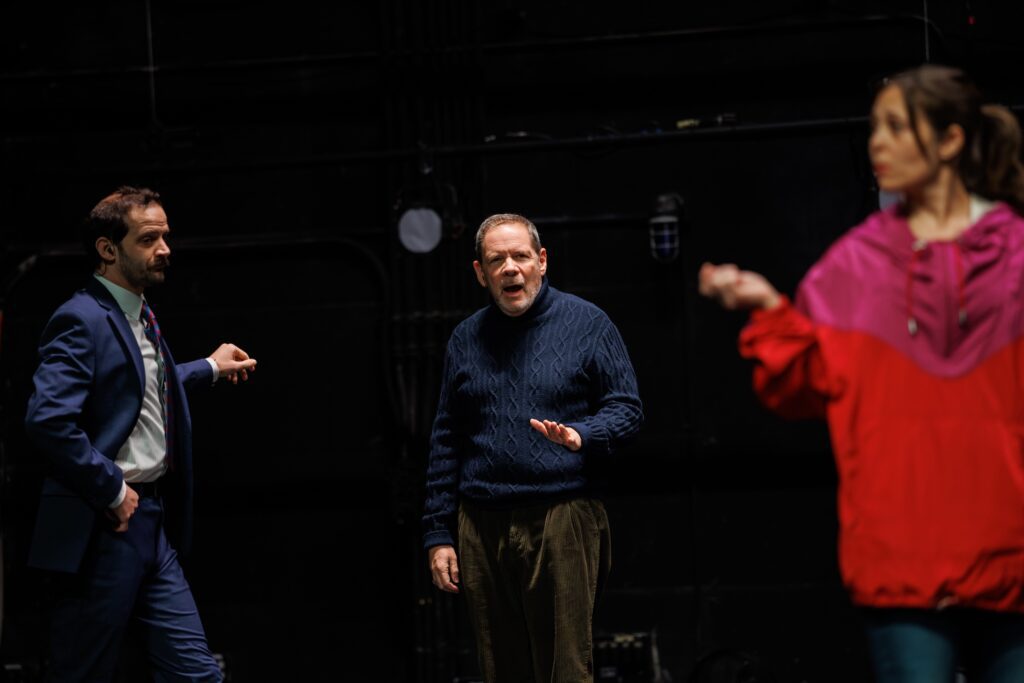
Documentary theater and the avant garde collided in NYU Skirball’s world premiere production (in association with The Collapsable Giraffe and OHenry Productions) of Kramer/Fauci (RECOMMENDED), experimental theater-maker Daniel Fish’s artful verbatim re-enactment of the televised 1993 C-SPAN exchange between measured infectious diseases researcher Dr. Anthony Fauci — who would be tapped to come back into the public eye nearly three decades onwards to tackle another healthcare scare — and playwright/activist Larry Kramer, a notoriously outspoken activist and fierce advocate for gay rights. A volatile love/hate intimacy infuses this heated debate between two brilliant minds over the political/medical handling of the AIDS crisis, especially as animated by knockout performances by Tony-winner Will Brill as Fauci and a combustible Thomas Jay Ryan as Kramer. Brill gave Fauci an air of steadfast resiliency that seems ideal for Fauci, while Ryan was just as frustrated and excitable as you’d expect Kramer to be. More impressive was the way these fine actors navigated the complicated relationship between the two men, which was nothing less than a masterclass in the subtleties of the art of acting. In only an hour, Brill and Ryan found ways of giving full weight and color to the long and knotted history between these two giants of their respective fields. As conceived and directed by Fish, a sense of deadpan whimsy permeated the staging (including roller skating, the proliferation of soap suds that took over the stage, the donning of a giant chicken costume), which bizarrely only underlined the gravity of this passionate exchange of ideas and beliefs.
HATE RADIO
St. Ann’s Warehouse
Through February 28
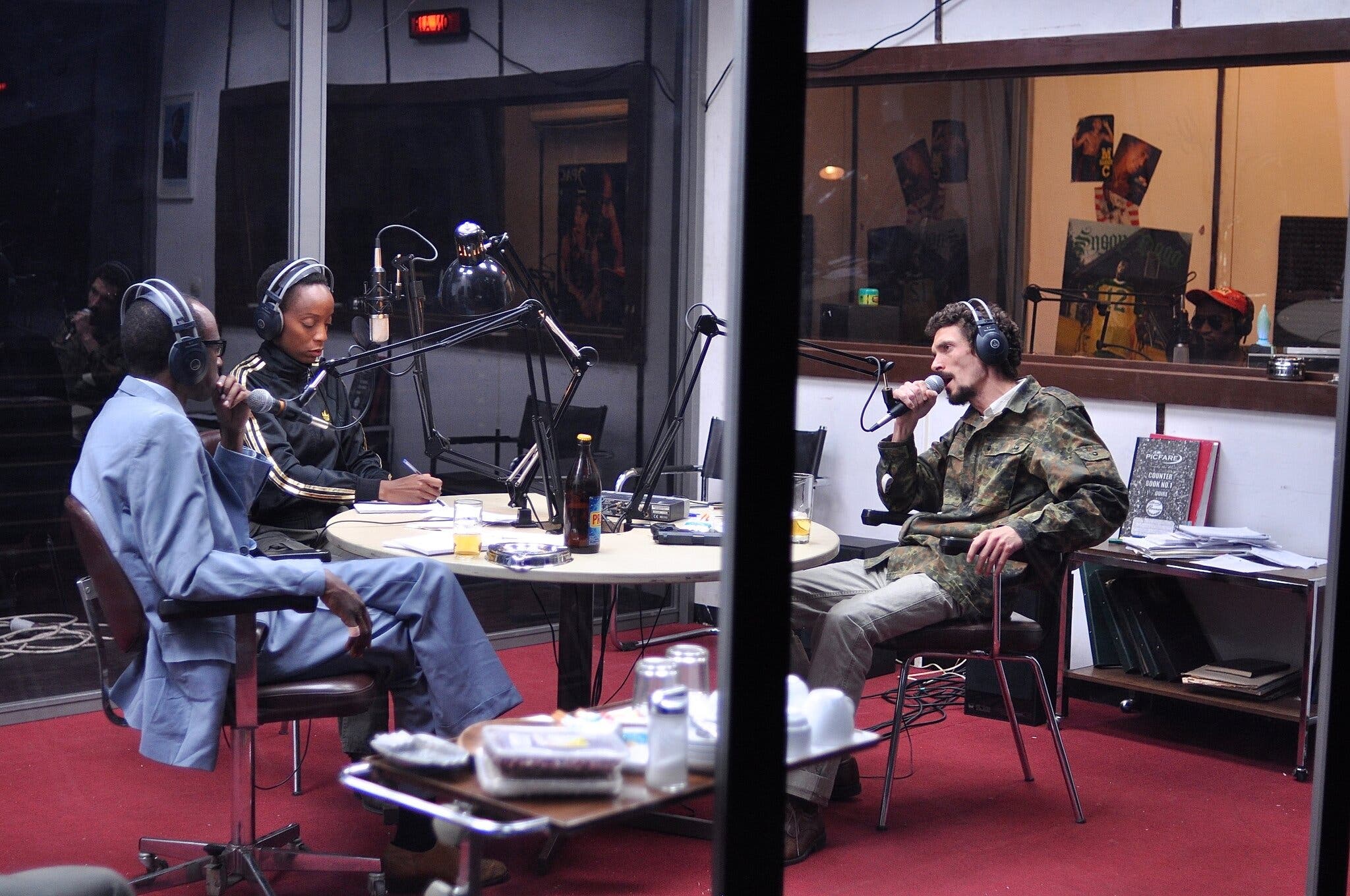
Despite last night’s blizzard-like conditions, I made it out to St. Ann’s Warehouse in DUMBO to catch Swiss auteur Milo Rau’s harrowing Hate Radio (HIGHLY RECOMMENDED), a chilling case study of how murderous, hate-fueled rhetoric can insidiously make its way into seemingly innocuous media — in this instance, a hip radio station (RTLM) whose casually lethal messaging spurred on the Rwandan genocide in 1994. Although it was originally staged in 2011 by the International Institute of Political Murder and has subsequently toured the globe, this haunting theater/film/installation/radio hybrid is only now making its U.S. premiere. Spoken in both French and Hutu (which is directly funneled to audience members via headsets thanks to Jens Baudisch’s detailed and well-calibrated sound design, which has a significant hand in heightening the intimacy and immersion of the experience) with projected English surtitles, the first portion is comprised of filmed interviews with four genocide survivors, while the second and more substantial portion takes place in an enclosed physical installation of an authentically reconstructed RTLM studio interior where a re-enactment of a pivotal broadcast is in the midst of transpiring. Despite the atrocities described in both segments, there’s an unnervingly understated and matter-of-fact quality to it all that suggests a level of normalcy to the horrors taking place just outside the walls of the studio. Throughout, the acting by the ensemble cast is intensely naturalistic; particularly Bwanga Pilipili’s blood-curdling turn as broadcaster Valérie Bemeriki. Although the commute back home in the inclement weather was arduous, the effort was absolutely worth it to experience this piercing piece of must-see documentary theater. Indeed, Hate Radio is essential viewing and shouldn’t be missed.
 Copyright © 2026
Leave a Reply