
VIEWPOINTS – Dance roundup: LIMÓN DANCE at 80, AUSTRALIAN BALLET unveils Wheeldon’s “Oscar”, and CITY BALLET revives a Balanchine rarity
- By drediman
- October 16, 2026
- No Comments
It’s been a busy few weeks in the world of dance at three of New York’s major dance venues, which collectively celebrated a major anniversary of an important company, unveiled the US premiere of a Christopher Wheeldon full-length ballet, and revived a Balanchine modernist rarity. As per usual, read on for my thoughts on these notable dance occurrences.
LIMÓN DANCE COMPANY
The Joyce Theater
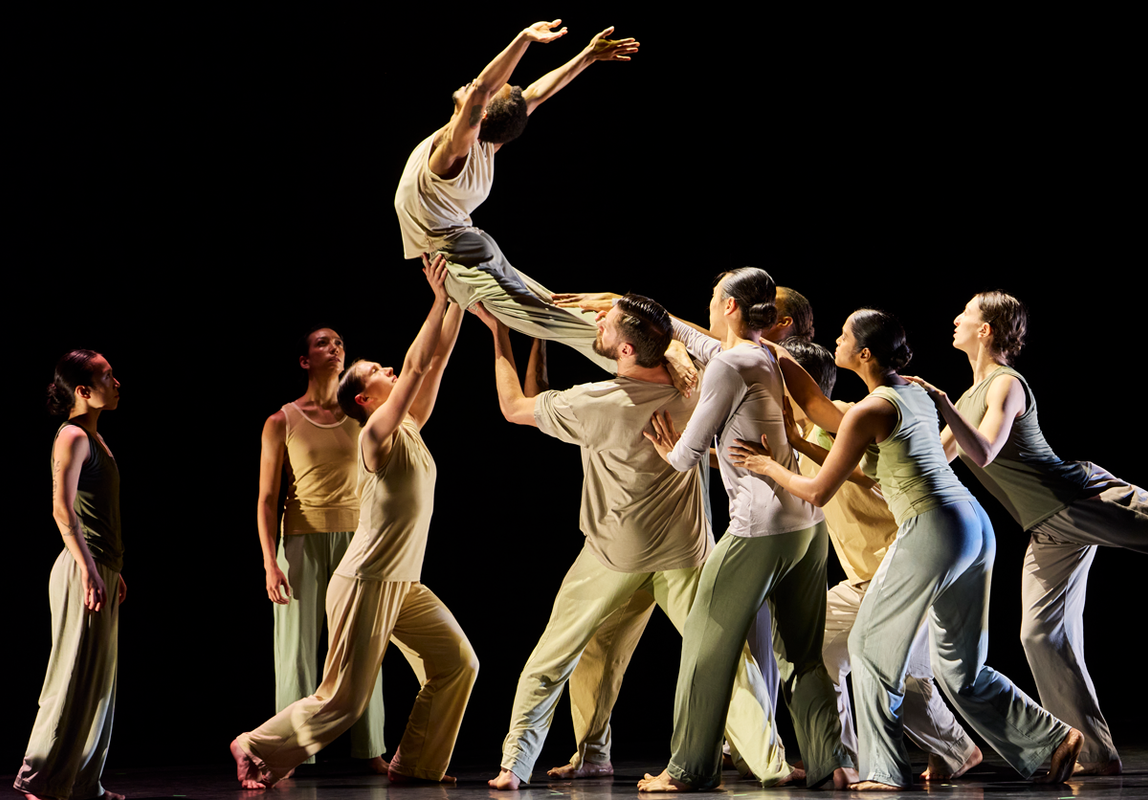
Last week, Limón Dance Company celebrated its 80th anniversary at The Joyce Theater in Chelsea with a program that linked its rich heritage and current trends in contemporary dance (RECOMMENDED). As befitting the landmark occasion, the two selections for the bill also came across as a love letter to members of the company, both past and present. The somewhat slight evening got underway with a major revival of a 1958 piece, José Limón’s Mazurkas, which was inspired by the choreographer’s trip to Poland and created to commemorate its citizens’ resilience and character in the aftermath of World War II. Set to the live playing of a Chopin piano score (courtesy of Michael Scales, who accompanied with exuberant tempos), the piece is comprised of a sequence of twelve segments — largely solos and duets, but also some larger groupings. Danced in its entirety for the first time since 1964, the work was performed with apparent pride, as evidenced by the dancers’ assertive musicality and spunky personalities. The program concluded with Join, an uplifting commission from 2025 that showcased the company as a whole. With the focus squarely on the ensemble — the work employs 11 dancers — the choreography conveys a sense of solidarity, which the company achieved with precision and style. With its loose references to Greek mythology that was the basis for a lost Doris Humphrey work — as simply costumed in shades of white and grey, the dancers vaguely resembled Grecian statues come to life — the piece strives for a timeless aesthetic through shared movement and suggestive storytelling, striking a number memorable tableaus as it unspools to an evocative score by Grammy-nominated composer Ambrose Akinmusire.
THE AUSTRALIAN BALLET: OSCAR
New York City Center
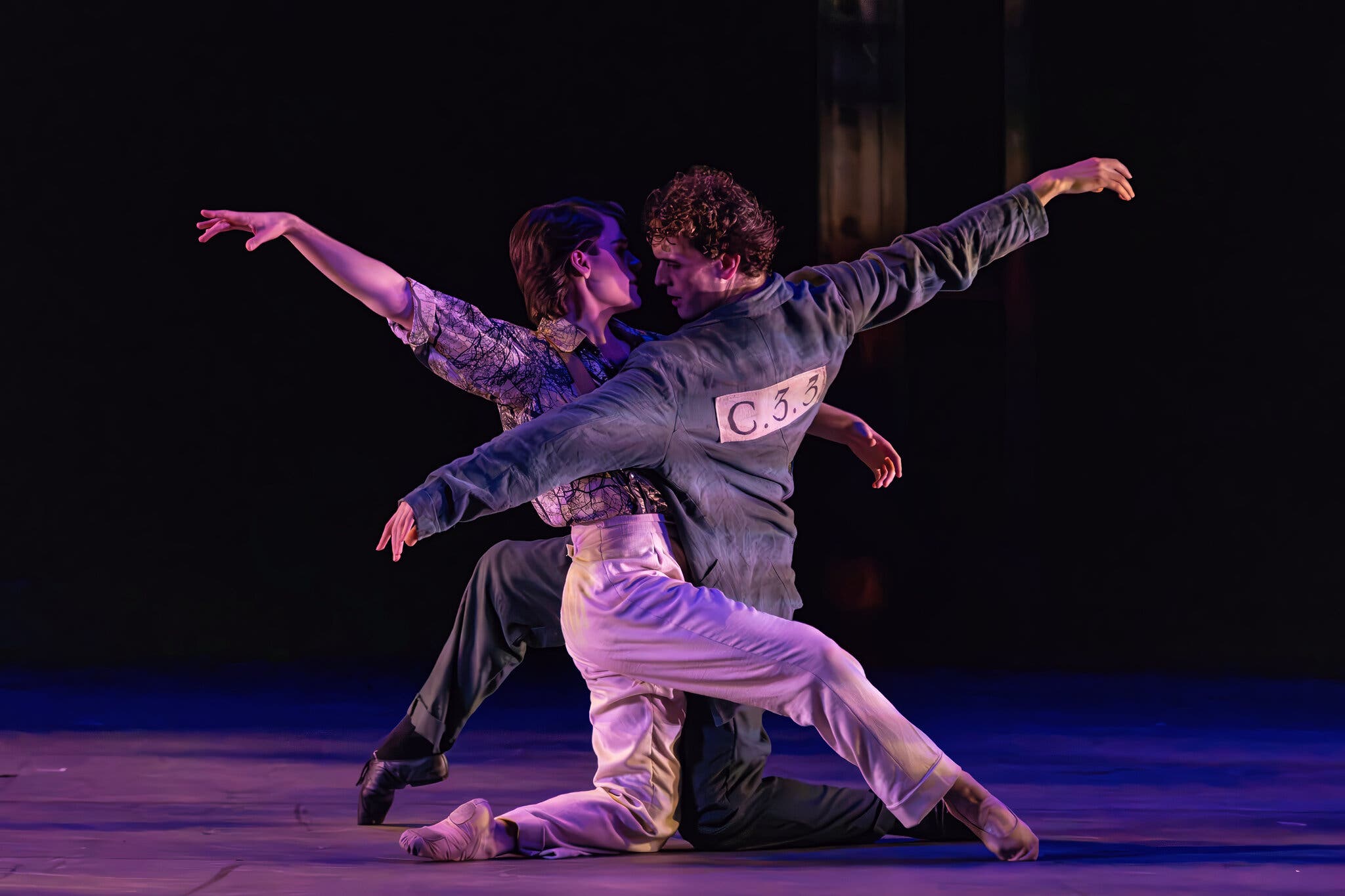
Also recently at New York City Center was the US premiere of Christopher Wheeldon’s Oscar (RECOMMENDED), courtesy of the Australian Ballet. Based on the life and loves of literary icon Oscar Wilde and set to a generically cinematic score by Joby Talbot (luxuriously played live by the 48-piece Orchestra of St. Luke’s), the anticipated full-length ballet leans in on non-linear storytelling, weaving flashbacks (the work begins during Wilde’s final trial) and Wilde’s own literary works — namely, the antithetical pairing of The Nightingale and the Rose and The Picture of Dorian Gray — into the fabric of the ballet’s world building. Given Wheeldon’s considerable history as a creator of dance theater, both in the world of ballet (Alice’s Adventures in Wonderland, The Winter’s Tale) and on Broadway (An American in Paris, MJ), it’s no surprise that the ballet moves through the Wilde’s biography with efficiency and an eye for theatricality. It’s all skillfully blocked, and the movements for the most part are fluid and fully extended — particularly the men (Adam Elmes was especially exquisite as Bosie) — which is likely partly influenced of Australian Ballet artistic director and former American Ballet Theatre star David Halbert, who as a dancer exhibited fine lines and an elevated stage presence. Where the work falls somewhat short is in its glaring lack of wit — one of the characteristics for which Wilde primarily is known — namely during the party scenes, in which the writer-cum-socialite is depicted as cute and silly, rather than an incisive observer and commentator of sophisticated urban life. More successful are the more intimate and earnest scenes that flesh out Wilde’s forbidden romances and fraught downward spiral as a condemned homosexual. In terms of scale, Oscar is in line with the revisionist yet populist productions of fellow British choreographer Matthew Bourne. As such, it fit quite snugly on the mid-sized City Center stage (the elegant sets are by designer Jean-Marc Puissant).
NEW YORK CITY BALLET
David H. Koch Theater
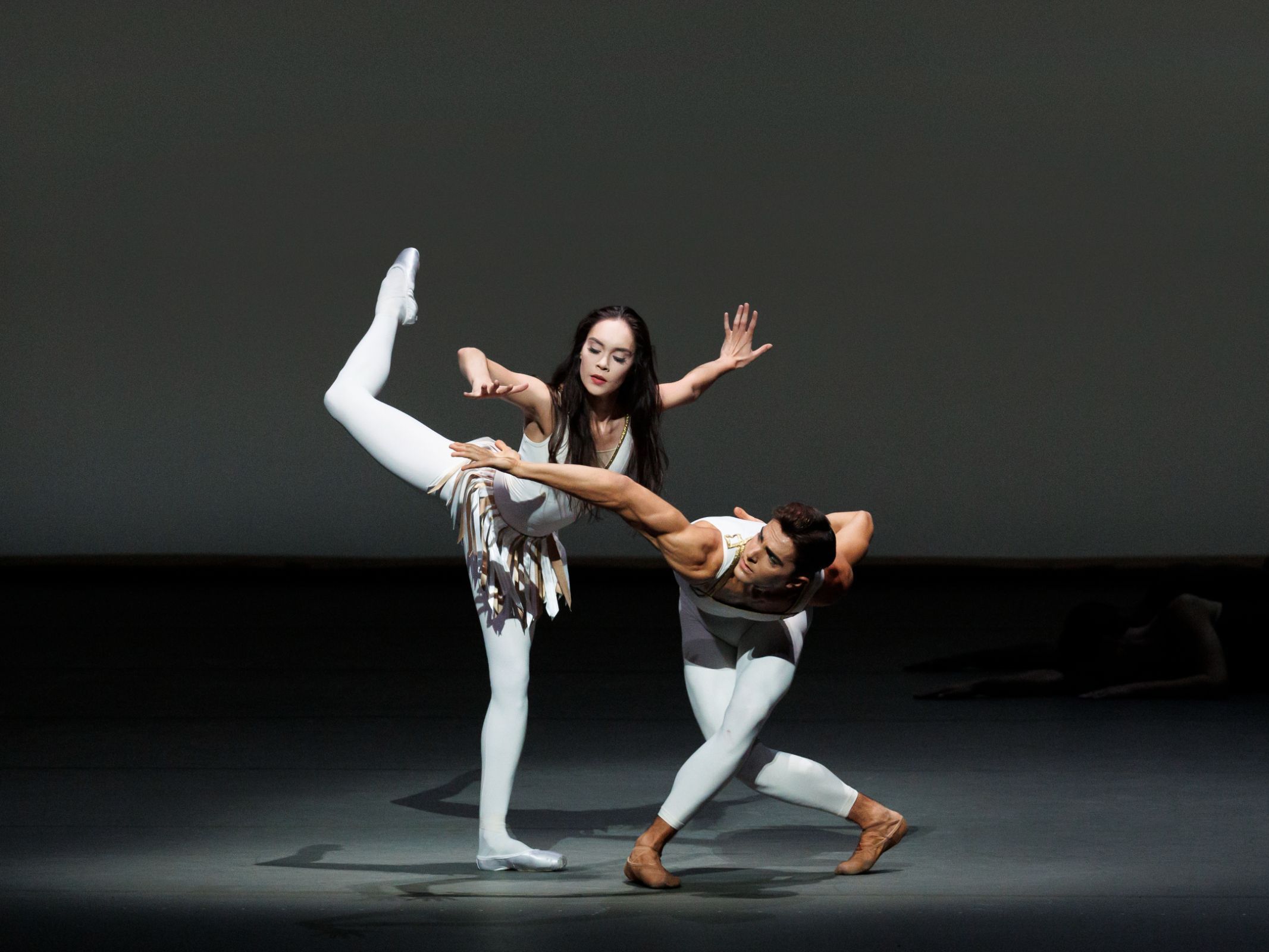
Then over at the David H. Koch Theater at Lincoln Center, the New York City Ballet unveiled the return of Pithoprakta in this fall season’s “All Balanchine” program (RECOMMENDED). Staged for the first time in decades by former Balanchine muse Susanne Farrell (the work was created for and on her), the 1968 modernist rarity is a fascinating combination of chaos and meticulous precision. Set to Iannis Xenakis’s avant-garde score — more atmospheric soundscape than traditionally musical — the overall results are both bizarre and alluring, as if being given a glimpse of an alien civilization (thankfully, at less than 10 minutes in length, the ballet’s strangeness doesn’t have time to numb the audiences into submission). At the center of it all was sensational principal Mira Nadon, who mesmerized with her off-kilter yet confident performance. Throughout, she was a ravishing vision as she thrillingly grappled with piece. Partnering her was striking soloist Davide Riccardo, who hasn’t looked this committed to a performance in a while. While arguably ultimately a Balanchine curiosity, I look forward to seeing Pithoprakta again to let more its idiosyncratic details more fully sink in. The work was paired with The Unanswered Question, a short, somewhat gimmicky ballet — its acrobatic and flight-forward aesthetic would fit right into the Pilobolus repertoire — featuring a willowy Ashley Laracey and captivatingly expressive corps member Cainan Weber. These two pieces were bookended by two established Balanchine classics. Starting off the evening was La Sonnambula, a tragic one-act story ballet highlighted by a gorgeous pas de deux between veterans Taylor Stanley — who seems to be fully present in his performances during his last months as a principal with the company — and Unity Phelan, who floated across the stage with preternatural grace in the title role. Concluding the program was the neoclassical staple Theme and Variation, led steadily if safely by principals Indiana Woodward and Joseph Gordon.
 Copyright © 2026
Leave a Reply