
VIEWPOINTS – Dance roundup: Dance Reflections continues with TRISHA BROWN DANCE COMPANY, CITY BALLET’s winter season concludes
- By drediman
- March 4, 2026
- No Comments
In the world of dance, this past week saw the continuation of the Dance Reflections by Van Cleef & Arpels Festival with a performance commemorating the historic collaboration between Trisha Brown Dance Company and renowned visual artist Robert Rauschenberg, as well as the conclusion of New York City Ballet’s winter season. Read on for my further thoughts on these dance happenings.
TRISHA BROWN DANCE COMPANY
Brooklyn Academy of Music
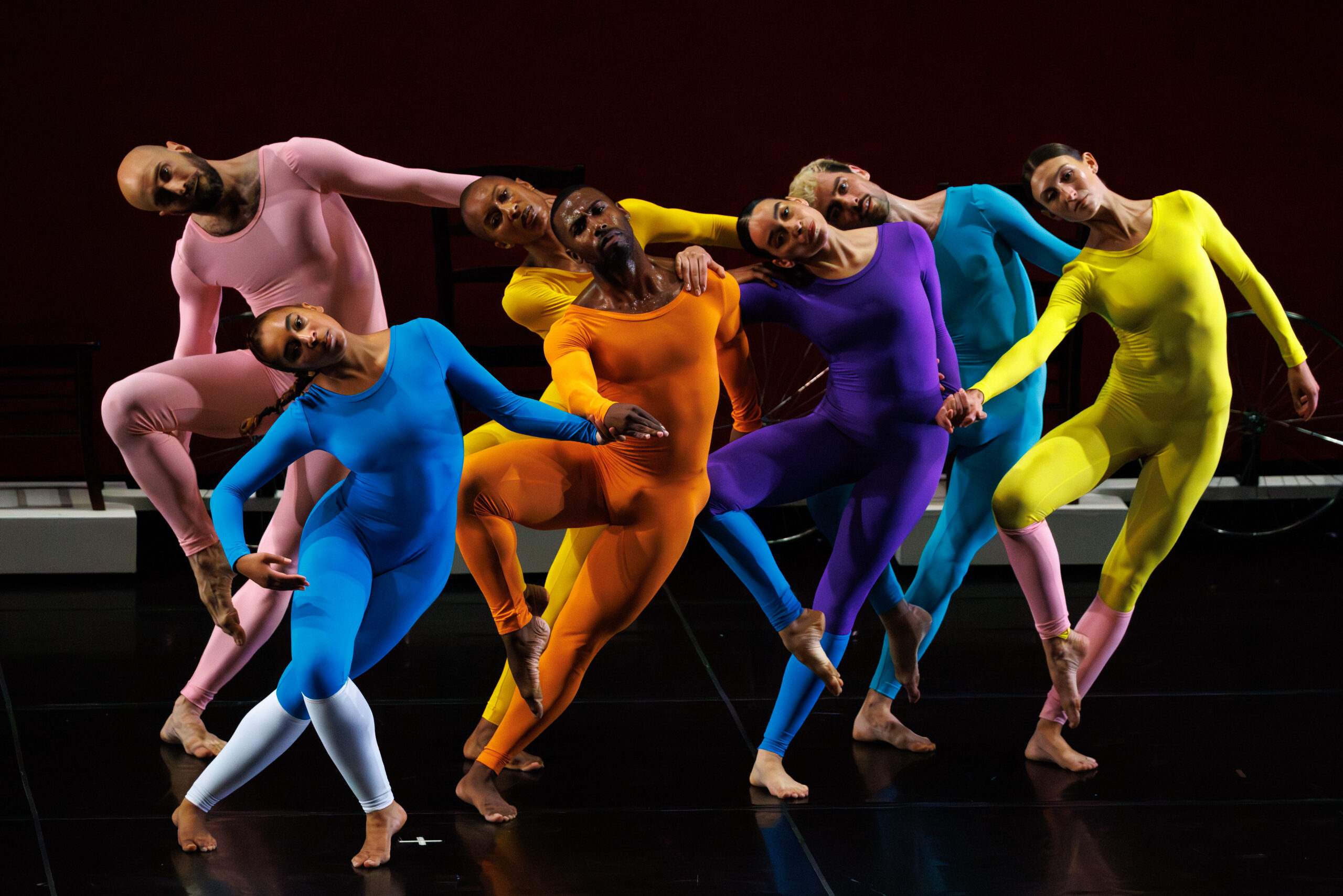
For only a handful of performances at the Brooklyn Academy of Music’s BAM Howard Gilman Opera House, Trisha Brown Dance Company put on a program that amounted to a satisfying celebration of the partnership between the Brown and her company and Robert Rauschenberg (RECOMMENDED). Included in the double bill — one of many offerings of this year’s edition of the expansive Dance Reflections Festival, which has been taking over the programming of many a performing arts venue across New York — were Brown’s Set & Reset and Merce Cunningham’s Travelogue. Brown’s piece opened the evening, and it was a striking example of the rigorous yet fluid postmodern dance aesthetic for which the American choreographer is known. Set to music by Laurie Anderson, the 1983 work was languidly danced underneath Rauschenberg’s levitating geometric sculpture onto which seemingly random vintage black-and-white video footage was projected. Although the connection between the footage and the choreography was arguably tenuous, ultimately, Set & Reset abstractly suggests the unpredictable and arbitrary ways in which history and culture proliferate. Appropriately, it’s a dance that organically and artfully comes into and out of the audience’s focus (thanks to Rauschenberg’s clever framing of the work). Then came Cunningham’s Travelogue, a rarely-seen 1979 work that showcases the legendary choreographer at his most playful and humorous, if you can imagine that. Using a score by John Cage aptly entitled Telephones and Birds (the phone prompts have been updated for this iteration of the dance) and colorful, eye-catching designs by Rauschenberg, the piece is nothing less than a sunny and witty pageant of quirky whimsy and the avant-garde. Despite only lasting a little over an hour, the bill was packed with personality and style — and was met with enthusiastic ovations at its conclusion.
NEW YORK CITY BALLET
David H. Koch Theater
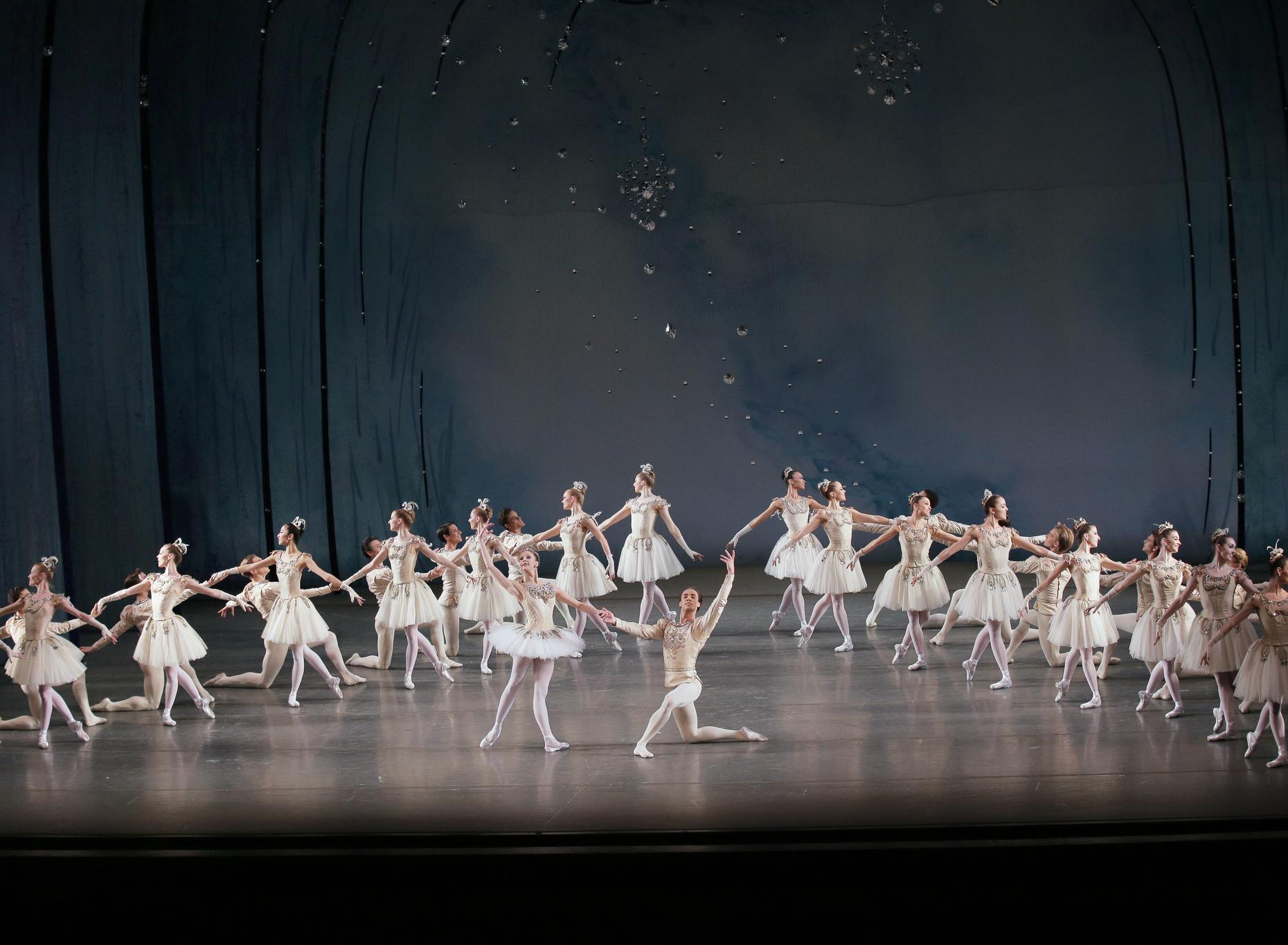
The same weekend, I also found myself at the final performance of New York City Ballet’s lengthy and carefully-curated winter season (RECOMMENDED), which notably included a pair of world premieres by the company’s Resident Choreographer Justin Peck and Artist in Residence Alexei Ratmansky (you can read reviews of their new works here). On this last bill on Sunday afternoon, the audience was treated to a pair of iconic ballets from the two indisputable City Ballet giants — Jerome Robbins’ Dances at a Gathering and a standalone rendition of George Balanchine’s Diamonds (originally choreographed to be the splashy finale of Jewels, an evening length triptych of now beloved ballets inspired by precious stones). In short, I’m happy to report that both were beautifully performed. Starting things off was Dances at a Gathering — arguably Robbins’ masterpiece — which features choreography that shimmers with humanity and the vitality of life itself. Although devoid of a definitive narrative, there’s nonetheless drama and connection between the bodies onstage, which were refreshed and palpably embodied by a vibrant cast made up of experienced dancers well-ensconced with the piece and their younger counterparts new to the classic ballet. Among the former, Tiler Peck and Adrian Danchig-Waring brought confidence and gravitas to their detailed performances. It was particularly touching to witness the effervescent Megan Fairchild’s bittersweet final appearance in Dances, and she was an absolute joy to behold — light as air, really — as the woman in green. Making memorable debuts were Mira Nadon and Ryan Tomash, relatively new principals who danced with both freedom and intimacy. Closing out the program in traditional and glamorous fashion was Diamonds, led by the regal pairing of Sara Mearns and Tyler Angle. As evidenced by the quiet abandon of Mearns’ performance, it’s clear that she feels the utmost comfort with Angle. And although I do miss the excised solos, the ballet truly has the sense of occasion to be a season-closer.
 Copyright © 2026
Leave a Reply