
VIEWPOINTS – Dance roundup: Anticipated debuts at City Ballet’s SLEEPING BEAUTY, commercial street dance animates 11 TO MIDNIGHT
- By drediman
- February 20, 2026
- No Comments
Before New York dance aficionados are bombarded by the onslaught of offerings coming their way via the upcoming Dance Reflections by Van Cleef & Arpels Festival, here are my thoughts on two vastly divergent dance performances I caught over the past week or so. As always, read on for my thoughts.
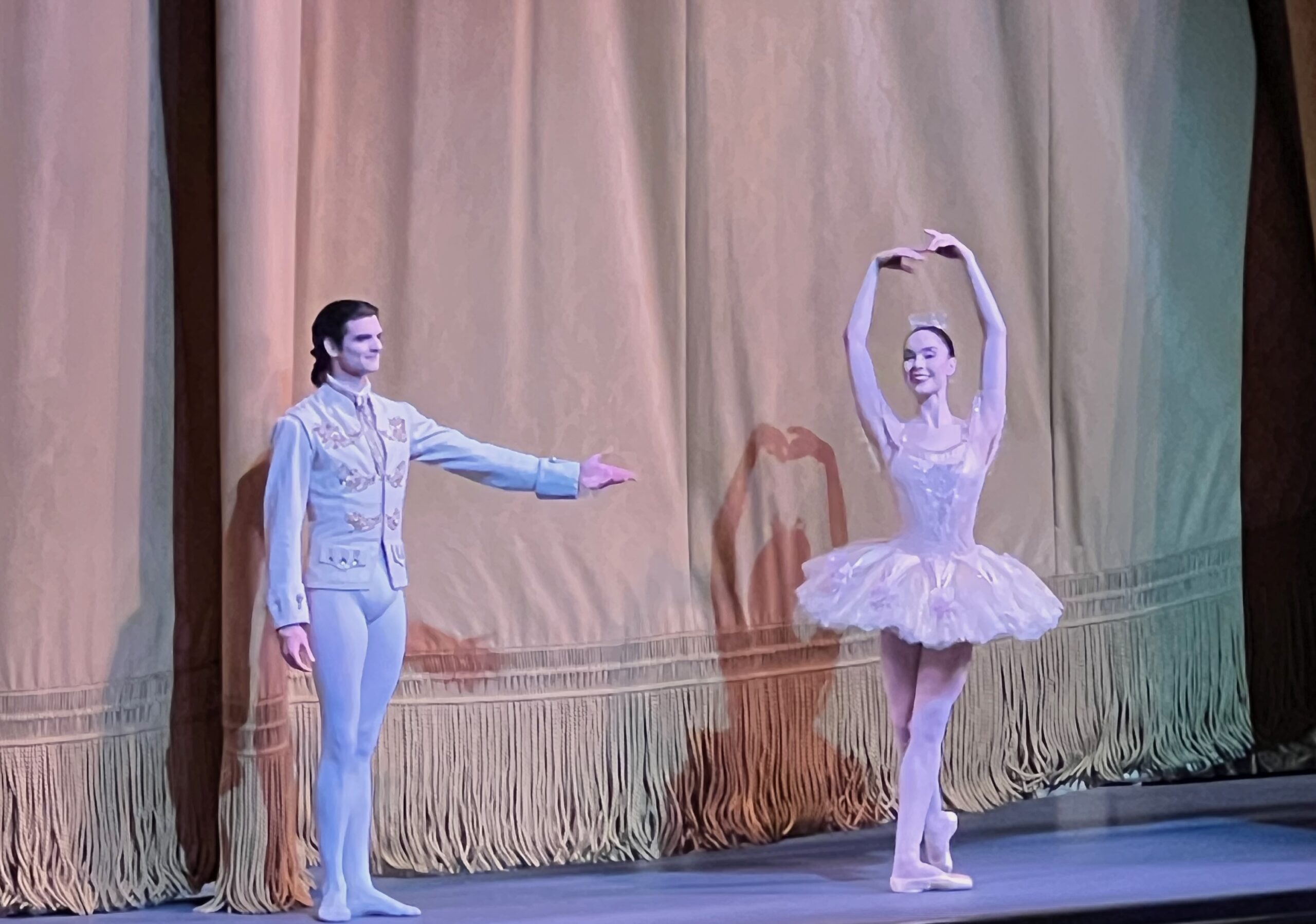
NEW YORK CITY BALLET: THE SLEEPING BEAUTY
David H. Koch Theater
The company’s winter season concludes on March 1
This winter season, two New York City Ballet principals are making highly anticipated role debuts in the company’s lavish version of the beloved full length story ballet The Sleeping Beauty (HIGHLY RECOMMENDED) — the radiant Mira Nadon as Princess Aurora and Taylor Stanley as Carabosse. They, and the rest of the production, were captivating earlier this week. Usually reserved for compact technical powerhouses (like Tiler Peck or Indiana Woodward), the role of Aurora is one of the coveted roles in classical ballet and is tasked significantly in Act One — rather lengthy in Peter Martins’ version for City Ballet — in the Rose Adagio sequence, as well as the Vision Scene later on. Of course she comes back in the Act Two in the culminating Wedding pas de deux. A long-limbed dancer with uncanny musicality and natural dramatic instincts, Nadon was ravishing in the Rose Adagio, showcasing a convincingly sunny and girlish disposition during the birthday celebration and subsequent courtships, and her unfortunate moment with the spindle was unfussy and not overly dramatic. Her portrayal grew in majesty in the Vision Scene, dancing with expansiveness to reveal Aurora in all her alluring beauty. A decidedly more modern dancer, the tall and lean Peter Walker paired nicely with Nadon as Prince Désiré, bringing a strikingly complementary angularity and matching long lines to the partnership. At the wedding, Nadon was pure lyricism, channeling Tchaikovsky’s divine music from deep within and dancing with a warm glow that further developed the character into royal maturity. As the evil Carabosse, Stanley was heightened camp and delicious mischievousness, and it was clear that they were having a ball throughout. Hopefully, his well documented casting will open the door for more such “drag” performances in the mime-driven role. Additional notable debuts continued last night with Emma Von Enck premiering as Aurora and David Gabriel as her prince, both of whom I heard were stellar.
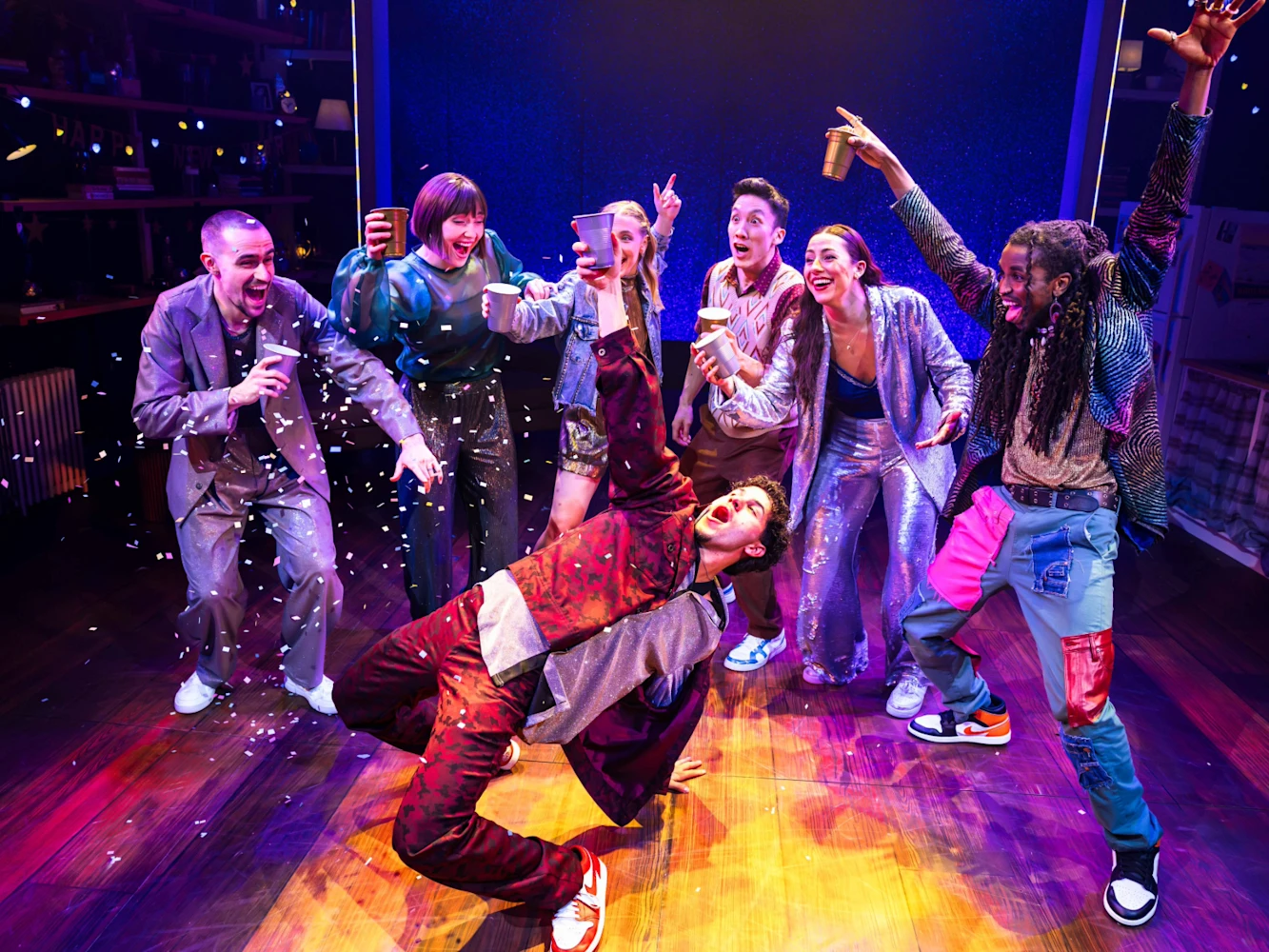
11 TO MIDNIGHT
Orpheum Theater
Open run
Dance returns to the Orpheum Theatre — the former East Village home of the long-running Stomp — in the form of the dance theater piece 11 to Midnight (SOMEWHAT RECOMMENDED), the brainchild of TikTok stars Cost n’ Mayor (aka Austin and Marideth Telenko, who also star in the show). With an appealing cast of seven skilled dancers discovered on social media, the show manifests — through commercial street dance, mime, and a smattering of dialogue — the hopes and aspirations of a group of friends at a house party during the hour leading up to midnight on New Year’s Eve. If the premise of it all seems a bit generic, that’s because it is. You see, 11 to Midnight was consciously designed for our current TikTok era, with its digestible bites of conflict, doubt, community, and love. Ironically, the piece is most effective when it leaves all of that surface-level emotion behind and engages in pure dance — more specifically when it commits to its energetic, lengthy dance breaks involving the entire company. As it stands, the show is an uneasy mix of simplistic and somewhat didactic dance theater storytelling. Perhaps the closest piece that comes to mind in relation to Cost n’ Mayor’s work is Susan Stroman’s Tony Award-winning “dansical” Contact, which also uses a carefully curated tapestry of pop songs to frame and bring context to the narrative at hand. But where the latter succeeds is its dramatic use of dance as a life-or-death metaphor for human connection. I didn’t feel such stakes here. That being said, the performers are, individually, hard-working and do a good job of bringing their own distinctly playful — and at times angsty — personalities to the fabric of the company at large. Although the production is undeniably lightweight fare, I didn’t at all have a bad time at the Orpheum. Overall, 11 to Midnight is amiable, high octane, and produced to a polished sheen.
 Copyright © 2026
Leave a Reply