
VIEWPOINTS – Assessing winter premieres at New York City Ballet: Justin Peck’s THE WIND-UP and Alexei Ratmansky’s THE NAKED KING
- By drediman
- February 9, 2026
- No Comments
New York City Ballet’s current winter season is notable for having unveiled two world premieres, both of which of which I was able to catch last week. Here are my assessments of these two anticipated new works by Justin Peck and Alexei Ratmansky, the company’s Resident Choreographer and Artist in Residence, respectively. Together, they represented a landmark — City Ballet’s 499th and 500th original ballet created specifically for the company.

Set to the youthful opening movement of Beethoven’s Eroica Symphony No. 3, Justin Peck’s The Wind-Up (RECOMMENDED) is one of the choreographer’s more significant creations of late and continues to exhibit the popular dance-maker’s trademarks — intricate steps that restlessly (and playfully) unfurl, kaleidoscopic patterning, a penchant for thematic repetition, and a focus on the ensemble over the individual. For the the company’s 499th original ballet, the prolific choreographer has once again teamed up with longtime collaborators Reid Bartelme and Harriet Jung, as well as Brandon Stirling Baker, who have been tapped to design the costumes and lighting, respectively. Conceptually, the Peck’s highly stylized depiction of a band of superheroes — as suggested by the sleek, boldly-hued costumes — is fascinating if somewhat cartoonish and two-dimensional when juxtaposed against Beethoven’s majestic music, which conceptually envisions a hero’s life (the first movement being a depiction of their youthful conquests; in order to continue their story, perhaps Peck intends to set the rest of the seminal symphony to dance?). At the performance I attended, I caught the secondary cast, which consisted of the sextet of India Bradley, Naomi Corti, Ruby Lister, KJ Takahashi, Ryan Tomash, and Peter Walker. Although they seemed a bit under-rehearsed — which I suspect is in part due to the breathless tempo of maestro Andrew Litton’s conducting — they nonetheless valiantly committed to Peck’s vision. Coming across best were Lister and Takahashi, both of whom more than merely kept pace with the arguably overly-complex steps; their dancing was bright and inspired, and a complete joy to watch. Less certain were Bradley (who seemed strangely off-balance throughout the performance) and Corti (who seemed to be playing catch up from the get go), both dancers I’ve greatly admired in other roles. Tomash and Walker certainly looked the part of superheroes on a mission and danced with conviction. Suffice to say, I’m eager to revisit the piece again and see the dancers grow more confident in this challenging ballet.
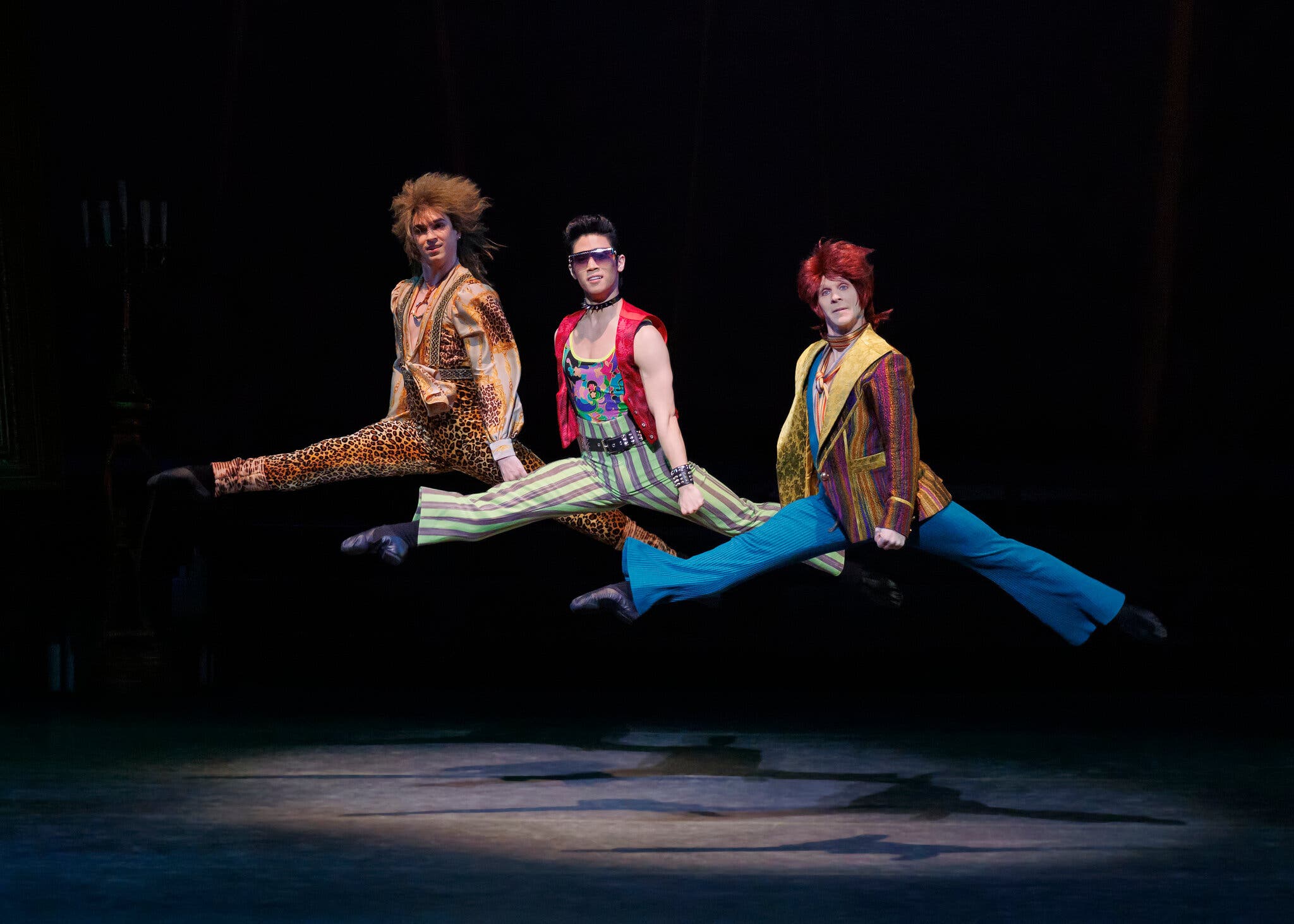
I had never laughed so heartily at a dance performance than when I first saw The Bright Stream, Alexei Ratmansky’s full length comic ballet for American Ballet Theatre (he originally staged the piece for The Bolshoi, where Ratmansky was the former Artistic Director). That experience fifteen years ago was my first encounter with the Ukrainian choreographer’s deeply human works, a relationship that has only gotten more satisfying and intriguing over the years. Now all these years later, the choreographer has returned with yet another comic ballet, a one act retelling of Hans Christian Andersen’s cautionary folktale The Emperor’s New Clothes, which attempts to capture the same kind of hilarity. Entitled The Naked King (RECOMMENDED), the work was created in reaction to the recent “No Kings” protest. As such, it wields as much political bite as it does a quirky sense of humor — thankfully without losing sight of the dance aspect amidst its competing aims. Although not quite the tight storytelling creation as some other one act narrative ballets out there (I would put George Balanchine’s masterfully conceived and executed Prodigal Son in that category), Ratmansky’s new work — which registers more effectively as a character/sociological study — ultimately potently lands its punchline, thanks largely to the detail and general guiding force of Jean Françaix’s Le Roi Nu characterful score (conducted quite beautifully by guest conductor Beatrice Affron). Ratmansky and veteran stage designer Santo Loquasto take inspiration from disparate locales and historical times, giving the piece a timeless essence, even if the overall visual effect is a tad unfocused. Perhaps because of Ratmansky’s exacting tutelage, the company moved as if under a singular vision, from the ensemble up to the dancers in the principal roles. Of particular note were Andrew Veyette’s deliciously droll yet in-check portrayal of the self-obsessed monarch, as well as Miriam Miller’s detached coolness and disdainful snobbery as his Queen. Perhaps best of all was the trio of David Gabriel, KJ Takahashi and Daniel Ulbricht, whose performances as tricksters who sell the king on the non-existent garb were alive with color, style, and playful dynamism.
 Copyright © 2026
Leave a Reply