
VIEWPOINTS – Classical music roundup: Honeck brings out the best in the NY PHILHARMONIC, and a GREGORY SPEARS world premiere mesmerizes
- By drediman
- February 2, 2026
- No Comments
This past weekend, I took in a pair of superb classical music performances that went a long way in dispelling the recent arctic chill we’ve been experiencing. As always, read on for my thoughts.
NEW YORK PHILHARMONIC
David Geffen Hall
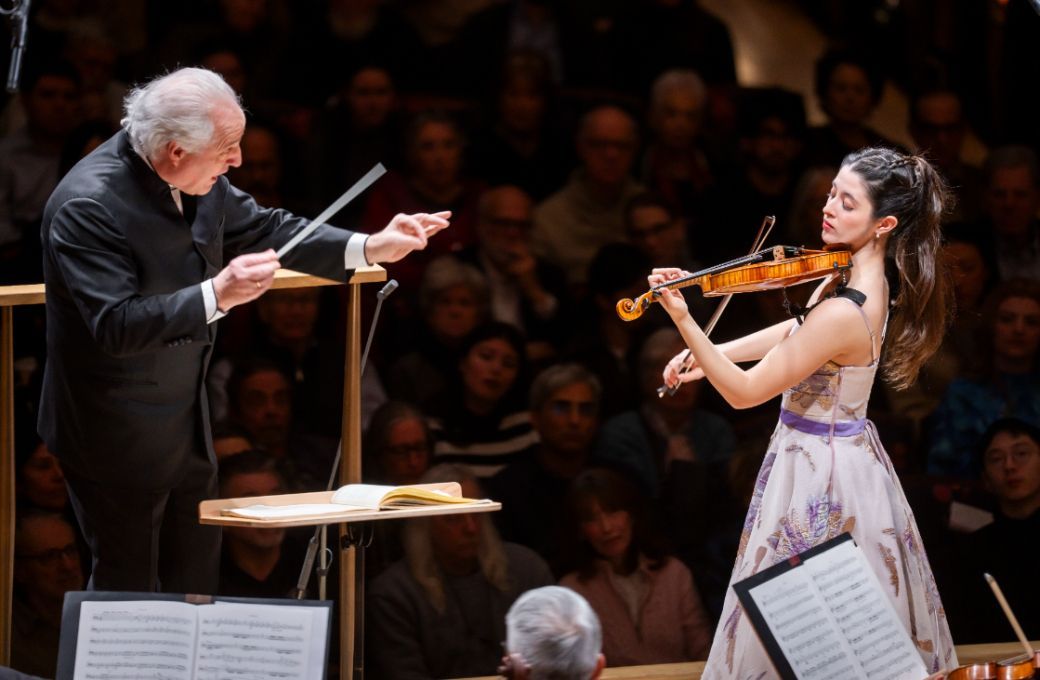
The great Austrian maestro Manfred Honeck returned this past weekend to conduct the New York Philharmonic at Geffen Hall, bringing out the best in the ensemble, in a well-balanced yet fascinatingly contrasting program (HIGHLY RECOMMENDED) made up of Beethoven’s Violin Concerto — featuring phenomenal 23-year-old Spanish violin soloist María Dueñas — and Honeck’s own symphonic rhapsody arrangement of Richard Strauss’s sonically maximalist opera Elektra. In short, the New York forces have rarely sounded finer nor more inspired than under Honeck’s baton — coordinated, plush, yet considered. In the Beethoven Violin Concerto, Dueñas was more than exemplary, playing with focus, ferocity, and tremendous maturity. Suffice to say, she was fully committed to traversing the concerto’s winding musical and emotional journey, taking her time and claiming full control over the arc across the three movements, which had the beguiled audience leaning forward eagerly joining her for the ride. It was a completely virtuosic performance that yielded to a scintillating encore of Franz von Vecsey’s Valse triste. After the intermission, the revered music director of the Pittsburgh Symphony Orchestra really turned up the volume in a symphonic condensation of Elektra — a vibrantly orchestrated opera that has historically required a notoriously large orchestra — which he arranged with composer Tomas Ille in 2014. Thankfully, the playing wasn’t just loud and jarring, it was also poetic and articulate. In Manfred and the Philharmonic’s performance, the psychological turmoil imparted by the score’s blaring sonic shards — punctuated with just the right amount of force by the percussion and brass sections — was just as affecting and vivid as the gloriously lyrical moments afforded by the orchestra’s luxurious strings.
SONNAMBULA
Stephen A. Schwarzman Auditorium at The Frick Collection
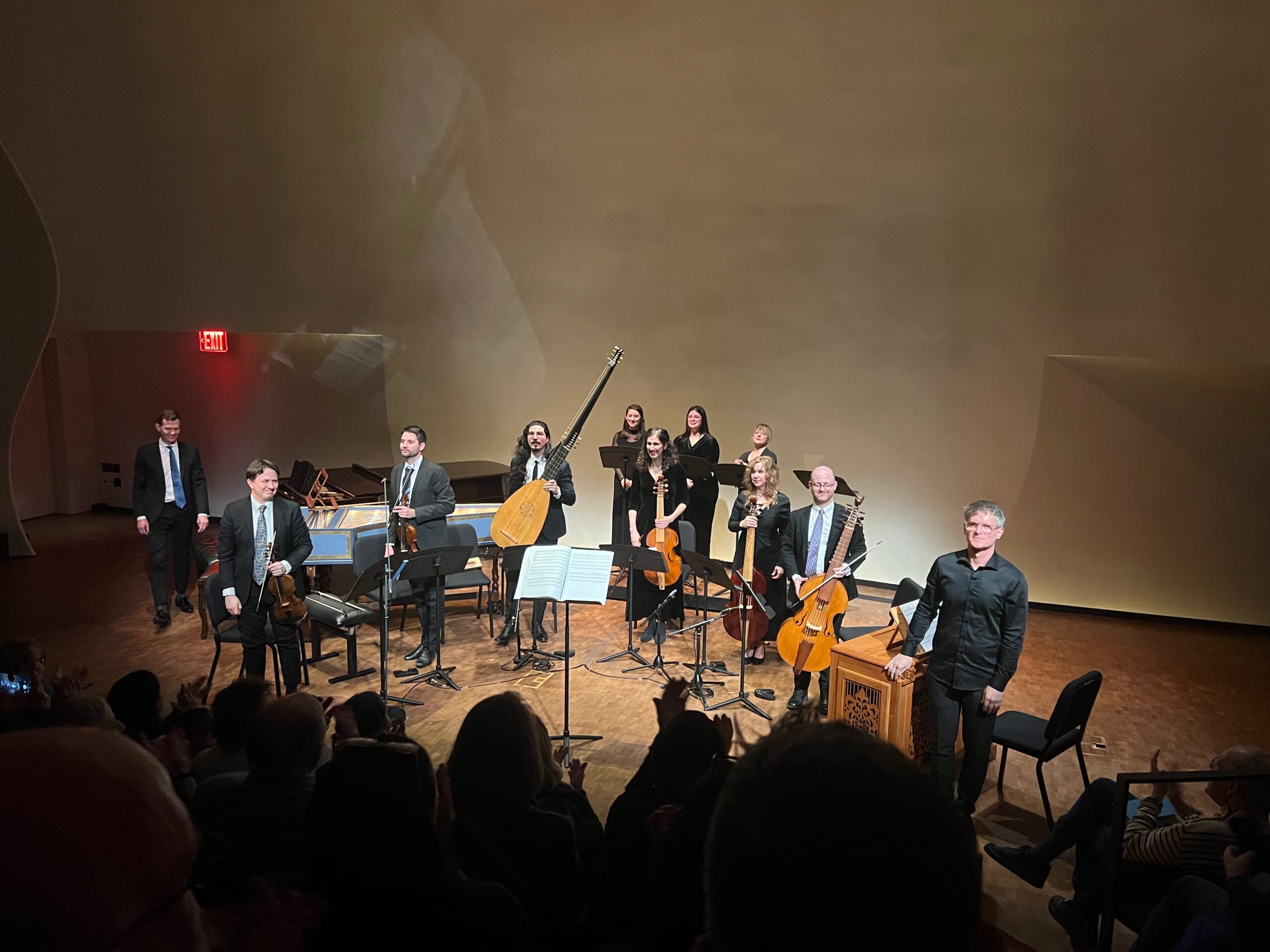
On a far more intimate scale, I also had the privilege recently of attending a concert (HIGHLY RECOMMENDED) at the exquisite new Stephen A. Schwarzman Auditorium at The Frick Collection, which recently completed a high profile renovation, including the addition of the aforementioned auditorium. Excellent acoustics and sight lines aside, the performance at the new hall by Sonnambula — the museum’s music ensemble-in-residence — was exceptional, the first half of which was comprised of “secret” early music written by women or for women to perform during the late Renaissance / early Baroque eras. Featuring evocative playing on period instruments and the emotive, bright singing of soprano Song Hee Lee, the curated collection of short pieces retained an air of intense privacy and deep feeling, as befits the tradition of of the “concerto della donne”, or concerts held in secrecy. The second half featured Gregory Spears’ Secrets, a world premiere work commissioned by The Frick. Ever since encountering the composer’s deeply felt operatic adaptation of Fellow Travelers during the 2018 Prototype Festival, I’ve been a fan of Spears’ intelligent, sensitive writing. Inspired by Giovanni Battista Moroni’s stunning Portrait of a Woman (which can be seen at the museum), his latest piece is a mesmerizing five-movement meditation on the inner life of a woman from across the centuries, made possible by the instinctual and organic symbiosis between modern and Renaissance musical vocabularies. Melding modern instruments (namely the piano), Renaissance instruments (e.g., viols, harpsichord, early organ), and the gorgeous and varied vocal contribution of ModernMedieval Voices, the work vividly imagines the mysterious woman’s primary internal concerns, ranging from the moral desolation of the time, intense religious devotion, and finally the transcendence of love in the face of mortality. The artful modern touches in Spears’ rhapsodic Renaissance-influenced music imbue these musings with urgency and immediacy, as if flattening time itself.
 Copyright © 2026
Leave a Reply