
VIEWPOINTS – Cunning deviousness at the heart of artistic and political success: Examining the moral corruptness that fuel KYOTO and PRACTICE
- By drediman
- December 10, 2025
- No Comments
This fall, Off-Broadway has delved into the heart of darkness, particularly in two new works that investigate the cunning deviousness that often fuels success and so-called progress. These would be Nazareth Hassan’s Practice (in the case of theater) and Joe Murphy and Joe Robertson’s now-shuttered Kyoto (in the case of politics), both of which feature morally corrupt characters that drive these ambitious plays. As always, read on for my thoughts.
PRACTICE
Playwrights Horizons
Through December 19
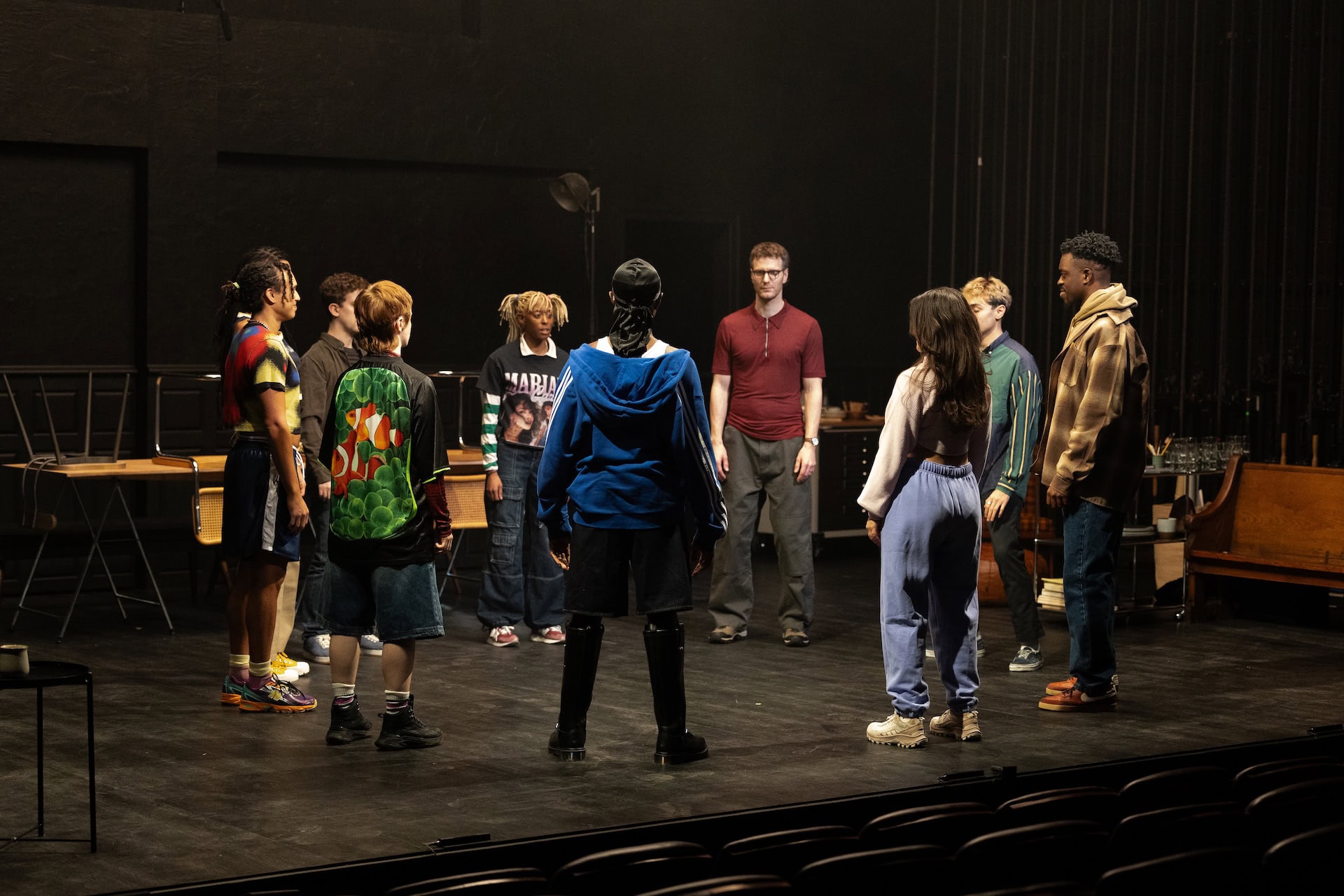
At the heart of Nazareth Hassan’s dark satire Practice (HIGHLY RECOMMENDED) at Playwrights Horizons is Asa, a fictitious auteur theater director, whose highly anticipated latest endeavor involves devising a piece of theater with a hand-picked group of young, diverse actors, all of whom are eager to work on such an artistically prestigious project. To spur the creative process, Asa isolates himself and his company — along with his sketchy romantic partner and subservient assistant — for multiple weeks at a remote theater camp-like retreat to develop the piece. However, what starts off seeming like a nurturing safe space for exploration and openness eventually turns into an embittered battleground of finger pointing and intense, ultimately self-immolating psychological warfare waged amongst company members. Behind all this is Asa — played with unnerving iciness by understudy Tony Jenkins at the performance I attended — who has pre-meditatedly masterminded the whole thing via veiled situational manipulation and subtly abusive leadership tactics. By fabricating this emotionally fraught environment, the director ruthlessly gets what he wants — the material for his latest theatrical creation. Audaciously, the second act of Practice — which is staged with impressed rigor by director Keenan Tyler Oliphant — is Asa’s final product. From the ashes of the chaos of the developmental process arises an avant-garde play-within-a-play that abstractly re-enacts that the distressing occurrences at the camp. In doing so, the director also sheds light on his own twisted complicity in the work’s dubious creation, thereby daring the art world to either cancel him or shower him with acclaim. With this fiercely caustic new work, Hassan raises the question as to whether such toxicity and emotional turmoil are necessary ingredients in the creation of true art. Indeed, along with his equally striking Bowl EP (seen at the Vineyard earlier this season), the visionary playwright is proving himself to be a distinct talent to truly look out for.
KYOTO
Lincoln Center Theater at the Mitzi E. Newhouse
Closed
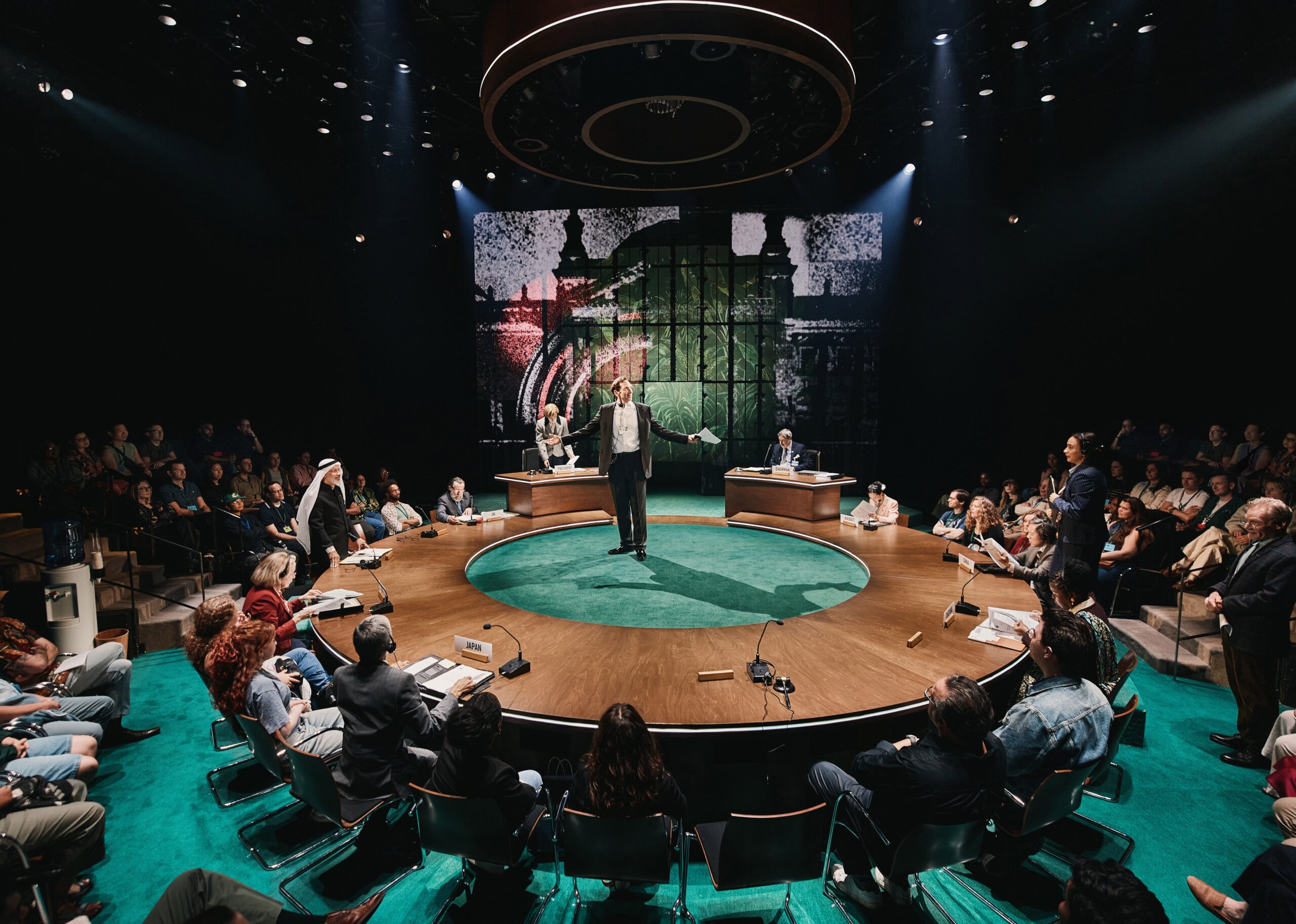
Then over at the Mitzi E. Newhouse Theater, there was Lincoln Center Theater’s recently closed Off-Broadway production of Kyoto (RECOMMENDED), Joe Murphy and Joe Robertson’s exhaustively researched theatrical account of the saga to get the Kyoto Protocol in place. Faced with the aggressive attempts by Big Oil to thwart the hard-won international treaty — which commits nations to reduce greenhouse has emissions over time — the accomplishment was a bit of a mini miracle and an inspiring testament to humanity’s capacity to work together for a better world. Co-produced by the esteemed Royal Shakespeare Company, the sweeping and panoramic play utilizes an episodic docudrama storytelling approach to weave a knotted tale of global political intrigue. The play’s most fascinating stroke is that it’s told from the antagonistic perspective of Donald Pearlman — played with slicing Mephistophelian glee by Stephen Kunken — an American lawyers a lobbyist for the self-serving interests of the oil and gas industry. Over the course of the play, Pearlman does essentially everything in his power, and then some, to stall and prevent the adoption of the Kyoto Protocol, most notably by relentlessly opposing the evidence uncovered by scientific consensus relating to climate change. What Murphy and Robertson’s meaty and eventful work — like Hassan’s previously discussed Practice, it pushes three hours in length — lays bare is the painful process involved in making progress within the complex machinations of contemporary politics. Also like Practice, Kyoto suggests, primarily through the doings of Pearlman, that the motivations behind certain actions are often far from the purest and are often tainted by greed and an unchecked hunger for power. As staged in the Mitzi Newhouse’s severe thrust stage, directors Stephen Daldry and Justin Martin their set designer Miriam Beuther have come up with an immersive and muscular production that literally pulls the audiences into the heat of political negotiations. Occasionally marred by its own obsessive and painstaking attention to detail, Kyoto is a long-winded potboiler that nevertheless ultimately powerfully makes its point.
 Copyright © 2026
Leave a Reply