
VIEWPOINTS – Music-making at Lincoln Center: Dalia Stasevska leads the NY PHIL in a Ukraine-focused program, The Met brings back Strauss’s ARABELLA
- By drediman
- November 11, 2025
- No Comments
Over the past few days, Lincoln Center was a nexus for some ravishing music-making, courtesy of the New York Philharmonic and the mighty Metropolitan Opera. As per usual, read on below for my thoughts on these memorable performances.
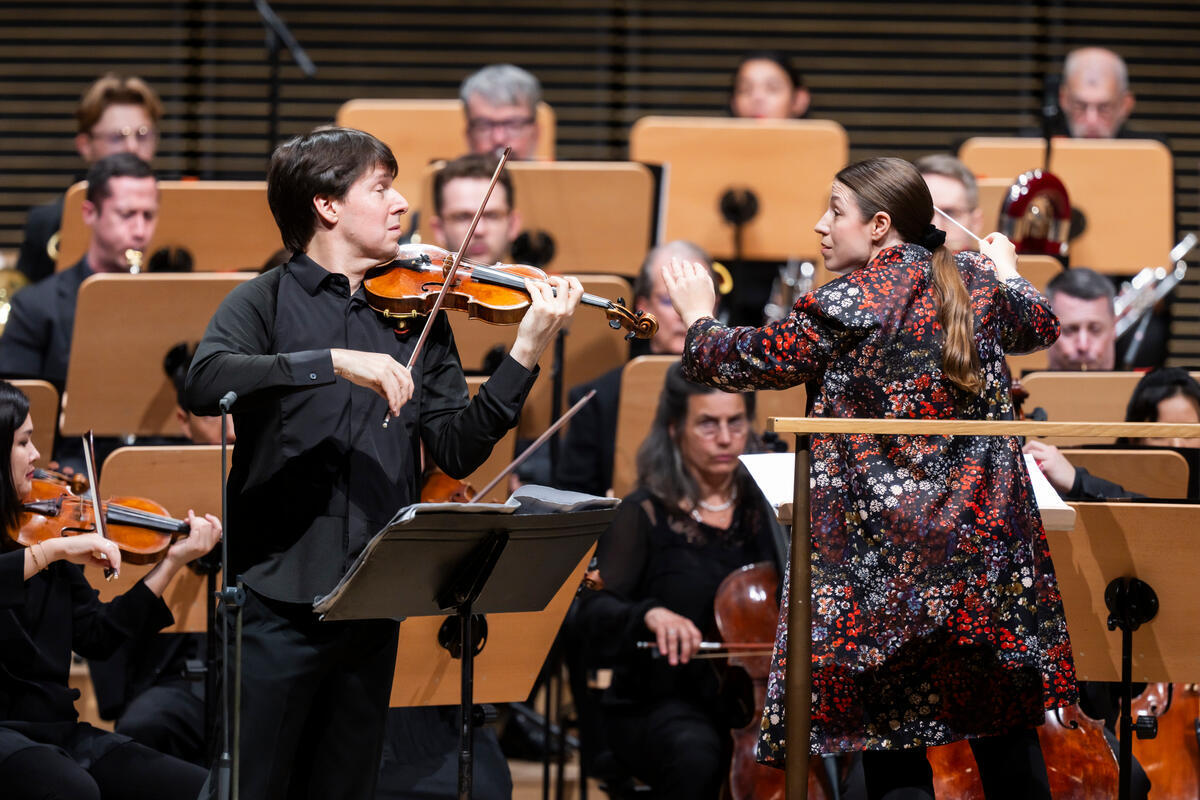
DALIA STASEVSKA CONDUCTS THE NEW YORK PHILHARMONIC, FEATURING JOSHUA BELL
New York Philharmonic at David Geffen Hall
Closed
This past weekend at David Geffen Hall, conductor Dalia Stasevska led the New York Philharmonic in a concert dedicated to the current struggles of the Ukrainian people (HIGHLY RECOMMENDED). The concert opened with searingly-played, attention-grabbing rendition of Aaron Copland’s Fanfare for the Common Man, a short piece that was commissioned in World War II to muster support for the Allied Forces. Suffice to say, the work’s power to inspire solidarity is as potent now as it was when it was originally created. Then came Joshua Bell’s appearance as soloist in Concerto for Violin and Orchestra by Thomas de Hartmann, a Ukrainian composer whose body of work has fallen into obscurity until the recent attention lavished on it by the likes of Bell. De Hartmann’s concerto combines colorful folk music with vividly cinematic orchestral writing, resulting in an emotionally sweeping musical experience, which was enhanced by the superstar violinist’s gorgeous tone and smartly measured virtuosity. For his requisite encore, Bell played an expressive version of Chopin’s famous Nocturne Op. 9 No. 2; it turned out to be a soothing balm in the midst of the turbulent program that surrounded it. The second half of the program opened with the U.S. premiere of contemporary Ukrainian composer Bohdana Frolyak’s Let There Be Light, a 10-minute piece that unfolds as an unsettled, searching meditation on today’s troubled times. The war theme continued with Benjamin Britten’s Sinfonia da Requiem, which closed the concert on a note of urgency. Although the 1940 piece was constructed to follow the structure of a traditional requiem mass, there’s little redemption to found in the brooding, powerfully-orchestrated piece, especially as played as one swath of music as it was on Friday. Throughout, Stasevska conducted the Philharmonic authoritatively, and the New York forces responded with splendidly incisive playing.
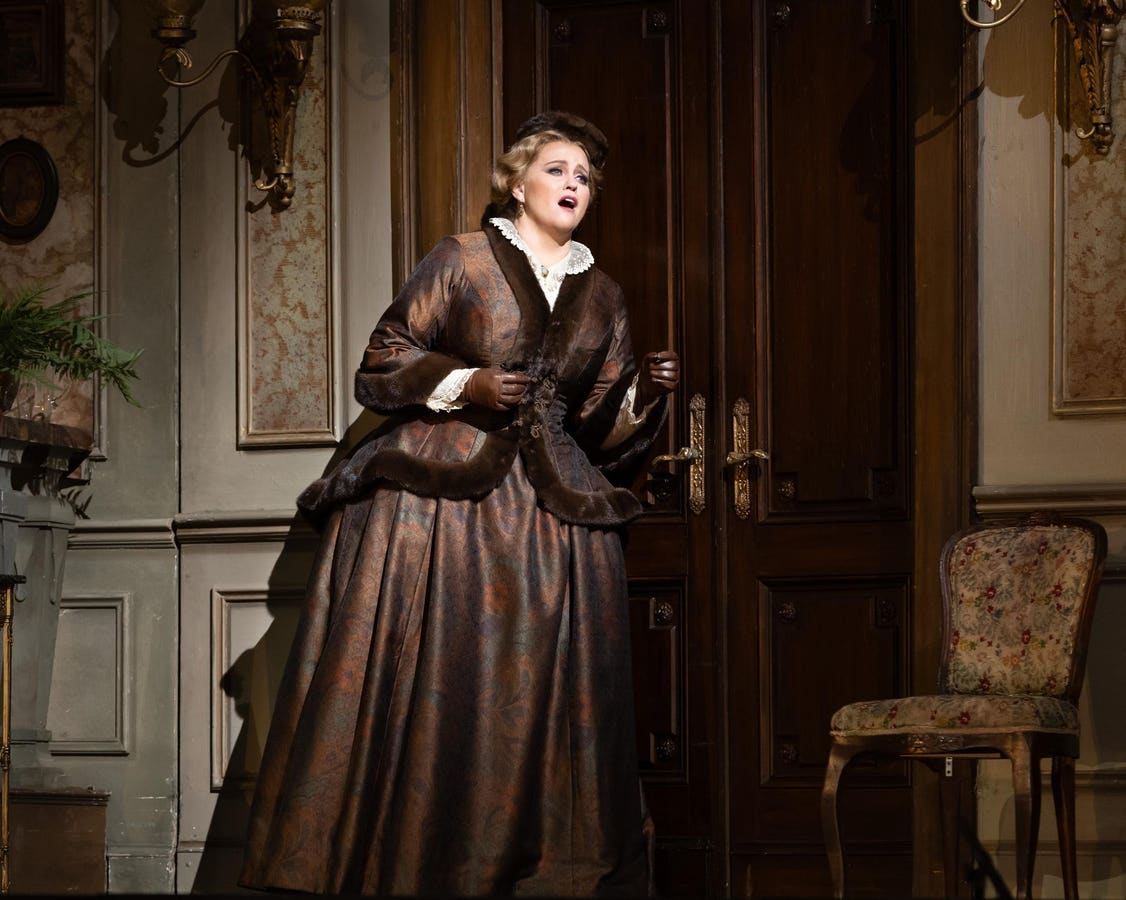
ARABELLA
The Metropolitan Opera
In repertory through November 29
Last night marked the return to the Metropolitan Opera of Richard Strauss’s relatively seldom-performed Arabella (RECOMMENDED) after an absence of more than a decade. First and foremost, it was a pleasure to see one of the company’s opulently naturalistic and increasingly rare heritage productions — this one by Otto Schenk — the kind that once formed the core of the rep but have since been gradually phased out in favor of more stylized, albeit simpler, stagings. Indeed, Schenk’s satisfying production fully embraces the world of 19th century Vienna in all its detail and glamor, which is the perfect backdrop for the sweepingly romantic story concerning the titular Arabella — a young woman who patiently pursues her ideal vision of love despite the immense pressure put on her by her financially flagging family — here played by American soprano Rachel Willis-Sørensen in her debut in the role. Willis-Sørensen is in possession of a warm, well-proportioned voice that capably handled the role’s vocal demands, and her acting throughout was the epitome of elegant restraint and quiet fortitude. As her neglected and more emotionally volatile sister Zdenka, soprano Louise Alder (in another Met debut) shined in a vocal performance that was at once creamy yet full of punchy character. As Mateo, one of Arabella’s fervent admirers who goes too far, Slovakian tenor Pavol Breslik — in a restlessly sung performance — was a combustible combination of charm and male toxicity. Last but not least was Polish bass-baritone Tomasz Konieczny’s vocally rich, burnished portrayal of Mandryka, the count who finally wins Arabella’s love, but not without some drama. In the pit was conductor Nicholas Carter, who confidently navigated Strauss’s sumptuous orchestral writing, one of the primary pleasures of the opera.
 Copyright © 2026
Leave a Reply