
VIEWPOINTS – Playful, fast-paced, and meta-theatrical revivals of classics: André De Shields in TARTUFFE and Gingold Group’s PYGMALION
- By drediman
- November 4, 2025
- No Comments
This fall, theater-goers looking to indulge themselves in the classic Western dramatic oeuvre should pay heed to a pair of playful, fast-paced, and meta-theatrical revivals. As per usual, read on for my thoughts.
TARTUFFE
House of the Redeemer
Through November 23
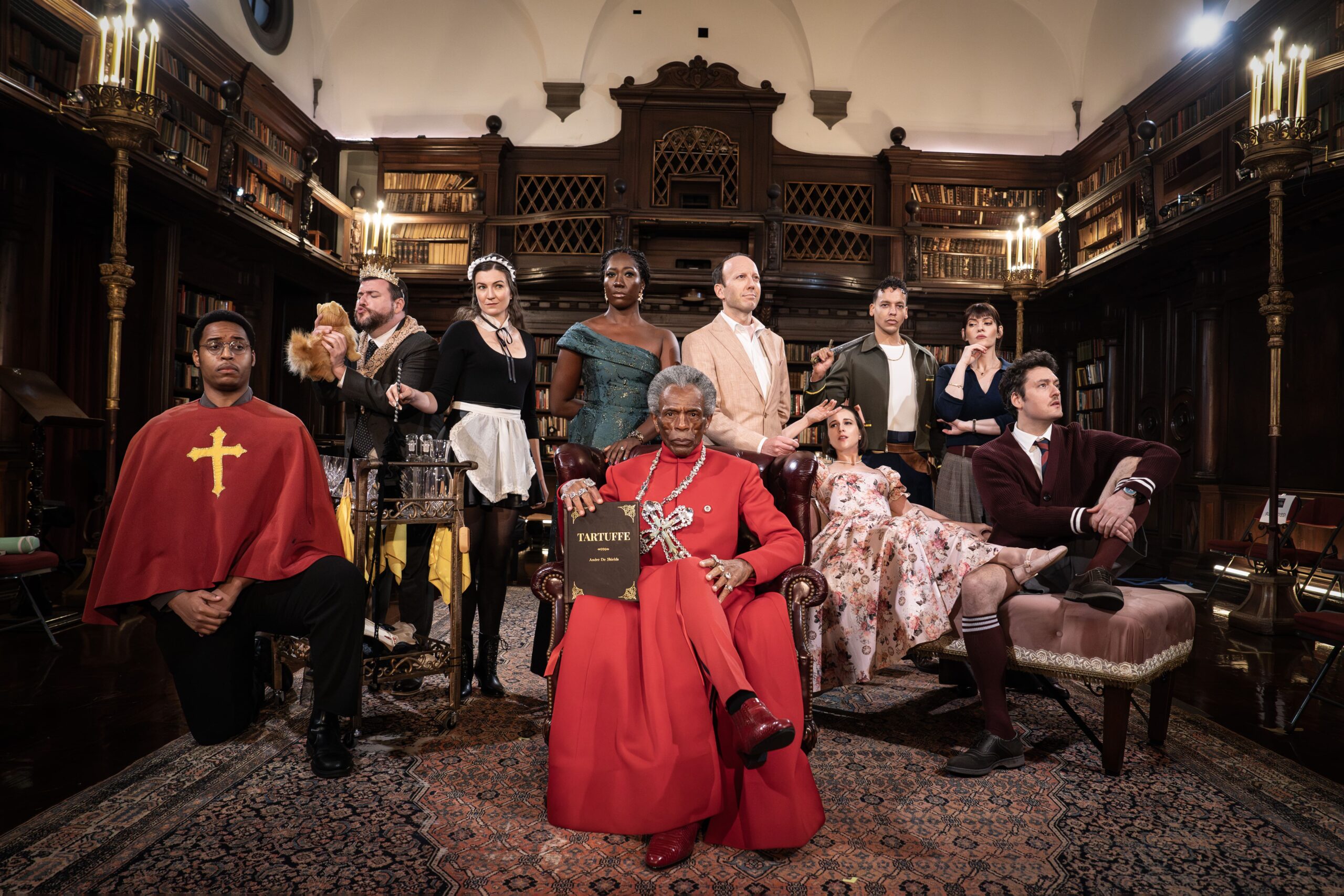
First up is the immersive Off-Broadway revival of Tartuffe (RECOMMENDED) staged in the gorgeously appointed 17th century library of the House of the Redeemer in the Upper East Side (the historic room was literally transported intact from France to New York, where a mansion was built around it). As directed by Keaton Wooden, the still relevant Molière classic — via Ranjit Bolt’s brisk and rambunctious 2003 translation — is being presented in a breathlessly and scrappy intermission-less staging that revolves around André De Shields’ seductive performance in the title role. If you’ve ever seen De Shields onstage (Hadestown, Cats: The Jellicle Ball), it will come as no surprise that he effortlessly commands the production — essentially a glorified staged reading (not necessarily a bad thing), complete with scene-setting stage directions that read aloud to introduce each of the play’s five acts — with his distinctly sensuous gravitas, which lights up the room every time he ceremoniously enters the scene. Indeed, the Tony-winner is having a devilish good time as the hypocritical and wickedly corrupt “holy man” who cons his way into the good graces of an unsuspecting wealthy family. De Shields’ farcical energy rubs off on the rest of the accomplished cast — which includes the likes of the equally magnetic and regal Amber Iman as Elmire, the increasingly skeptical lady of the house and the hounded object of Tartuffe’s sexual desires — who also have a ball riffing through the Molière‘s cautionary tale. Particularly having a good old time are Todd Buonopane and Tyler Hardwick, who are both ham it up — nearly to the point of distraction — as if appearing in an improv performance rather than one of the classics of Western Drama.
PYGMALION
Gingold Theatrical Group
Through November 22
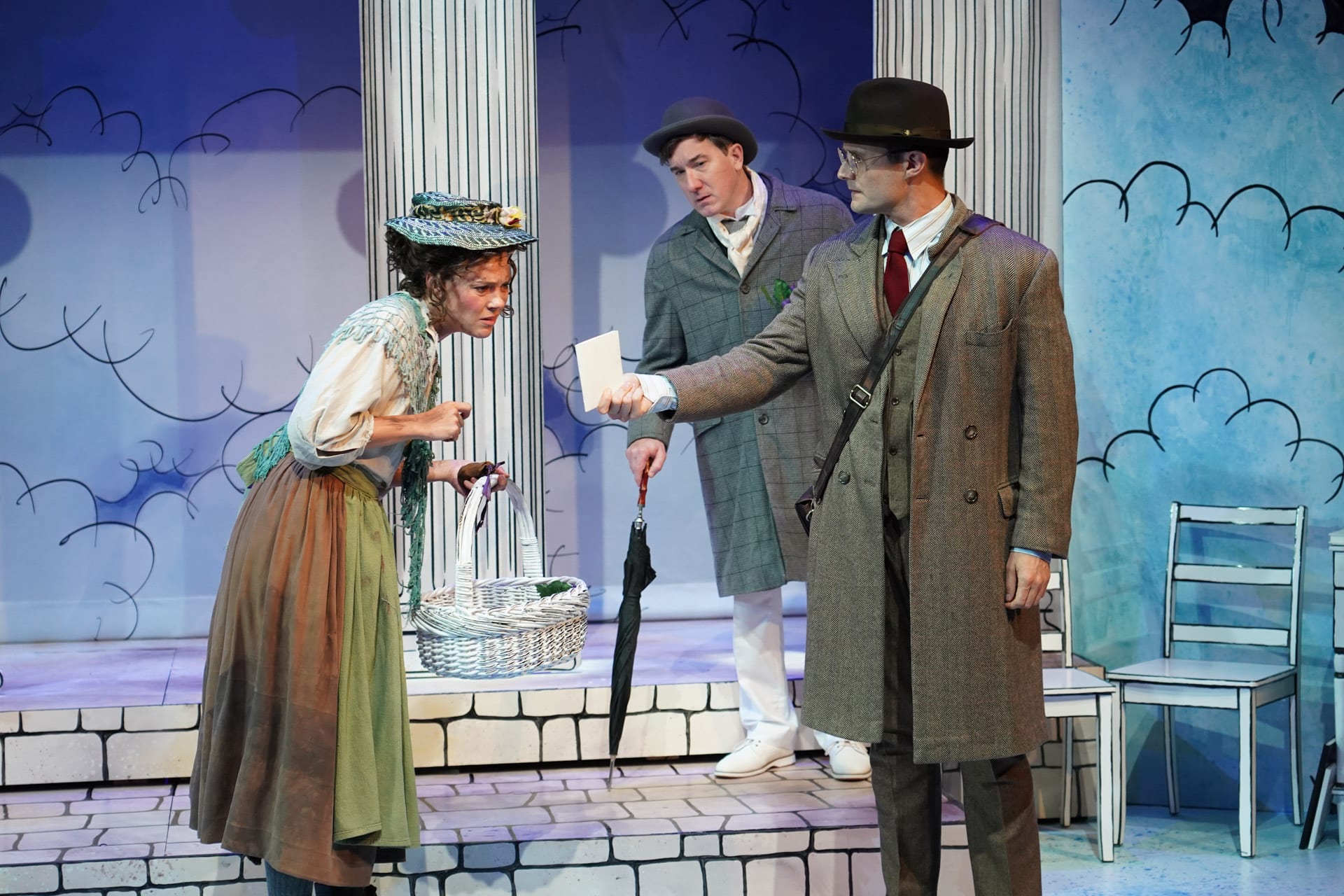
Last weekend, Gingold Theatrical Group’s Off-Broadway revival of George Bernard Shaw’s Pygmalion (RECOMMENDED) opened at Theatre Row. Gingold’s artistic director David Staller is known for his light touch with the plays of Shaw, an approach that is distinctly his. This aesthetic is alive and well in Staller’s current production of Pygmalion, which utilizes a rarely-used framing device in which the Greek gods themselves re-enact Shaw’s play — which draws inspiration from a Greek myth in which a sculptor falls in love with a statue that he created — on a cartoonish black-and-white set (courtesy of scenic designer Lindsay G. Fuori). In a series of swiftly staged scenes — with additional commentary by the overlooking gods — the action unfolds efficiently, with an emphasis on highlighting the comic foibles of humanity. Although the fleet staging at times detracts from dwelling on Shaw’s knotted philosophical musings on human nature, the overarching acting is top notch, if a tad too broad for my taste (which I suspect is a directorial choice). As Henry Higgins, Mark Evans is ideal — brash and unkempt, yet still exuding sex appeal. As Eliza Doolittle, newcomer Synnøve Karlsen — a beguiling combination of Scarlett Johansson and Carrie Coon — is convincing every step of the way from an ignorant, rough-around-the-edges flower girl to the refined belle of the ball. Rounding out the fine cast are New York stage stalwarts Teresa Avia Lim, Lizan Mitchell, Carson Elrod, and Matt Wolpe — all excellent character actors, who double both as the aforementioned gods and the familiar roster of characters of Shaw’s play (the source material for Lerner and Loewe’s classic musical My Fair Lady, which lifts dialogue directly from the work).
 Copyright © 2026
Leave a Reply