
VIEWPOINTS – Fine music-making across genres: Diego Matheuz leads the NY PHILHARMONIC, Heather Christian’s ORATORIO FOR LIVING THINGS returns
- By drediman
- October 27, 2025
- No Comments
Fine music-making is fine music-making, regardless of where one comes across it. This past week, I was reminded of this belief when I took in performances both in an intimate Off-Broadway setting and the expanse of David Geffen Hall at Lincoln Center. As per usual, read on for my thoughts.
NEW YORK PHILHARMONIC
David Geffen Hall
Ongoing
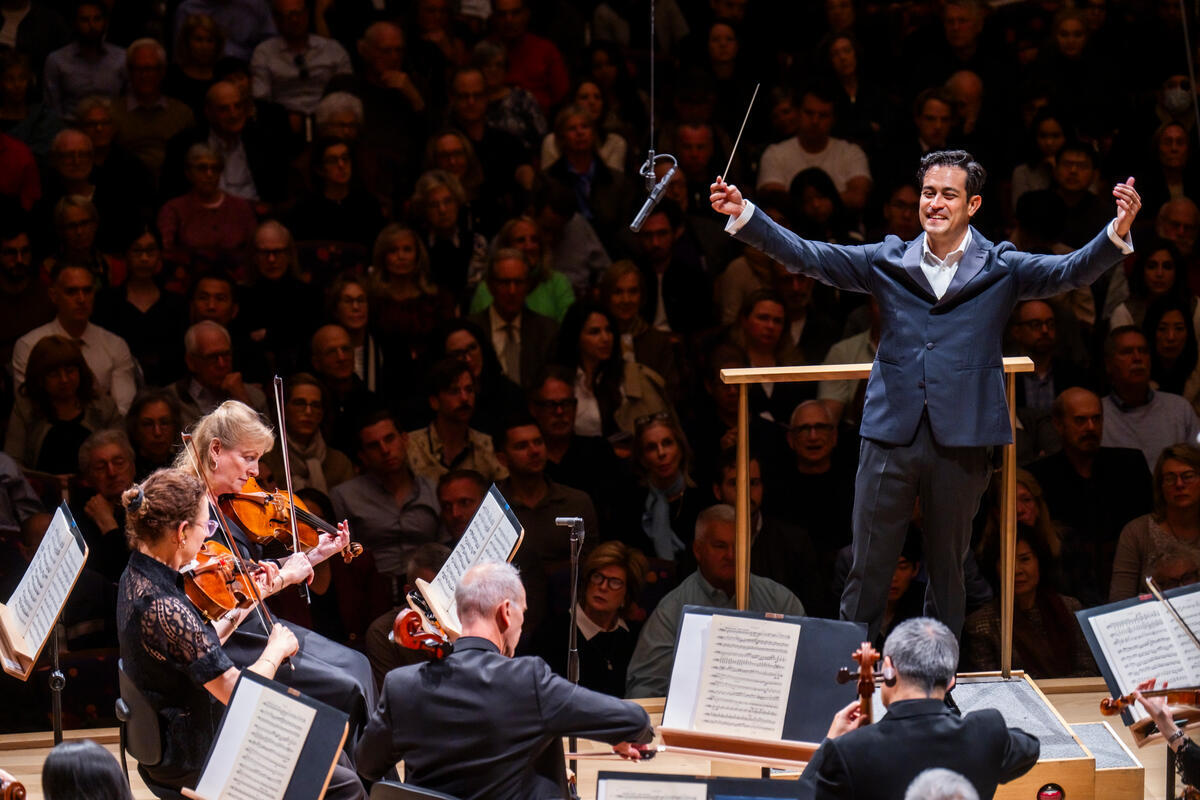
This past weekend, Venezuelan conductor Diego Matheuz took up the baton to lead the New York Philharmonic — in his subscription debut with the ensemble — in a program comprised of works by Inocente Carreño, Erich Korngold, and Tchaikovsky (RECOMMENDED). Throughout, the music-making was wonderfully finely-tuned if a tad on the measured side. Commencing the concert was Margariteña (glosa sinfónica), a 14-minute autobiographical piece created in 1954 by the conductor’s fellow countryman Inocente Carreño that evocatively depicts the composer’s childhood, family, and his home on Margarita, an island off the coast of Venezuela. Matheuz and the New York forces played with heartfelt expression, bringing palpable affection to the performance. The concert continued with Korngold’s Concerto in D major for Violin and Orchestra, featuring the orchestra’s concertmaster Frank Huang as the soloist. To be sure, the piece is a virtuosic showpiece — allowing violinists to move dynamically between the sweep of Viennese romanticism and the more contemporary expressionism of cinematic score music — which Huang handled with calm finesse. The beloved concertmaster’s performance built in confidence, excelling in the second movement’s subtle showcase of color and tone (lifted from the film Anthony Adverse) and finishing strongly with energy and rhythmic commitment in the piece’s third and final movement (Finale: allegro assai vivace). The evening concluded with a solid rendition of Tchaikovsky’s Symphony No. 5. Throughout, Matheuz’s pacing was elegant yet forward moving, and he navigated the composition’s interweaving themes with the sensitivity of a storyteller. Although there’s a somewhat unresolved quality to the 45-minute work, the maestro gave the symphony a sense of completeness that left the audience satisfied.
ORATORIO FOR LIVING THINGS
Signature Theatre Company
Through November 23
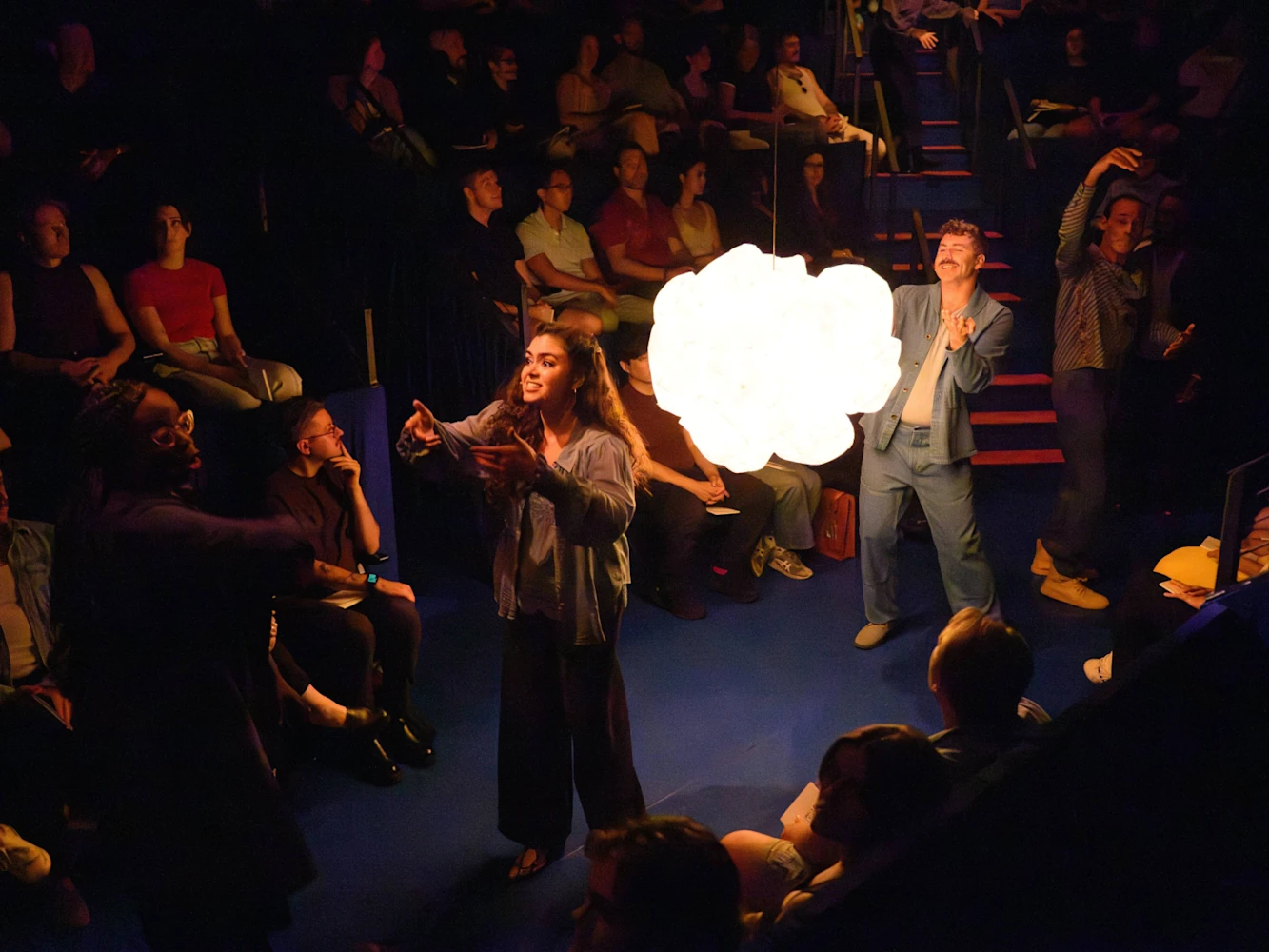
This fall, Heather Christian’s highly acclaimed Oratorio for Living Things (HIGHLY RECOMMENDED) makes a welcome Off-Broadway return courtesy of Signature Theatre Company, giving a larger audience the chance to experience this bizarre, profound, and altogether singular piece of music theater. In essence, the work is an existential meditation on time, and more broadly humanity’s place in the universe, from the quantum to the cosmic. The work does not necessarily break boundaries as much as disregards them. Although Christian — who was recently named a MacArthur “Genius” Grant Fellow — draws from the classical oratorio form and is informed by a myriad of musical genres (classical, jazz, rock, country, theater music, etc.), her work is never defined by them. Musically, the piece seamlessly ebbs and flows between tidal force and gently undulating aural caresses. To say that the work does away with traditional narrative storytelling is an understatement. Indeed, the enigmatic composition progresses organically from theme to theme, as if by instinct. Admittedly, much of the libretto — a lot of which is in Latin — is confounding, but simply as a depiction of humanity through a collective, symphonic offering up of individual stories and voices, it’s a breathtaking achievement. Oratorio for Living Things has been outfitted for an ensemble of 12 wonderfully idiosyncratic singers (perhaps echoing the 12 apostles?), and they handle the wide-ranging demands of Christian’s score gloriously. Director Lee Sunday Evans has gracefully staged the piece in an intimate (almost claustrophobic) cocoon-like arena, in which she elegantly blocks the choral ensemble. In such a confined, communal space, the sonic experience of Christian’s work is awe-inspiring, although not quite as overwhelming as when I first experienced the piece more than three years ago. But as before, when the chorus breaks out in full vocal force, the room reverberates with the grandeur of the moment, building a cathedral of sound that’s downright spiritual.
 Copyright © 2026
Leave a Reply