
VIEWPOINTS – Fraught cries for help: Caroline Guiela Nguyen’s LACRIMA and Carolina Bianchi’s THE BRIDE AND GOODNIGHT CINDERELLA
- By drediman
- October 27, 2025
- No Comments
This past week, I encountered a pair of immensely ambitious, emotionally fraught productions from auteur theater-makers — both women, refreshingly — featuring characters on the brink of nervous breakdowns, many of them crying out for help to manage their fragile mental states. Read on for my thoughts on these international productions, both part of the lineup of an uncommonly robust fall festival season.
LACRIMA
BAM’s Next Wave / L’Alliance New York’s Crossing the Line
Closed
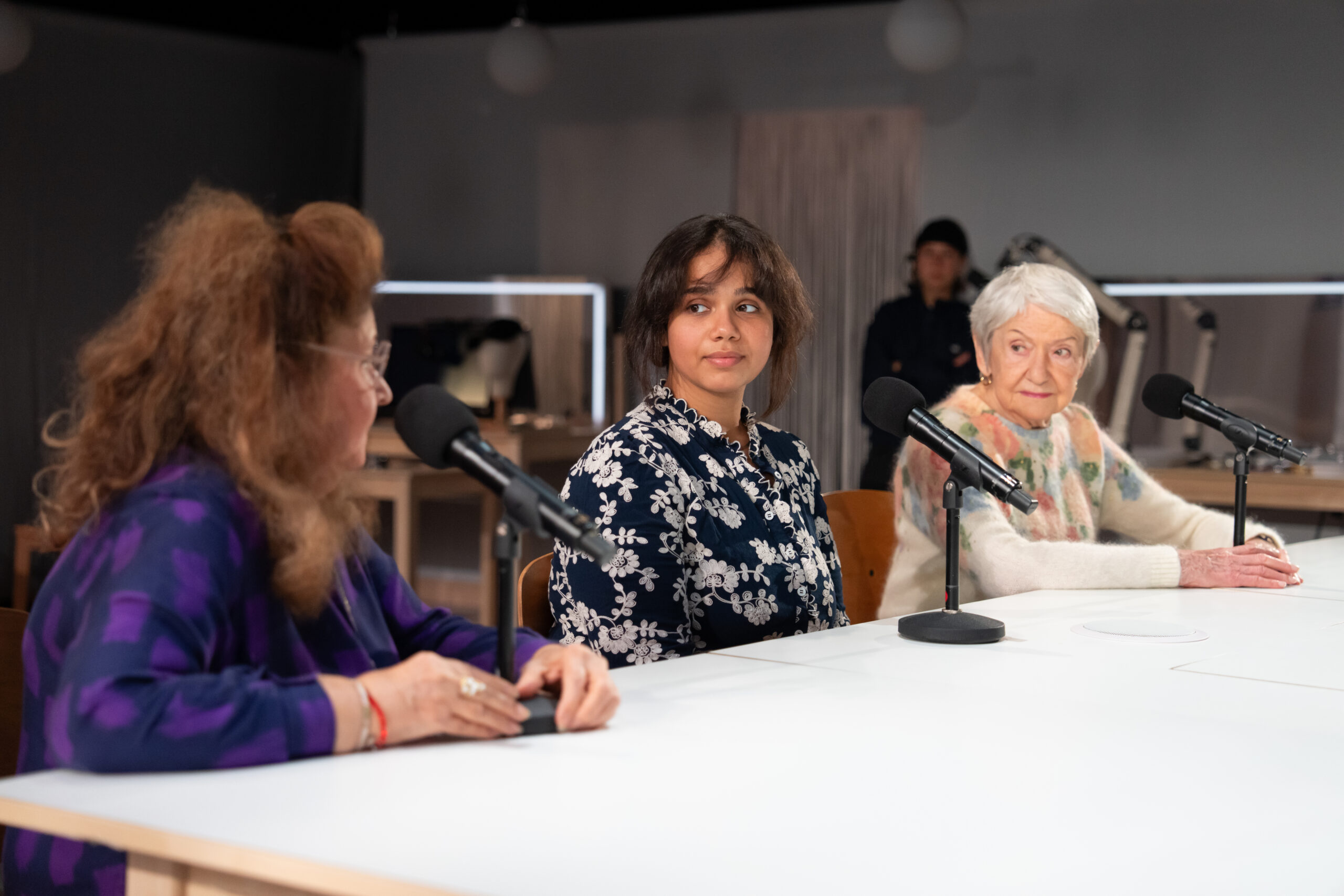
First up at the Brooklyn Academy of Music’s Harvey Theater, there was Caroline Guiela Nguyen’s LACRIMA (HIGHLY RECOMMENDED), one of the centerpiece offerings of BAM’s Next Wave 2025. Presented in association with L’Alliance New York’s Crossing The Line Festival, the work begins intriguingly with a glimpse of its tragic ending (no spoilers here, of course). How could have things come to such a dire place? The production then rewinds to the moment a Parisian fashion workshop wins the highly coveted commission to design and put together the wedding dress for the royal wedding of the Princess of England. What follows is theater on a sweeping scale as the play depicts the herculean, single-minded effort required to undertake such a high profile task. The high stakes of the project quickly lead to a pressure-cooker environment and the rise of certain abuses — both domestically (particularly against women) and as it relates to labor conditions — ultimately leading us to the play’s wrenching conclusion. At three hours in length without a full intermission, LACRIMA is a slow-burning affair that gradually gathers in momentum as it follows the three groups responsible for different aspects of the dress-making (e.g., elaborately embroidered silk, delicately handcrafted lace, a train onto which 150,000 pearls are stitched). Simultaneously taking place in England, France, and India, the multilingual play — there are projected English translations throughout — does a skillful job of depicting the global nature of the endeavor, effectively incorporating Zoom calls and other such electronic forms of communication into the fabric of the storytelling, thereby lending the multimedia elements of Nguyen’s seamless and stylish staging an air of narrative necessity rather than simply flashy storytelling gimmickry. Although the play is fictional, the superbly-acted production has been given a sense of realism that imbues the scenes of escalating conflict and breakdown with urgent and harrowing intensity.
CADELA FORÇA TRILOGY, CHAPTER 1: THE BRIDE AND GOODNIGHT CINDERELLA
Powerhouse: International / L’Alliance New York’s Crossing the Line
Through October 25
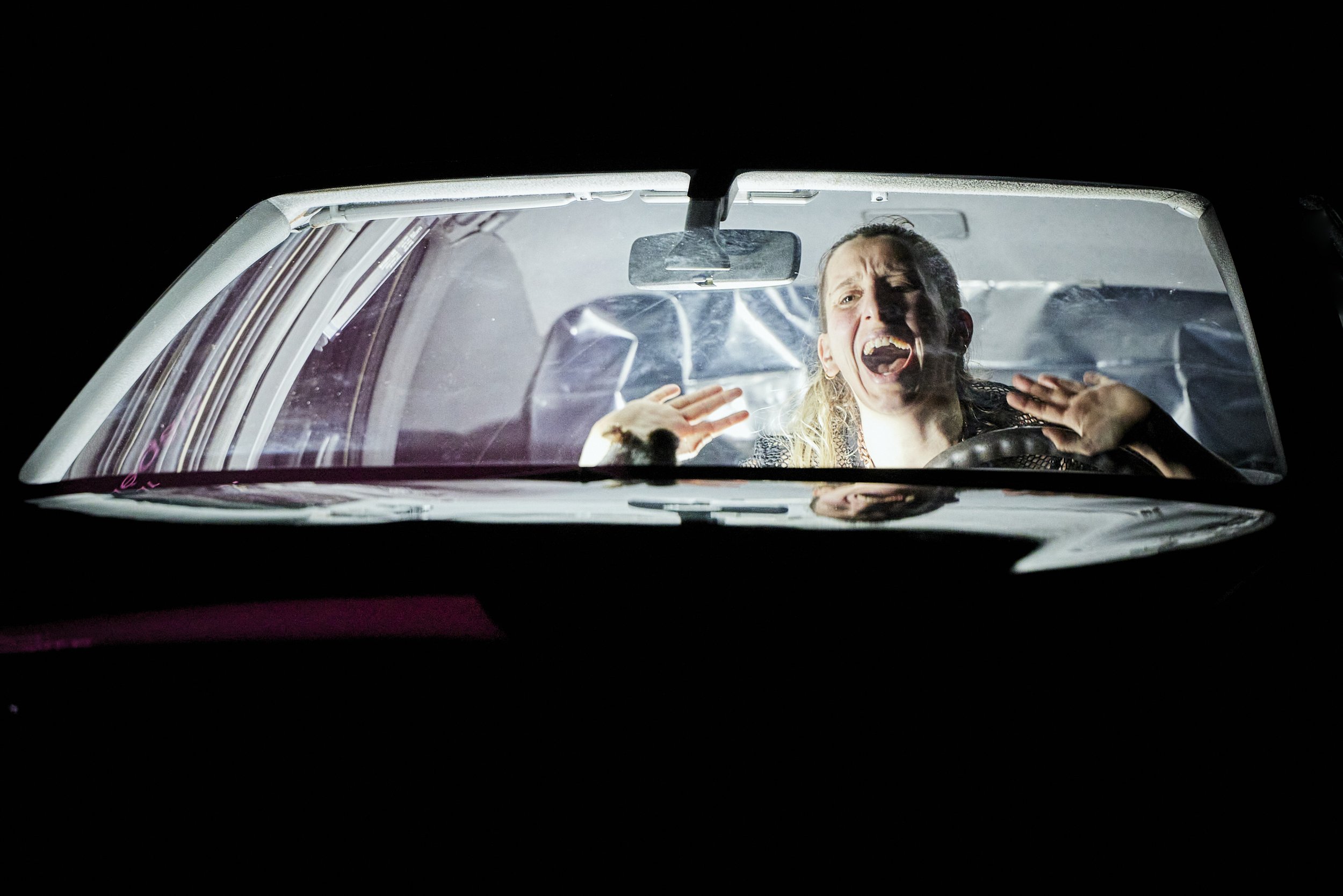
For more adventurous theatergoers, there was Carolina Bianchi’s Cadela Força Trilogy Chapter I: The Bride and the Goodnight Cinderella (RECOMMENDED), which was presented last week by the brand new arts festival Powerhouse: International, also in association with L’Alliance New York’s collaborative Crossing The Line Festival. The Amsterdam-based Bianchi made a notorious splash at the Avignon Festival two years ago with the performance, which has her willingly consuming tranquilizers to revisit a traumatic incident in which she was drugged and sexually abused. The play commences unassumingly, with Bianchi giving the audience an academic talk — in Portuguese, with projected English titles — on sexual violence against women, particularly as it relates to the rape and murder of performance artist Pippa Bacca in 2008 in Turkey in her pursuit to hitchhike her way through much of Europe in a wedding dress. Shortly thereafter, our guide willingly downs a cocktail with the aforementioned substance, eventually losing consciousness in the middle of her lecture. What follows is a hallucinatory dance theater fever dream that simulates stylized sexual encounters that suggest rape-like situations. Visually, the landscape is dominated by the menacing presence of a life-sized car, as well as eerie grave-like sites that point to the long history of sexual violence faced by women. As the lengthy intermission-less evening unfolds, the threat of violence looms increasingly large as the text of Bianchi’s lecture continues to be projected without her, culminating in a howling cry for help from a woman trapped and suffocating in the smoke-filled car. What follows is even more disturbing and unnerving — a scene in which Bianchi’s vagina is probed with a camera-tipped speculum by a member of the company (the live capture is projected for the audience to see). It leaves an impression that’s at once shockingly invasive and medical, as if to indicate both the act of sexual assault and a sterile post-rape examination. Soon after this graphic sequence, Bianchi is brought back, groggily, to reality, still seemingly unable to process her trauma.
 Copyright © 2026
Leave a Reply