
VIEWPOINTS – Masters at work: The Joyce’s ARPINO DANCE FESTIVAL revs up and the return of Robbins and Balanchine masterworks at CITY BALLET
- By drediman
- October 2, 2025
- No Comments
This week — to borrow from New York City Ballet’s programming lingo — I had the great pleasure of basking in “masters at work” by way of ballets by Gerald Arpino, Jerome Robbins, and George Balanchine, three of the most influential American choreographers of the twentieth century. As per usual, read on for my thoughts.

NEW YORK CITY BALLET: MASTERS AT WORK I
David H. Koch Theater
In repertory through October 7
One of the gems of New York City Ballet’s ongoing fall season is its “Masters at Work I” program, which features the pairing of Jerome Robbins’ The Goldberg Variations and George Balanchine’s Tschaikovsky Suite No. 3 (HIGHLY RECOMMENDED). Mention The Goldberg Variations to dance aficionados, and you’ll likely find them either swooning with pleasure or their eyes glazing over. Pushing nearly 90-minutes in running time, the work is stately and intentional — particularly during the subdued progression of variations in the ballet’s first half — noticeably downplaying the speed and athleticism typically associated with City Ballet. Thankfully, Wednesday night’s performance was transcendent. This time around, Robbins’ artful overarching concept — which bridges past and present dance traditions through the timelessness of Bach’s seminal piano composition — registered with inspired clarity rather than tiresome long windedness. Indeed, the piece seemed energized and refreshed by the thoughtful contributions of a relatively youthful cast, whose attention to detail and uncanny musicality elevated the lengthy ballet. In Part I, the standouts were David Gabriel and Emma von Enck, two dancers who are making an indelible mark with their clean, sparkling performances. In Part II, the gorgeously long-limbed Miriam Miller proved that she is fast becoming the company’s heir apparent to the great Maria Kowroski, while the pairing of Indiana Woodward and Joseph Gordon was splendid, both bringing an unaffected humanity and subtle inner glow to their performances. Providing a nice contrast while also tying into the dialogue between past and present was Balanchine’s richly atmospheric Tschaikovsky Suite No. 3 in a performance that grew in confidence as it progressed. In the third movement, corps member Indie Bradley and soloist KJ Takahashi performed with vibrancy and excitement, while in the fourth movement, principals Tiler Peck and Roman Mejia brought the house down with the majesty and precision of their dancing, as did the pristine work by the corps de ballet.
ARPINO DANCE FESTIVAL
The Joyce Theater
Through October 12
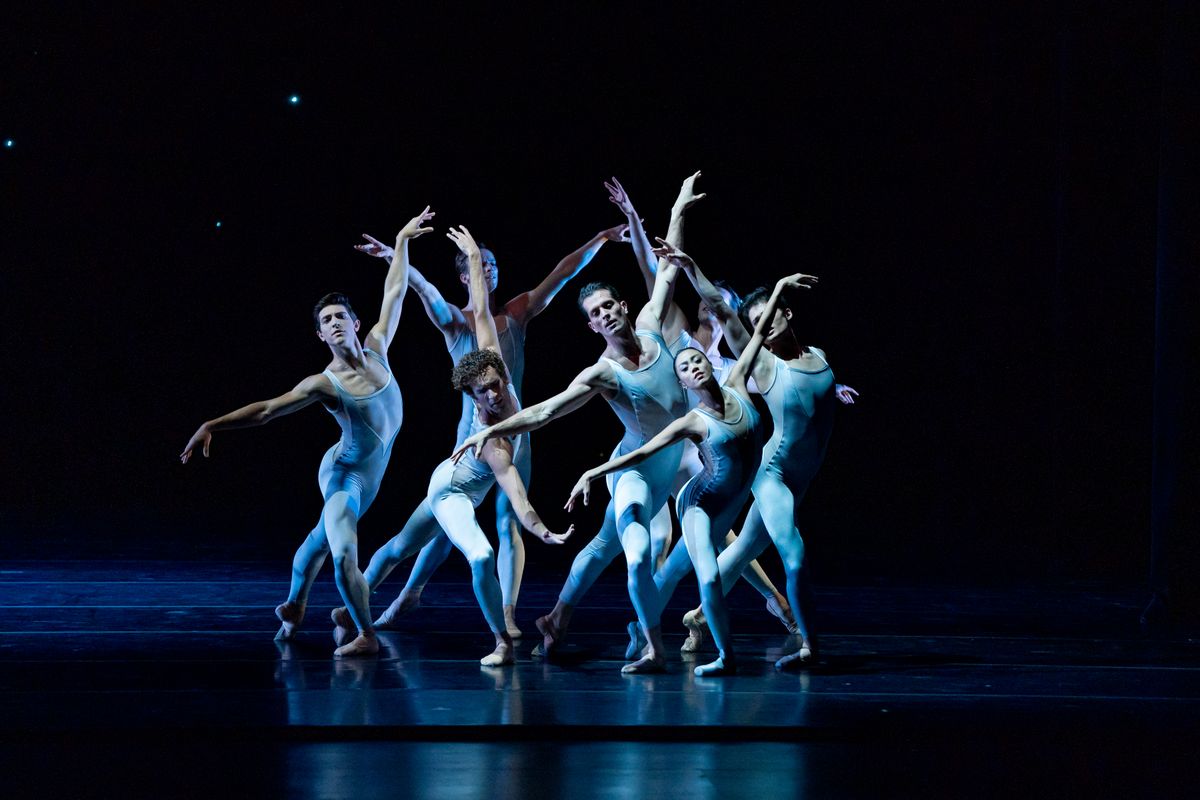
This week also saw the opening of the first of two programs of the Arpino Dance Festival (RECOMMENDED) at The Joyce Theater in Chelsea. The anticipated two-week festival — which is being presented by The Joyce in conjunction with The Gerald Arpino Foundation — gives a new generation of New York dance fans the rare opportunity to survey the body of work of Gerald Arpino, a co-founder of the Joffrey Ballet and its prolific resident choreographer for many decades (when the Joffrey left for Chicago in 1995, his works all but disappeared from the city’s dance stages). Generally speaking, Arpino’s choreography can be characterized for brightness and scrappy assertiveness, clearly drawn and often catering to the audience’s appetite for accessible and outwardly crowd-pleasing fare. This was certainly true of Program 1, which captured Arpino’s amped up vision of classical ballet. The evening kicked off with Artistic Ventures in Dance (“AVID”) performing Confetti, an animated piece for three tambourine-wielding couples that highlighted right off the bat the choreographer’s penchant for showmanship, which shined through despite some tentative dancing. Then came a true show-stopper — San Francisco Ballet’s Misa Kuranaga and Houston Ballet’s Angelo Greco headlining the pas de deux L’Air d’Esprit. Suffice to say, both Kuranaga and Greco masterfully held court with their impeccable style and sublime technique as they floated through what can only be described as a heightened homage to romantic ballet, namely Giselle. After the intermission, Joffrey Ballet effortlessly slipped into Round of Angels, one of Arpino’s more recognizable and instantly appealing ballets. Set to the ubiquitous Adagietto from Mahler’s Symphony No. 5, the geometrical ballet swirled dreamily as if a drifting constellation of stars. The bill ended with Birthday Variations, a sunny work that was brought to vigorous life by a quintet of Oklahoma City Ballet dancers (a particular standout was Alejandro González, whose energy and personality lit up the stage).
 Copyright © 2026
Leave a Reply